




Now Reading: PH education funding falls short of global standards, below UNESCO benchmark
-
01
PH education funding falls short of global standards, below UNESCO benchmark
PH education funding falls short of global standards, below UNESCO benchmark

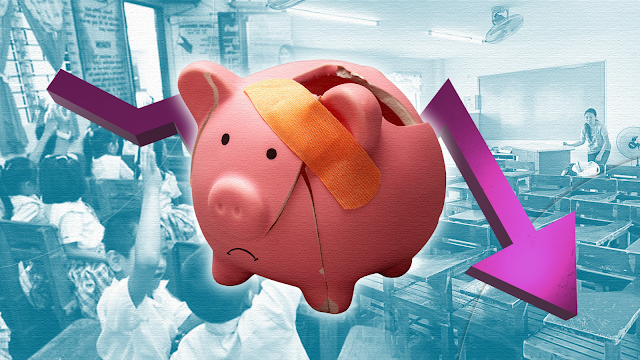
Despite being mandated by the 1987 Constitution to give education the “highest priority”, the Philippines continues to fall short of global standards in funding this sector.
Business leaders and education advocates warned Congress as it deliberates on the proposed 2026 national budgets.
The Philippine Business for Education (PBEd), a non-profit organization founded in 2006, raised urgency over the government’s Php 1.178-trillion allocation for education next year, which amounts to only 3.8 percent of the country’s gross domestic product (GDP).
It is below the United Nations Educational, Scientific, and Cultural Organization (UNESCO) benchmark of four to six percent.
“We must allocate our resources where it matters most, because every peso wasted denies our people access to vital programs — such as education, nutrition, and healthcare — that they rightfully deserve,” PBEd Executive Director Bal Camua said.
According to the Second Congressional Commission on Education’s (EDCOM 2) Year Two report, for the past decade, education spending has averaged just 3.2 percent of GDP.
Compounded by inefficiencies and budget insertions, PBEd said this chronic underfunding continues to hinder the education system despite constitutional guarantees.
“Opening the budget deliberations from start until its passage will help strengthen accountability and ensure that public funds truly serve the people,” Camua said.
To conduct fully transparent budget deliberations, PBEd urged lawmakers to strengthen accountability and ensure that public funds directly benefit learners.
Amid the budget debates, PBEd welcomed the creation of the Education and Workforce Development Group (EWDG), a high-level inter-agency body formed under Administrative Order No. 36.
The group has been vocal about opening budget discussions from start to finish, saying this would prevent inefficiencies and political “insertions” from eroding allocations meant for classrooms, teachers, and students.
The initiative aims to align education programs with labor market needs through curriculum improvements, teacher training, and lifelong learning opportunities.
“The creation of the EWDG is a crucial step toward bridging the gap between what our schools teach and what our industries need. For it to truly succeed, it must be grounded in transparent budgeting, strong accountability, and active engagement with stakeholders—so that every reform truly delivers better education and brighter opportunities for all Filipinos,” Camua said.
Education Secretary Sonny Angara admitted it could take 30 years to address at current funding levels, wherein urgency is underscored by pressing concerns in the sector, including a reported classroom backlog of 165,000.
“Every year, we delay meeting the standard, we risk losing a generation,” Camua said.