









Now Reading: Real Lies, Realize: Ranks Above Bars
-
01
Real Lies, Realize: Ranks Above Bars

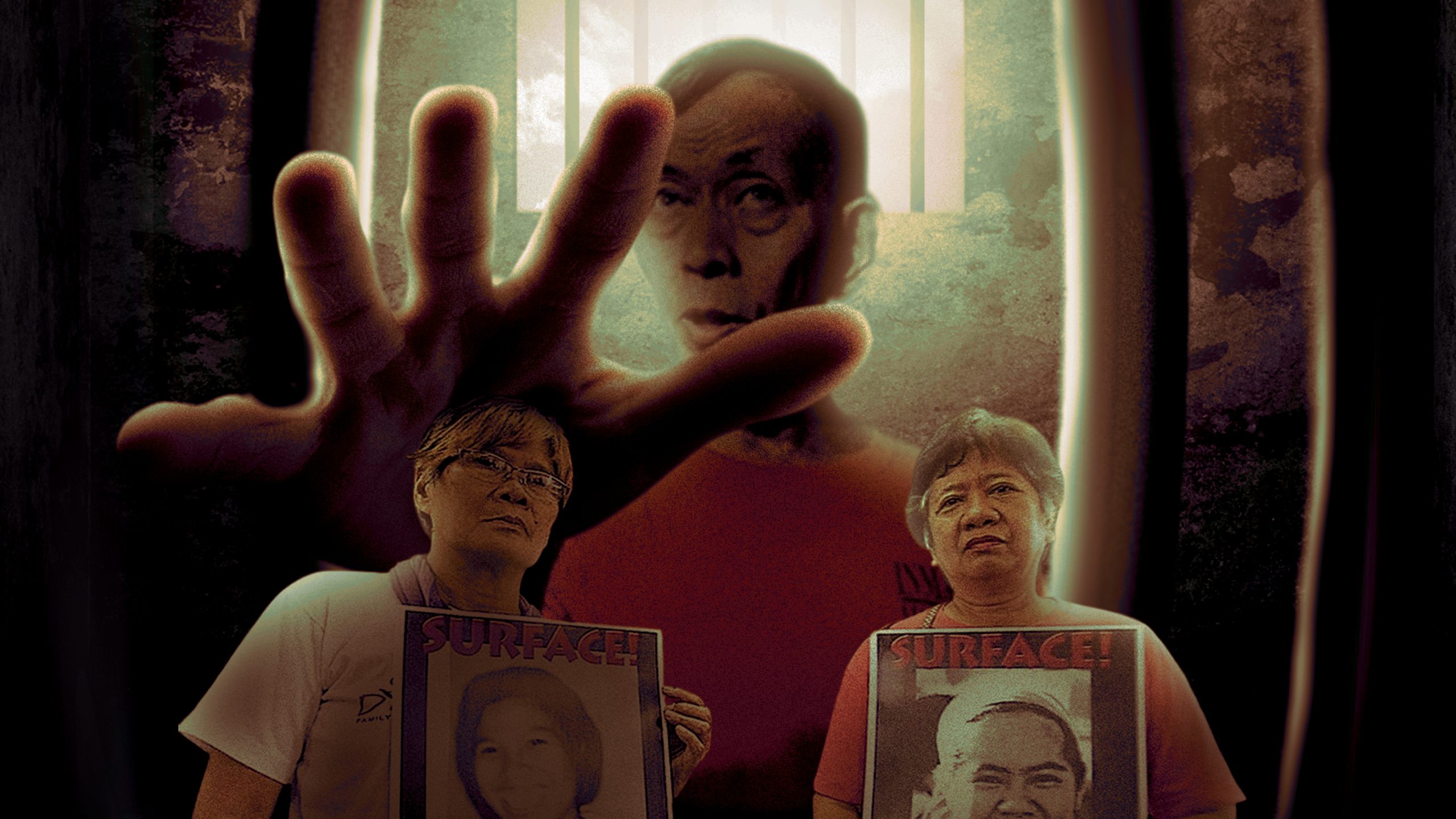
The law often describes itself as the beholder of truth and accountability. But once the law involves high-ranking individuals, this very definition slips in the question of reality.
At the center of this issue lies the retired military general Jovito Palparan, convicted in 2018 for the kidnapping and serious illegal detention of UP student activists Sherlyn Cadapan and Karen Empeno. For years, he was known as the “berdugo”, a military official linked to the disappearance of activists. But Palparan was not new to these accusations as he was also involved in seven cases of summary execution, a massacre, an abduction, five incidents of harassment, illegal arrest, and detention, and a case of aerial assault.
Palparan, along with Lieutenant Colonel Felipe Anotado and Staff Sergeant Edgardo Osorio, was originally admitted to the New Bilibid Prison (NBP), one of the seven penal colonies under Bureau of Correction (BuCor). But this was no simple and efficient arrest as his conviction happened three years after hiding in Manila and two decades after the crime took place. Victims were taken by military forces in Bulacan which was under Palparan in 2006. The abduction left the victim’s families in endless suffering, as their loved ones remain missing to this day—the bodies were never found.
However, despite this delayed action, controversy still arose when notices sent to the location were all returned with notes of Palparan being relocated or “transferred out”. This was then denied by the BuCOR Director General Gregorio Catapang Jr. saying that Palparan remained at the facility providing photos as evidence. The problem is that these images carried no timestamps or indication of where it was taken. This itself can’t be considered as “evidence” if there was truly no Palparan in the cell. In a matter as serious as this, the public cannot simply be asked to accept a visual proof at face value.
While the dispute remains on the pedestal, the families of Cadapan and Empeno are left to question whether the person accountable for their children’s death is truly serving its time in prison or escaping the results of his actions. Or worse? Palparan might be receiving privileges that serve him better rather than owning up to what he has done.
This is what’s troubling. For two decades, they have fought towards justice and for the conviction of the man behind their children’s death. Now, even after the court has spoken, they are still left to question if accountability was truly served. For these families, the simple act of keeping Palparan behind the bars—strictly, without any form of privilege—is the absolute minimum the BuCor could do. It is an insult to their decades of seeking justice that even this basic requirement is now in doubt. To families who were never afforded the closure of seeing their children, much less burying them, the alleged ‘special treatment’ and lack of transparency regarding his location are not just administrative lapses; they are a direct slap to the face of those who sacrificed everything just to see him convicted.
Such inconsistencies signifies how powerful individuals are being treated differently: laws meant to apply for everyone are implemented differently once they are involved. And this weakens the already-broken system of justice we have in this country.
A conviction should have ended his privilege, but in this situation, these officials repeatedly suggest that power continues to influence how justice really is in the country. These inconsistencies are not merely administrative errors; they are clear contradictions that suggest a darker reality. While BuCor Director Gregorio Catapang Jr. insists that Palparan remains confined within NBP’s walls, official court records tell a different story. In February and March of 2026, the Supreme Court issued formal notices to Palparan at the NBP. Both were returned to sender, with NBP personnel explicitly marking them as “moved out: transferred to BuCor–Baguio” and “moved out to PMA Baguio,” respectively.
The failure to deliver these documents is further confirmed by the official PHLPost tracking status, which recorded the reason for return as: “Unsuccessful delivery – [Return to Sender] REASON: Addressee moved-out”. These stamps are not just ink on paper; they are admissions from within the correctional system itself that the convict is no longer where he is legally required to be. The Bureau of Corrections cannot even provide transparent accountability of a high-profile inmate’s location, they have effectively failed their duty to public trust. By choosing to hide behind questionable photos instead of official records, the BuCor is not just shielding a convict—it is actively gaslighting the public and mocking the justice system they are sworn to uphold. The Bureau is no longer just a custodian of the law, it has become a collaborator in the erasure of accountability.
As NUPL President Ephraim B. Cortez rightfully pointed out, the burden of proof lies with the Bureau. If Palparan is indeed still detained at the NBP, the BuCor should be able to provide clear, verifiable documentary evidence instead of relying on questionable photos. The anxieties of the families of Cadapan and Empeno are not based on speculation, but on the very records that the state is attempting to explain away. By refusing to provide transparency, the BuCor does more than just shield a convict; it confirms the painful truth that in this country, a prison cell is not a cage for the powerful, but merely a revolving door.
Everyday, thousands of Filipino inmates serve their sentences in prison; no special treatment, substandard areas, and no leeway. Yet, when a former general gets behind those bars—despite having a history of cruelty, harassment, and convicted with the students’ disappearance— government agencies find themselves under scrutiny and under pressure just to simply inform his whereabouts. And that’s the contrast that is difficult to ignore.
Others may argue that officials may require arrangements for security reasons—and that is valid. However, protection should never come at the cost of transparency. Authorities must be able to explain comprehensively if the area was ever “unsafe” for this former military. And until it does not appear to be so, they are only protecting him from being accountable rather than genuine security.
Ultimately, this is not just about the whereabouts of one man; it is a test of our justice system’s integrity. If the law is to be truly blind, it cannot afford to look away when powerful individuals receive special treatment. The Bureau of Corrections has a duty to the public and to the victims’ families to replace confidentiality with accountability. Transparency is the only path to credibility, and for as long as this remains a mystery, the public will continue to see justice not as a shield for the innocent, but as a luxury for the elite.