










Now Reading: SC voids impeachment raps vs VP Duterte for ‘constitutional violations’
-
01
SC voids impeachment raps vs VP Duterte for ‘constitutional violations’
SC voids impeachment raps vs VP Duterte for ‘constitutional violations’

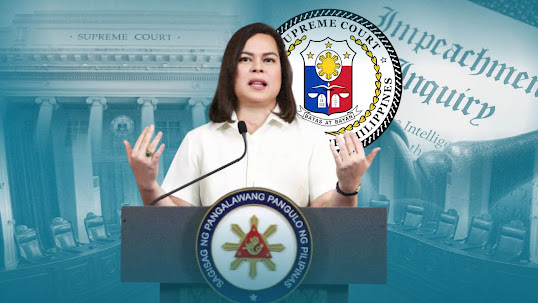
The Supreme Court (SC) has unanimously declared the Articles of Impeachment against Vice President Sara Duterte unconstitutional, citing violations of the one-year ban on initiating impeachment and the respondent’s right to due process, in a ruling issued on July 25.
In a press briefing, SC Spokesperson Atty. Camille Ting announced that the high court en banc ruled that the complaint filed by more than one-third of House lawmakers on February 5, 2025, was barred under Article XI, Section 3(5) of the 1987 Constitution.
“The SC has ruled that the House impeachment complaint versus VP Sara Duterte is barred by the one-year rule and that due process or fairness applies in all stages of the impeachment process,” Ting said.
The decision, penned by Senior Associate Justice Marvic Leonen, renders the Senate unable to acquire jurisdiction over the impeachment proceedings.
Ting clarified that the ruling does not clear Duterte of the charges, but any new impeachment complaint can only be filed starting February 6, 2026.
The Court said the one-year period is reckoned from the termination or dismissal of prior complaints.
In this case, the three initial impeachment complaints, all related to Duterte’s alleged misuse of confidential funds, were deemed terminated on February 5, 2025, the day the fourth complaint was filed and endorsed.
The fourth complaint, filed under Article XI, Section 3(4), was signed by 215 lawmakers, with 25 more joining after the plenary vote. Only 102 signatures were needed to reach the one-third requirement for transmittal to the Senate.
“Our fundamental law is clear. The end does not justify the means,” Ting said, quoting the ruling. “There is a right way to do the right things at the right time. This is what the rule of just law means. This is what fairness or due process of law means, even for impeachment.”
The SC also emphasized the importance of procedural fairness in impeachment, laying out minimum due process standards.
These include access to evidence for all House members, the respondent’s opportunity to be heard before transmittal to the Senate, and the requirement that charges be for impeachable offenses committed during the current term.
Moreover, the Court asserted that all stages of impeachment are subject to judicial review.
“The impeachment process is primarily a legal and constitutional procedure, but with political characteristics. It may be sui generis (of its own kind), but it is not a purely political proceeding,” Ting said.
Associate Justice Alfredo Benjamin Caguioa was inhibited from the case, while Associate Justice Maria Filomena Singh was on leave during deliberations.
Malacañang urged the public to respect the SC’s decision.
“We call on everyone to respect the Supreme Court and place their trust in our institutions,” said Undersecretary Claire Castro.
Vice President Duterte’s legal team welcomed the ruling, describing it as a win for constitutional checks and balances.
“This unanimous decision has once again upheld the rule of law and reinforced the constitutional limits against abuse of the impeachment process,” her defense panel, represented by Atty. Michael Poa said.
They added that Duterte remains ready to respond to the allegations “at the proper time and before the appropriate forum.”
Meanwhile, the House of Representatives may still file a motion for reconsideration, although the ruling is immediately executory.
The high court’s decision stemmed from the consolidated petitions filed by Duterte, her lawyer, Atty. Israelito Torreon and others, asking the SC to void the impeachment complaint against her.
The Court also reminded the House that it has no discretion to delay the referral of verified complaints and must act within the constitutional timelines.
“The Constitution does not grant either the Secretary General or the Speaker of the House any discretion to determine when this period commences,” Ting said.
Despite the setback for complainants, the SC reiterated that the door remains open for future accountability mechanisms, within constitutional bounds.