










Now Reading: SovereigN’T: Ore than we bargained for
-
01
SovereigN’T: Ore than we bargained for


Honey Sotto
Progress is once again being sold to Filipinos as a promise of a better future. Through Pax Silica, the Marcos Jr. administration presents the Philippines as a rising player in artificial intelligence, semiconductor production, and advanced manufacturing. The proposal sounds ambitious. It speaks of innovation and economic growth. Yet behind these promises lies a familiar reality: the country is once again being positioned as a supplier of resources and labor in a system largely designed and controlled by others.
What surprises me is not the project itself, but how little public attention it has received. Then again, perhaps that should not be surprising at all. Most Filipinos are focused on concerns that demand immediate attention: rising prices, tuition fees, transportation costs, wages, and the daily challenge of making ends meet. Surveys conducted by Pulse Asia and Social Weather Stations consistently show that inflation, jobs, and poverty rank among the public’s top concerns, while issues involving industrial policy, foreign investment, and international economic agreements rarely receive the same level of attention.
Still, that is exactly why Pax Silica should not be ignored. It gets buried under technical language like “critical minerals,” “supply chains,” and “economic corridors,” which makes it sound distant and complicated. But once you strip away the jargon, the issue becomes very simple. It is about who controls Philippine resources, who benefits from them, and who gets to decide how they are used in the long run.
Pax Silica is a United States-led initiative aimed at securing supply chains for semiconductors, artificial intelligence, and critical minerals. As part of this effort, our country is expected to host a proposed 1,619-hectare (4,000-acre) Economic Security Zone in New Clark City under the Luzon Economic Corridor. The project is being promoted as an opportunity to attract investments and position the country at the center of emerging technologies. However, being placed at the center of production does not necessarily mean being placed at the center of power.
Moreover, the Philippines already occupies an important position in the global minerals market. According to GlobalData, the country produced approximately 365,100 metric tons of nickel in 2023, making it one of the world’s largest producers and accounting for roughly 11 percent of global nickel output.. Yet despite possessing resources that power modern technologies, the country continues to export much of its minerals in raw or minimally processed form. The highest-value activities, from advanced refining to technology development, remain concentrated abroad.
This is precisely why the government’s celebration of Pax Silica feels premature. The administration speaks of industrialization, but industrialization is not measured by how much a country extracts. It is measured by how much value it creates and controls. A nation does not become technologically advanced simply because its minerals are used in advanced technologies.
Global demand for critical minerals is expected to rise significantly in the coming decades. The International Energy Agency (IEA) projects that demand for minerals such as nickel, copper, and cobalt will continue to grow as countries expand renewable energy systems, electric vehicles, and semiconductor production. Supporters of this initiative see this as an opportunity. Critics see a warning.
That is why I struggle with how easily “industrialization” is used in these conversations. Extraction is not the same as industrial power. A country does not become technologically advanced just because its resources are used in advanced technologies. It becomes advanced when it controls what those resources turn into. This is not a new story. And the more I look at it, the more I realize we already have a vocabulary for it in other contexts.
We were told the same logic during the Cold War, when Clark and Subic were framed as strategic necessities for regional security. We hear echoes of it today in agreements like the Visiting Forces Agreement and the Enhanced Defense Cooperation Agreement, both defended as mutually beneficial arrangements. But what has remained consistent across these eras is not the language of partnership, but the imbalance in outcomes. The Philippines is repeatedly described as “strategic,” yet that strategic value rarely translates into structural economic transformation for ordinary Filipinos. What changes over time is not the structure of dependence, but the language used to justify it.
Despite this supposed importance, ordinary Filipinos continue to struggle with many of the same problems. Wages remain low, industrialization remains incomplete, and millions still search for better opportunities both at home and abroad. According to the Philippine Statistics Authority (PSA), the country’s unemployment rate rose from 4.1 percent in April 2025 to 4.7 percent in April 2026, with the number of unemployed Filipinos increasing from 2.06 million to 2.41 million during the same period. These figures reveal a reality that grand investment announcements often fail to address. Strategic value does not automatically translate into national development. A country can be useful to global powers while remaining underdeveloped in the areas that matter most to its people.
Some argue that Pax Silica will generate jobs and attract foreign investment. That is possible. Manufacturing contributes roughly 18 to 20 percent of Philippine Gross Domestic Product (GDP), while electronics and semiconductors remain among the country’s leading export sectors. However, job creation alone should not be mistaken for national advancement. If Filipinos remain concentrated in mining, assembly, and low-value labor while strategic technologies remain foreign-owned, then the country is merely working harder within a system it still does not control.
Even more concerning is the lack of clarity surrounding the governance of the proposed Economic Security Zone. Discussions involving “joint governance” and enhanced foreign access to resources have raised legitimate questions about how much authority the Philippines will retain over strategic assets. These concerns are not paranoia. They are rooted in historical experience. Filipinos have seen before how foreign interests can shape local development while local communities bear the costs.
Environmental concerns add another layer to the issue. Mining operations across the country have long been associated with deforestation, watershed degradation, and conflicts involving Indigenous and rural communities. Reports from organizations such as Global Witness and the Environmental Justice Atlas have documented these impacts for years. For investors, critical minerals may appear as figures on a spreadsheet. For communities living near extraction sites, they often mean disrupted livelihoods, damaged ecosystems, and uncertainty about the future. The farther one is from the mining site, the easier it becomes to talk about development without confronting its consequences.
What troubles me most is how quickly this is being framed as progress before the fundamental terms are even clear. Investment is being highlighted, but questions of ownership, technology transfer, environmental safeguards, and long-term economic control remain less visible in public discussion. Development, at least in my view, should not begin with celebration. It should begin with leverage.
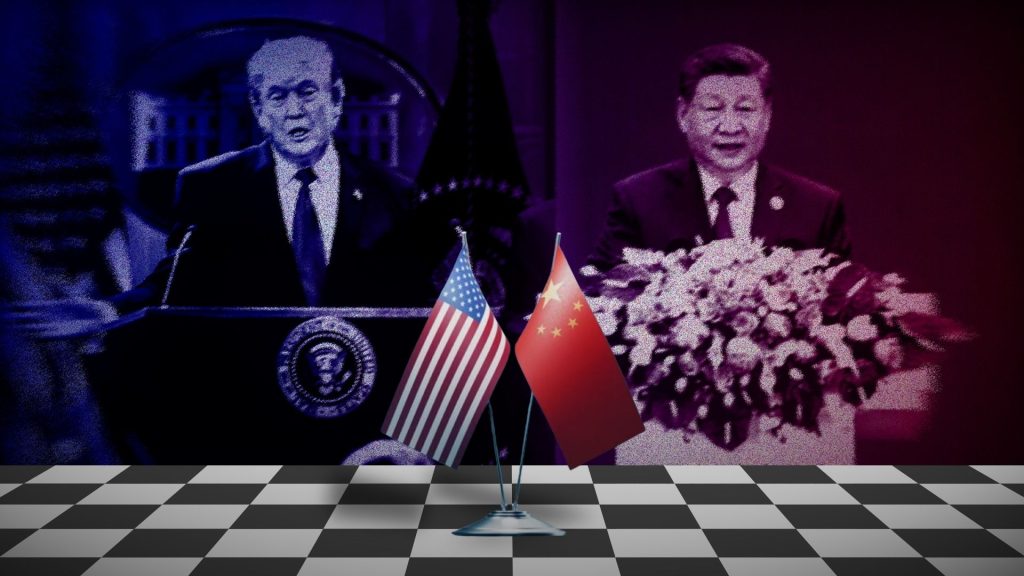
This is also why reducing the debate to a choice between the United States and China misses the point entirely. That framing is convenient, but it avoids the deeper issue. The real question is not which power benefits more. It is whether Filipinos meaningfully benefit at all. National interest cannot be assumed to exist just because foreign investment is involved.
I am not arguing against foreign partnerships. That position would be unrealistic. But I am questioning the ease with which participation is mistaken for progress. Being part of a supply chain is not the same as owning the chain itself, and being useful to global industries is not the same as having power within them.
And perhaps most importantly, Philippines does not lack relevance. It lacks control over how that relevance is translated into development. And if we are not careful, we may find ourselves repeatedly included in futures we help build, but never truly shape.
Pax Silica is being presented as a gateway to the industries of tomorrow. But a future where we supply the minerals, provide the labor, and host the infrastructure while others own the systems and reap the returns is not progress. It is a dependency refined, modernized, and made harder to recognize.
And that, more than anything, is what makes it worth paying attention to.