









Now Reading: Tacloban school shooting incident sparks debate on lowering age of criminal responsibility
-
01
Tacloban school shooting incident sparks debate on lowering age of criminal responsibility
Tacloban school shooting incident sparks debate on lowering age of criminal responsibility


Marvin Laurente
The recent Tacloban City school shooting incident involving two minors has reignited debates over whether the Philippines should lower the age of criminal liability.
The incident prompted renewed calls from government officials and law enforcement authorities to revisit existing laws on juvenile justice, while lawmakers and child rights advocates pushed back against the proposal.
Under the amended Juvenile Justice and Welfare Act of 2006, or Republic Act No. 9344, a child aged 15 or below is exempt from criminal liability but is subjected to intervention programs.
Those above 15 but below 18 years old may still be held criminally liable if they are proven to have acted with discernment.
Following the incident, Senator Robin Padilla reiterated his call to amend the Juvenile Justice and Welfare Act and lower the age of criminal responsibility from 15 to 10 years old.
“Sa aking mga kasamang senador, sana bigyan niyo naman ho ng panahon at pagkakataon ‘yung aking panukala, i-amend na natin ‘yang Juvenile ano na ‘yan,” Padilla urged fellow senators.
The Philippine National Police (PNP) also expressed support for lowering the age of criminal responsibility, although it proposed setting the minimum age at 12 years old instead of 10.
“The PNP is supporting lowering the age of criminal responsibility… We are thinking 12 years old,” PNP Public Information Office chief Col. Allen Rae Co explained.
When asked why the PNP favors lowering the age to 12, Co cited statistics showing an increase in the number of children in conflict with the law (CICL).
“As a matter of fact, we studied the data, our statistics show that the number of children in conflict with the law (CICL) is increasing. For us, we also consider whether they acted with discernment. We cannot arbitrarily include them; we still need to determine whether they understood their actions,” he added.
Malacañang noted that President Ferdinand Marcos Jr. is open to studying proposals that would lower the age of criminal responsibility if the measure proves beneficial to both youth development and law enforcement efforts.
“Kung ano po ang makikita na version ng Pangulo at kung ito naman ay magiging mas makakabuti sa ating mga kabataan at sa pagpapatupad ng ating batas, sasang-ayunan naman po ng Pangulo yan,” Palace Press Officer Claire Castro said during a press briefing.
However, senator Francis “Kiko” Pangilinan, the principal author of the Juvenile Justice and Welfare Act, opposed the proposal, stressing that minors involved in crimes are not exempt from punishment and that parents may also be held accountable.
“Minors who commit crimes should not be released. That is wrong. It is against the law,” Pangilinan reiterated during a Facebook livestream on Tuesday.
He argued that the strict implementation of existing laws, coupled with stronger family and community support systems, would be more effective in preventing juvenile crime than lowering the age of criminal responsibility.
Manila Rep. Joel Chua pointed out that youth violence cannot be addressed
solely through harsher legal measures.
“The real answer lies in restoring proper values, the loving guidance of parents and teachers, affordable access to mental health professionals, and leaders and elders who can serve as good role models for the youth,” Chua stressed.
Human rights groups also voiced opposition to the proposal.
Amnesty International Philippines urged the 20th Congress to oppose efforts to reduce the minimum age of criminal responsibility and to focus instead on proven, evidence-based approaches that safeguard both children and communities.
“The pursuit of justice for the victims of the Tacloban school shooting must never come at the expense of children’s rights. In moments of grief and public outrage, the government must resist punitive responses that have repeatedly proven ineffective and instead uphold its mandate to protect every child while ensuring accountability by upholding human rights standards,” the organization said.
In a Facebook post, the League of Filipino Students (LFS) likewise condemned Padilla’s proposal, arguing that the focus should instead be on addressing violence, impunity, and failures in governance rather than imposing criminal liability on younger children.
“Pinagtatanggol mo ang mga kriminal sa gobyerno pero gusto mo unahing tugisin ang mga 10 years old lang? Ang ugat ng problema ay ang culture of violence, impunity, hindi intelligence at security,” LFS Chairperson Gabriel Magtibay stated.
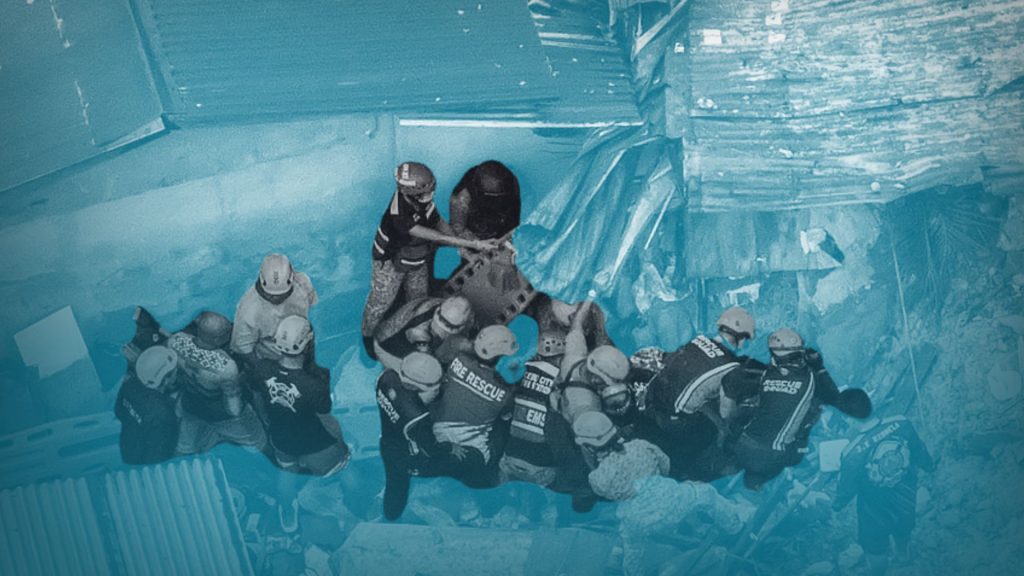
Calls to lower the minimum age of criminal responsibility resurfaced following the shooting incident at San Jose National High School in Tacloban City involving two students aged 14 and 15.
The incident resulted in the deaths of three students and left 20 others injured.