









Now Reading: The 20-peso dilemma
-
01
The 20-peso dilemma


It’s ironic that for an administration that promised to resuscitate the agrarian sector, President Ferdinand “Bongbong” Marcos Jr. seems to have a skewed perception of fixing the food crisis in the country.
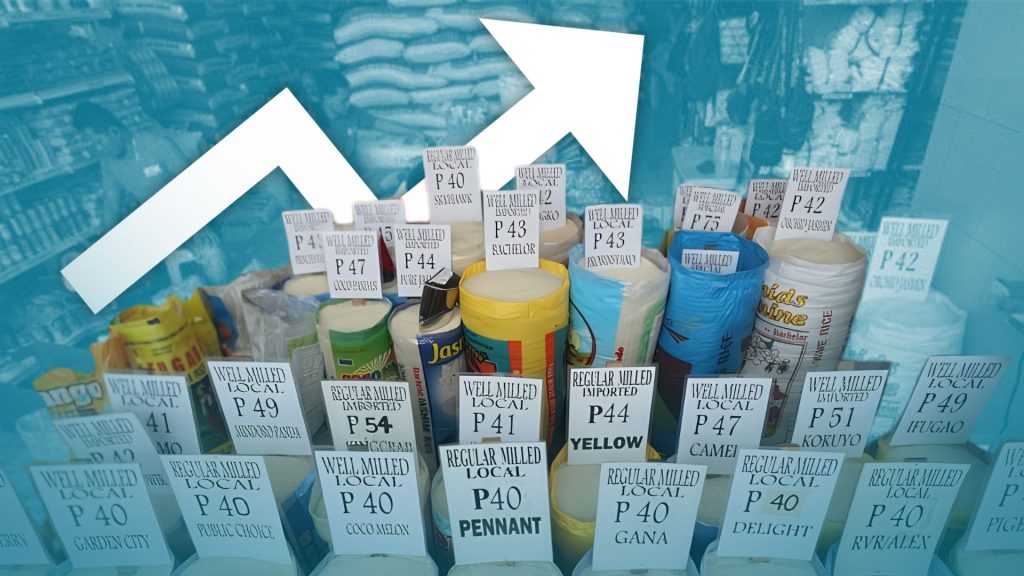
In his recent State of the Nation Address, as well as the previous ones, the administration promised to keep the rice prices at the twenty-peso cap, only to fail nonetheless. Well, he said there’s success—but I wouldn’t call wasting money to force the price down a success when there’s an easier and cheaper way to do it, which is to take care of your farmers literally.
Isn’t it so obvious that perhaps, just maybe, the problem is never in the price, but the nation itself that keeps forgetting its agrarian roots? Farmers across the country are declining in number as the years go by due to crippling debt, lack of proper government support, and threats to land ownership. This Peasant Month, the same calls echo in every farmland—Afford our farmers basic human decency!
No land’s man
Many agrarian lands were usurped by private corporations by forcing them to sell their titles through ludicrous means. Worse is, these situations are not illegal in the law, and for farmers with nothing to offer to lawyers, the odds are worse.
In a 2022 report by the Philippine Center for Investigative Journalism (PCIJ), information specialist Prescila Igtiben of Imus City Government revealed that two “Magsasaka Siyentista” awardees, Noel Bautista and Benjie Ilas, no longer farm after selling their lands to private corporations. Apparently, developers built structures around their farms, resulting in blocked roads, reduced soil fertility, and damaged irrigation systems—making the land untillable.
The problem is, RA 6657, or the Comprehensive Agrarian Reform Law, Chapter XV Section 65, allows for land conversion once the area is no longer suitable for agriculture. So, if you are a developer who wants to develop a place, just buy the land indirectly. After all, who will blame the developer for building structures around farmland legally?
But if you want the soil to be healthy, you can just claim that the farmers are squatting illegally in the farmland without any deed. If the farmers resist, you have the right to chase them out of the lands through violence—this is what’s happening to many contested lands, most especially Lupang Ramos and Lupang Tartaria. If you need a more prominent example of the case, the Hacienda Luisita massacre is a gruesome reminder of the Cojuangcos’ abuse of power.
These are all promulgated by the government’s lackluster approach to agrarian reform. Years since the fake reform pushed by the Marcos Dictatorship leading to the disenfranchisement of generations of farmers, the agrarian sector has been waiting for genuine change—one that truly recognizes the values of the hands that feed the nation—and the son of the dictator could have done just that, yet his focus on the price cap fails to recognize the inherently rotten problem born out of an agricultural-turned-industrialist state.
Now, the half-assed agrarian programs pushed by the government are akin to a slap to the face of every farmer fighting for their land, a brief relief that never solves the problem at its root, because the truth is, the benefits of commercial lands owned by those in power are sweeter than giving farmers what they truly deserve.
‘No Future’
In the same PCIJ report comes a harrowing revelation: No one wants to farm any longer.
The older farmers are slowly disappearing, and their children know better than to inherit a responsibility that does not bring any benefits. A dying industry that the country itself is burying before it inhales its last breath.
Truth is, no matter how many programs or incentives the government provides, as long as they don’t see our farmers eye to eye, the 20-peso price cap will always be a sham. What the administration should be doing is to reallocate the subsidies put into capping the price into boosting the agrarian sector and safeguarding its workers.
However, currently, the tariffs for rice importations is only at 15%, impeding the profit of local farms. While the Senate is urging the President to increase the tariffs to 35% in lieu of the storms, should the farmers wait for disasters to strike before the administration focuses on local industries?
In fact, their efforts to support the farmers during typhoons is a sham: According to UMANI Production, despite the announcement of the Department of Agriculture to borrow P3 billion for emergency procurement of fresh palay, the farmgate prices remain as low as P5 to provinces—when they promised to buy wet palay for P17/kilo and dry palay for P23/kilo to aid the farmers in the crisis.
This issue isn’t only a problem today. Farmgate prices have always been low—yet for some reason, the retail price always doubles or triples the cost, burdening the consumers. We are paying for more while our farmers are earning less. Where does the money go?
Worse is, the efforts of the government to subsidize the price of rice became an excuse for traders to further haggle with farmers on farmgate prices to “compete with the lower cost of rice from the programs.”
So, the solution shouldn’t be about subsidizing rice prices—that’s only a band-aid solution to the glaring problem of the unrestricted power of traders against farmers. It is questionable that traders get so much profit from processing rice while the farmers only get a quarter for their efforts.
Shouldn’t we propose a bill to protect the welfare of farmers by making farmgate costs higher and retail costs lower? Shouldn’t the Philippine government update the agrarian reform laws to ensure that no farmer will sell their land due to circumstances forced on them?
There’s no question why no one wants to farm anymore. Your land is being taken away from you, while the prices keep on increasing, and your profit is only getting lower. Agricultural country? P20 rice? What a joke.