











Now Reading: The cage breaks, but the machinery of terror remains
-
01
The cage breaks, but the machinery of terror remains
The cage breaks, but the machinery of terror remains

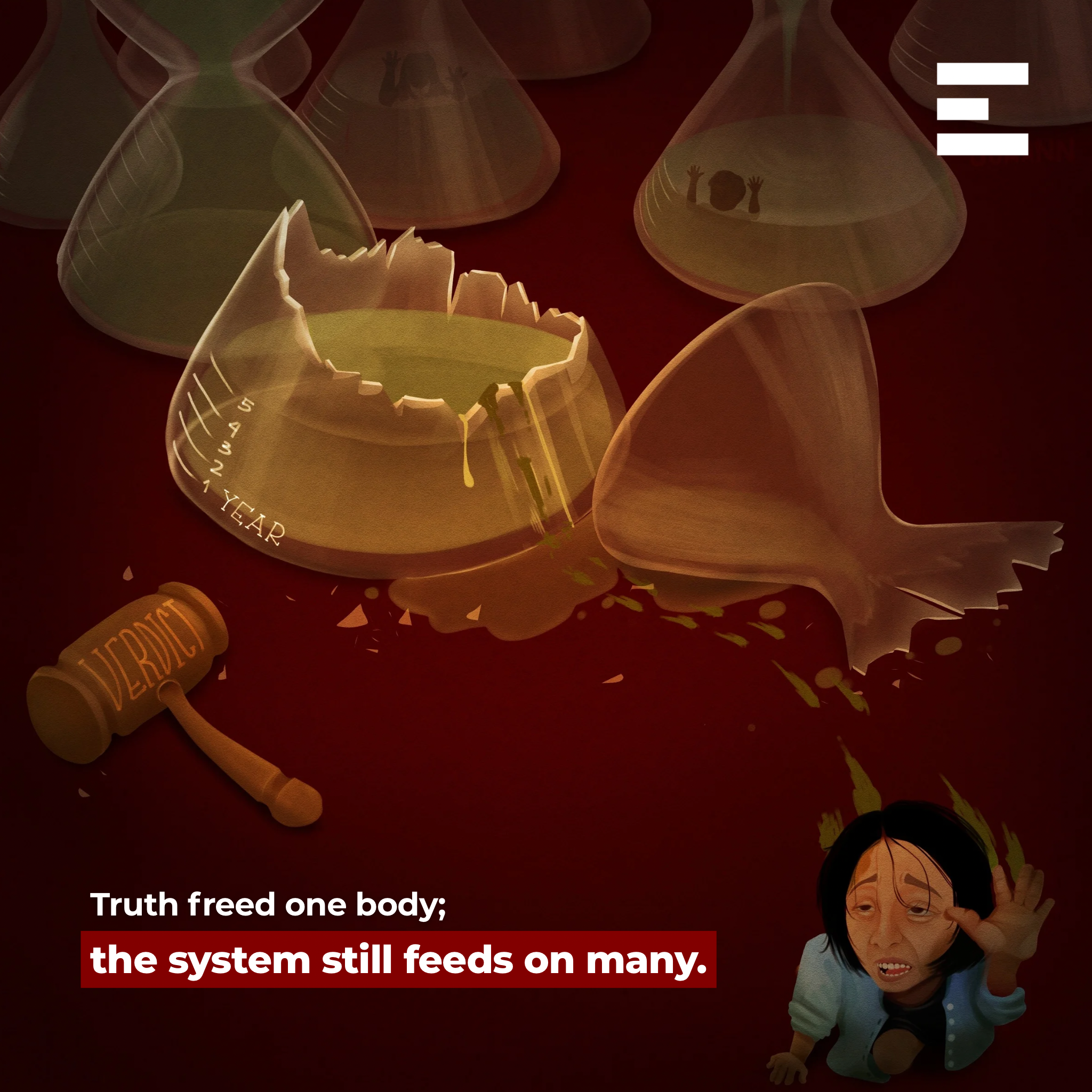
A mother, a model student of the University of the Philippines (UP), and a loving daughter – all markers of which society might perceive what an ideal “woman” should be.
But in the machismus that is Philippine society, matched with an equally testosterone-driven administration from 2016 to 2022, women of the new type find themselves at odds with not only social norms, but also what is considered legal by those in power.
Amanda Echanis’ acquittal, although to be much celebrated, must be met with a realization that to call this a triumph of the Philippine justice system is to misunderstand the very nature of the injustice that occurred.
The acquittal is not a vindication of our legal institutions nor democratic rights but it is a damning indictment of a state machinery that weaponizes time to steal the lives of its dissenters.
For five years, Echanis was behind bars on charges that the Tuguegarao City Regional Trial Court has now declared bereft of “proof beyond reasonable doubt”.
The court found that the prosecution failed to establish the essential elements of the crime, citing a “patent lack of substantial compliance” with the rules of engagement during the raid on her home.
From 2020, activists, peasant organizers, and students like Echanis have done the same thing over and over again: review the evidence; and that the entire prosecution was dubious, the process was flawed, and the intent was persecution, not prosecution.
But not only was it five years of effort for those in defense of Echanis which was put in for her. For Echanis and her son, Randall, it was the state stealing the life of a mother and her child, detaining them on trumped-up charges of illegal possession of firearms and explosives.
That child is now five years old. He has spent his entire formative infancy in the shadow of a prison cell, a victim of a system that does not distinguish between a mother and a “terrorist,” between a peasant organizer and a criminal. Who pays for those five lost years? Who returns the time stolen from a mother and her child?
Echanis’ case and the evidence used against her are marked practices of the Duterte administration. It is the classic reyd-tanim-kulong scheme, a tactic of state forces to silence those who dare to organize the masses. Her case was non-bailable, to ensure that even if the accused is eventually acquitted, the punishment has already been administered through years of pre-trial detention.
It is a process where the jail time is the verdict, delivered long before the judiciary can bang the gavel.
And it is ironic that the very administration that did so is facing the same fate, over 10,000 kilometers away, in the Hague.
While the state, especially the National Task Force to End Local Communist Armed Conflict (NTF-ELCAC) moves in blitz to red-tag and arrest student leaders and activists, they move with a glacial pace when the truth is demanded of them. As noted in the court’s decision, the integrity of the search was “highly dubious”.
Yet, these agents of the law, who bypassed the mandatory hierarchy of witnesses and delayed the search without explanation, remain shielded by the very institutions they corrupted.
It is an irony that echoes the plight of students facing subpoenas for simply exercising their democratic rights. The state fears the youth, the organizer, and the writer because they expose the rotting foundations of the current order.
Amanda Echanis, even from behind bars, refused to be silenced, making history as the first political prisoner elected to the UP Diliman Student Council. Her victory in the polls was a testament that while they can imprison the body, they cannot shackle the spirit of resistance.
But let us not be lulled into complacency by this single release. The acquittal of one is not the freedom of all. There are nearly 700 political prisoners still in detention centers across the Philippines, many facing the same fabricated charges that stole five years from Amanda Echanis.
The machinery that manufactured the evidence against her is still operational. The “serve and protect” motto remains a farce as long as it protects the powerful and serves warrants to the persecuted.
In the end, Amanda’s freedom proves that the state’s narrative was a lie. But it also reveals a horror about our current governance: it is a system that is willing to devour its own citizens–mothers, poets, students–to maintain a fragile status quo.
The challenge now is to broaden the fight. The cage has broken for Amanda, but the struggle continues. We must demand not just the release of all political prisoners, but the dismantling of the very machinery that put them there.
Until then, justice remains a concept delayed, and in the Philippines, justice delayed is a freedom stolen.