


Now Reading: Through The Lover’s Lenses: In Film, Flesh, and Fragments
-
01
Through The Lover’s Lenses: In Film, Flesh, and Fragments

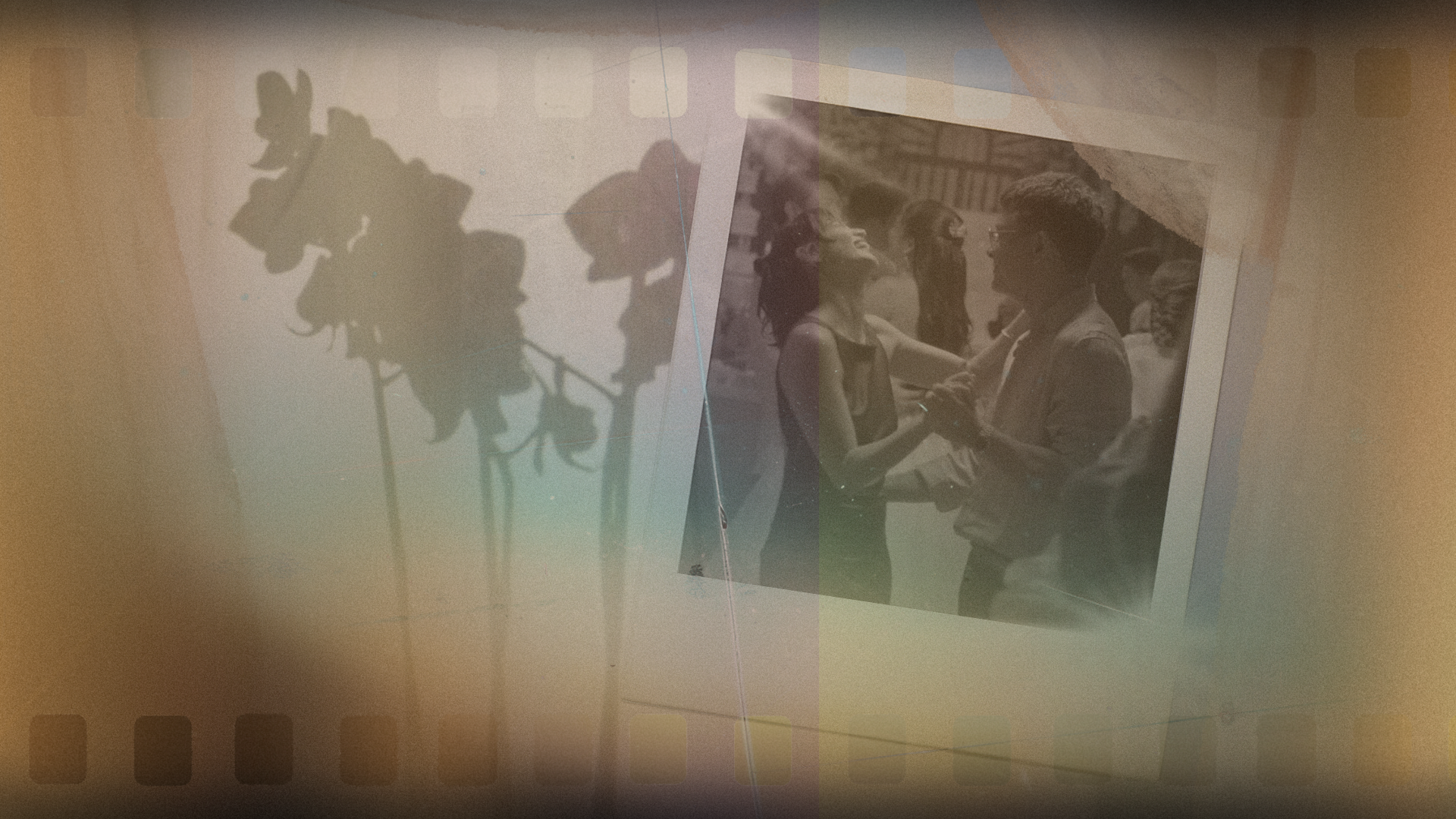
A little while before the 14th of February, when hearts brimming with warmth are meant to be commemorated, the well-renowned Irene Emma Villamor offered something far from the usual romance. Through her direction, love was rendered fragmented and fragile, seen through an unfamiliar, unfathomed lens.
Amidst the garnering sentiments, what somehow slipped through the cinephiles’ and casual movie-goers’ minds is the divulged inspiration of the film. That Eric and Ellie’s love story goes beyond the script and screenplay, which makes the enactment through voice and flesh resonate hauntingly, for it has been deeply rooted in Roland Barthes’ book, so named “A Lover’s Discourse: Fragments”.
While many of the Filipino masses were anticipating Cupid’s arrow and its promise of a perfect match, Viva Films and Cornerstone Studios instead delivered a story that felt less like a love letter and more like a lingering question. In which the persistent act of waiting, where patience has been stretched painfully thin, has truly become the measure of a person’s longing. Yet, any amount of time will never be enough if one chooses to bloom in their own becoming, while the other is committed enough to keep on with the dragging.
Starring Jericho Rosales and Anne Curtis, an exceptional narration of a decade-long love told through the perspective of the lover — in the desperate belief that he is the one who loves more.
This phenomenon is experienced across skins and synapses; from the writing of the mastermind of melancholic movies, and stirred stunningly by a French author and philosopher’s definition of love in snippets summed up in a book’s spine.
The Lover’s Lonesome Language
Perhaps that is the motive behind the movie The Loved One — to shed light on the gray areas between what it is to love and what it means to be loved. Through Eric’s stance, love is not a shared language but a monologue, a discourse told by the lover. It seems that it would explain why the movie opened with Eric’s soliloquy of suffering.
In this sense, his story resonates with Barthes and his creation “A Lover’s Discourse: Fragments”, where love is dissected not as a mutual contract but as the speech of the one who waits, longs, imagines, and suffers. Eric and Ellie became trapped in their own desperate desolation of what seemed to be a love that is always narrated by the one who deems to feel more — and in this film, it was Eric whose voice echoed through the walls of the cinema.
“Dahil ako ang mas nagmahal, ako ang laging naghihintay.”
The first to arrive at a table for two, the desperate act of double-texting, and watching the door finally swing open. The movie opened with the scene where Eric is sitting by himself in a cafe, eyeing the door intently, keeping his phone on his hand; his mind runs like a search engine, scouring a justification of why he has been in the same role ever since, the one who precedes, excuses the delays and apologies — glued in his seat, waits patiently.
In this moment, Eric becomes the very figure Roland Barthes describes in the fragment “Waiting” in A Lover’s Discourse: the lover who organizes time around the anticipated arrival of the beloved, staging a quiet drama where every passing minute grows heavier with meaning. Waiting becomes a performance of love itself, where the lover rehearses doubts, hopes, and imagines explanations while remaining seated in the same place.
At some point in time, most of us have been in Eric’s position, in which the act of waiting has long been a romanticized action. Barthes suggests that the lover’s identity is ultimately tied to this very act: “Am I in love? — Yes, since I am waiting…The lover’s fatal destiny is precisely: I am the one who waits.”
Eric embodies this identity, believing that endurance is proof of devotion. To him, arriving first, replying faster, or staying longer is not merely a habit; it is a quiet declaration that his love exceeds the other’s. Thus, waiting becomes asymmetrical, where the one who loves more bears the burden of patience.
“Love turns ordinary people into poets, philosophers… and monsters.”
Eric spoke this line in the aftermath of their intimacy. Perhaps this is the perception of someone outside the relationship, or someone analyzing a connection that has already ended. As for those who adore, being vulnerable to speak, being able to break the walls of possibility, and becoming their greatest fear is what it means to love truly and unruly.
As it is told to appear monstrous from the outside, it may just be the lover’s internal eruption of language and feeling, the very condition Barthes describes when the lover becomes consumed by the experience itself, overwhelmed by the intensity of loving. This resembles the fragment “to be engulfed” in Barthes’ pages, where the lover does not simply feel love; he is submerged by it, just as Eric’s love for Ellie does not remain a tranquil affection but inflates until it occupies the entirety of his interior world.
The ordinary gestures he performs transcend into poetic lines as they seep with longing; his reflections become philosophical as he constantly tries to justify, understand, and sustain the feeling that overtakes him. Yet the same devotion can hide under one’s bed and haunt them; a beast that has been taunted by the prolonged time, as it watches every movement, and any mark of uncertainty unleashes the rage.
“I feel like I’m losing you.”
A parallel display plays as Barthes writes that desire remains the same whether the object is present or absent; the intensity of longing does not diminish simply because the beloved is there. If this is the case, then the object is, in a sense, always absent. For Eric, even when Ellie was physically beside him, the void he carries cannot come to a close. Her presence does not resolve his desire but instead sharpens it.
He seeks what she cannot yet give: the assurance of permanence, the promise of marriage, the certainty of an entangled life. Ellie, however, was never meant to be unmoving. Yet Eric, in the depth of his love and sacrifice, continued to hope that time might soften her resolve, that she might one day choose to abandon her own life-seeking to build the future he imagined with her.
In those ten years, Eric has submerged and diluted himself into the life he has long waited for with Ellie. Each passing second that Ellie shows no certainty in settling down quietly erodes his sense of self, until the life he once inhabited disperses. Through those words he uttered about him losing her, Ellie was there, standing before him. Then perhaps the solemn statement he is truly declaring is whether, somewhere along the years of waiting, he has gradually lost himself.
The Other Side of the Monologue
Barthes refers to the beloved as atopos, which means “unclassifiable” or “singular.” Ellie, at the beginning, is a woman in the midst of becoming. She is full of motion, purpose, and frontiers yet untamed, till Eric gradually sculpts her into the shape of every dream he bore on his shoulder: the one he has waited for, the mother of his children, the soul of his home, and the constant of his lifetime. All the while, the breathing complexity of Ellie’s identity is pressed like a petal between the pages of his narrative. What is fluid in her becomes fixed in him. Her “not now” hardens into rejection. Her hunger for growth is mislabeled as instability. Her evolving love is audited and found lacking.
“Don’t you dare use me to heal your trauma.”
Depending on the weather of Eric’s emotions, Ellie is defined only as either a promise fulfilled or a promise broken. In reference to Barthes’ theory, where the loved one is often silenced — or simply does not speak — Ellie, as the beloved, remains the still axis around which the lover’s language spins. In the movie, even when Ellie speaks, Eric fails to truly hear her, to see her fully for who she is. For instance, every time Ellie shares her dreams, Eric masks his ambivalence behind polite nods and smiles, yet over time, a subtle unease hangs around because this is not the Ellie he desires.
Nonetheless, Ellie absorbed the sharp edges of his ire much as shorelines endure relentless waves. This suggests that Eric’s insistence that he “loved more” gains force precisely because Ellie barely retaliates. Her silence becomes a blank wall onto which he projects his fears, insecurities, and unresolved anguish. The less she speaks, the larger his speech swells.
“Kapag kasama kita, nalulungkot ako.”
From a psychoanalytic perspective, Ellie can also be understood as avoidant-leaning secure. She is not incapable of commitment, only that she is wary of enmeshment. Coming from a bubble of privilege, Ellie does not anchor herself to romance as a lifeline. For her, marriage is a covenant that must be entered freely, at the right season and reason, by two people who have chosen it without coercion. It is neither a trophy to prove devotion nor a deadline to secure permanence. Hence, when the same love begins to shrink the world she once roamed freely, she defies to be swept along at a pace she cannot keep.
This reveals that being loved is not always a sanctuary after all.
When Love Looks Back at Itself
Two hearts that once moved in quiet unison now sit across from each other in a small café, separated only by a table and the years that have quietly gathered between them. What once filled a decade of their lives now lingers as a figment they can only pine over.
Ellie appears composed, almost gentle in the way she carries herself. There is a calm openness in her presence — she has come not to argue but simply to talk without reopening the wounds that once hurt them both. Across from her, Eric carries a quieter tension. His stillness holds the weight of things left unresolved.
The monochromatic filter does not only imply the melancholic spirit of the post-breakup. The screen’s loss of color signifies how the vibrant hues of their love story have slowly faded into memory, while the stark contrasts hint at the differences that once stood too sharply between them. Here, we sit with them from afar — sharing a mellow cup of coffee with Ellie and Eric, pausing long enough to reflect on the fragile ways love moves through our own lives.
“I meant when I said I love you still.”
Ellie stays momentarily and then flees, while Eric is left nailed in his position, immobile. Ellie was never the type of person you would catch static; she has always been someone in motion, someone who refuses to remain inside a life that no longer feels her own. Eric, however, belongs to the opposite rhythm. His love has always been patient, rooted, almost architectural in the way it illudes permanence. In Eric’s utterance, the term “still” may mean either of two things: that his adoration for her is persevering, or he is only fond of her when she is unmoving.
In Barthe’s book, the lover often ends up loving love itself, the condition of loving, rather than the object being loved alone. Eric’s stillness reveals this paradox. What he holds onto in that moment is not only Ellie as she is now, but the entire discourse of loving her: the years of waiting, the imagined future, and the fidelity that had kept him dragging two feet to its end.
“For me, saying ‘I love you’ has become a question.”
Something that once sounded firm and certain now trembles and is delivered with doubt. Barthes writes that the phrase “I-love-you” is not merely a declaration, but an act that constantly seeks reassurance. Eric’s confession becomes less of a statement and more of a fragile inquiry: Does this love still mean the same thing to you as it does to me?
From Eric’s side, love was never meant to be casual or provisional. That entering a relationship meant assuming a form of responsibility, allowing another person to become part of the architecture of one’s life decisions and priorities. To invite someone into that space was to promise that they would be sculpted to the image they have been molded in the other person’s head, and if they disagree, the love is left to be interrogated with daggers of inquiry.
“How did we become these angry people? Hindi naman tayo ganun.”
As the heart knows otherwise, this is where the notion of differentiation finds a place for Ellie. Her fear was never of Eric himself, but of losing herself inside a love that had turned into a ruthless arithmetic of efforts, faults, and lapses. She chooses to leave not because she has nothing left to reciprocate, but because there is just too much misalignment, constriction, and resentment clouding even their own shared orbit.
Ellie is the image Eric could not fully see beyond his own longing. When she steps away, she fractures the image he had so deliberately held together, and the shards cut with the piercing realization that to love someone is not to claim dominion over their timing, their growth, or their unfurling. It is not love to confine someone within the vase of our liking, then turn toward another who seems to fit the contour we imagined. Ellie was never the villain. She was simply the beloved who refused to stay trapped inside someone else’s discourse.
“Mahal mo ako ngayon tapos biglang… hindi na?”
Looking softly, what Eric and Ellie went through need not have been a courtroom of misdiscerned grievances, if only they had taken turns at the table of dialogue. Too often, couples treat communication like a puzzle of filling the air with solutions or reassurances, when what it truly asks is mere company, attention, and recognition.
Seen in this light, we awaken to the idea that what went wrong was not their passion, but the pledge to tend the living thing that every relationship requires. Had they laid their cards on the table, unrolled the map of their hopes and visions for each other to read, much of the shadow between them could have lifted. Or perhaps, it would not have taken ten long years to see that they had been standing in a light that was never truly theirs.
A netizen said that “being in a relationship means carrying parts of someone else’s happiness,” and yet both Eric and Ellie wavered beneath that weight. Love, at its most patient, is like a flower: it must be watered and cared for every day, even when its roots have burrowed deep over long years, or it risks wilting under neglect.
Who, Then, Is the Loved One?
Throughout the movie, the debate storms over who loved more, who loved less, and who really is “the loved one.” In the quest for answers, it may be sharpened that both Eric and Ellie are the loved ones in their own unique cadences.
“You’re a f*cking storm, you’re just gonna destroy me.”
In heightened screams, words that slipped in his tongue that cut through his amorous one, Eric interprets enduring and fighting as loving more — but Barthes would say that the intensity of speech does not equal the depth of love and only reveals who is speaking. Ellie’s love does not trumpet its sacrifices across the room, but it is very much a sentient kind that whispers, “Does this still nurture us both?” When the denial goes undeniable, her love rises as empathy that outweighs the pull of possession. It is in the final act of letting go that Ellie offers the greatest gift of unchaining two hearts that have long repelled each other.
“You know me better than anyone else… but it also means that we can hurt each other more than any person.”
As Director Irene expounded in her interview, she drew inspiration from Barthes’ book but transformed its logic into emotion. Where Barthes probed love after it ended, The Loved One plunges us into the raw, unguarded experience of heartbreak. The film is far more than art — it resonates because it feels painfully real. For some, it is a tunnel vision, a private story of longing; for most, it is a mirror of past loves or present connections. Through her lens, we see love in full color: the joy, the grief, the nostalgia, and the cradling interludes even upon separation. And gradually, the world turns black and white — the visual echo of two people, like Ellie and Eric, learning to return to their own flesh while carrying fragments of each other.
“We are busy finding faults instead of focusing on what made us good.”
In the book, Barthes eventually figured out that love is not always meant to be viable; it does not have to be measured under the worldly ebbs and flows of longevity, social stability, or productivity — but rather by the intensity of the shared experience itself. “Is it really better to last than to burn?” In the film, then, we are reminded that love is not gauged by the sense we can make of it — but by the way it leaves us, alive, aching, yet in all ourselves again.