







Now Reading: When ranking isn’t the reality
-
01
When ranking isn’t the reality

Junel Fiestada and Kate Alvarez
Climbing the ladder, reaching the top, and achieving greater heights are aspirations shared by developing nations. In the same manner, climbing higher in global ranking is a proof of a country’s competitiveness. Yet not every improvement is a triumph. It may be the same ladder, but never the same ground. We may rise higher, but still be stuck in the same problems.
The Philippines went up four places in a global competitiveness ranking, earning a score of 59.07 in the Institute for Management Development World Competitiveness Center (IMD WCC) index. Rising from 51st to 47th, the evaluation centered on the four pillars of sustainable competitiveness: economic performance, government efficiency, business efficiency, and infrastructure.
Despite this improvement, we still lag behind Southeast Asian countries covered by the report, placing 4th out of 5 and 13th of 15 among nations in the Asia-Pacific region. The IMD WCC cited key challenges that affect the Philippines’ competitiveness, including inflation, risks of corruption, government responsiveness, education, and climate change mitigation efforts.
We’ve risen up, but where exactly are we headed to?
If there’s anything evident, it’s the inefficiency of the Philippine government. Citizens have been labelling the upper house as “senateflix” due to their dramatic and series-like arguments. These include Sen. Robin Padilla threatening Sen. Kiko Pangilinan with an ethics complaint after heated exchanges, the arrest of Sen. Jinggoy Estrada, and the hiding fiasco of Sen. Bato Dela Rosa from his International Criminal Court (ICC) warrant of arrest.
Needless to say, the drama is rather time-consuming and disappointing, considering that the money that runs these senseless sessions is from the pockets of the Filipino people. They are not only wasting time, but also our hard-earned money.
The economy offers little reassurance either. The Congressional Policy and Budget Research Department (CPBRD) recently found out that we are experiencing stagflation—a period of slow economic growth accompanied by rising unemployment rate and high consumer prices. This is reflected by slowing GDP growth rate at 2.8 percent, deemed as the weakest expansion. On top of that, inflation is skyrocketing at 7.2 percent in April 2026 along with unsurvivable high energy and gasoline prices.
“The hypothesis is straightforward. The oil supply shock raised the costs of critical inputs and shifted the supply curve inwards. In response, the government can moderate its spending, decrease the tax burden, and, in doing so, reduce the other costs of doing business,” says CPBRD.
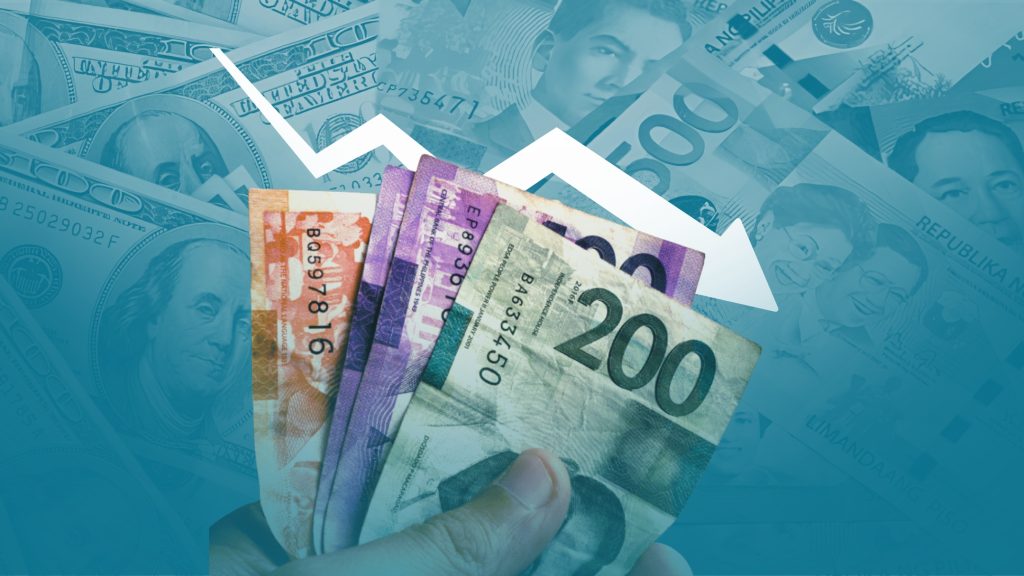
The weakening peso reflects these economic pressures. From around ₱56 to one US dollar in previous years, the exchange rate has roughly climbed to ₱62 in just the second quarter of the year. Consequently, the purchasing power of Filipinos has steadily declined. Compared with 2018, every peso today buys significantly less. A grocery budget of ₱1,000 in 2018 would now require approximately ₱1,369.86 to purchase the same basket of goods.
On the other hand, Business and infrastructure remain areas requiring urgent attention. Labor, technological infrastructure, agriculture, education, and healthcare continue to demand sustained investment and reform.
IBON Foundation asserted that the country’s labor force isn’t slowing down, but experiencing a crisis. Employment continues to fall from 50.2 to 49.4 in December 2025, and the unemployment rate surges to 2.3 million. Despite December tallying increased labor due to holidays, data tell otherwise. Empowering domestic agriculture and Filipino modernization could bolster the labor force as well as other industries instead of clinging to failed market and investment measures.
Education-wise, it isn’t any different. Studies point to declining student proficiency amidst the rise of Artificial Intelligence (AI). At the same time, the present generation’s cognitive abilities fell short compared to those of previous generations.
However, this isn’t simply a personal problem, but systemic. The education system needs revamping to ensure foundational mastery and grasp of knowledge in Basic Education. Support for teachers and focus on infrastructure should also be boosted. But how can they implement quality education if capacity building and training are unsupported, budgets are misappropriated, brain drain, and a far less conducive learning environment for learners?
Lastly, the looming public health of the Philippines contributes to its weaknesses. The Department of Technology’s Food and Nutrition Research Institute released a report containing figures on stunting growth at a staggering 25.3 percent. This is considered a “high public health concern” according to the World Health Organization.
An ironic shortage in the healthcare workforce also exists. Despite being the world’s largest labor exporter, nurses are understaffed and we only have about 8 physicians per 10,000 population. The play between health and economics continues to be determined by high out-of-pocket expenditure, leading to debt and limited access to care.
In the global lens, it is valuable that we present ourselves as holistically competitive and competent. After all, these rankings positively affect the country’s portfolio for investors and partnership opportunities. However, more than the global appeal, we must also listen to the lived experiences of Filipinos because it is undoubtedly the measure of true progress.
One cannot boast competitiveness when prices at sari-sari stores have doubled its value, government officials throw tantrums, small businesses are collapsing, MSMEs are receiving minimal support, safety codes of buildings are crumbling, and public infrastructures are still a reminder of desperation for many Filipinos. Because when people still question progress, these rankings become performative to mask the masses’ suffering.
A good ranking is commendable, but a dignified life is better. If the ranking is improving, so should our way of living. Going up the charts is as bad as being stuck with the same problem, because it begs the question: Who are we improving for? Who are we getting competitive with?