











Now Reading: Cloning isn’t infinite— and it took 20 years to prove it
-
01
Cloning isn’t infinite— and it took 20 years to prove it

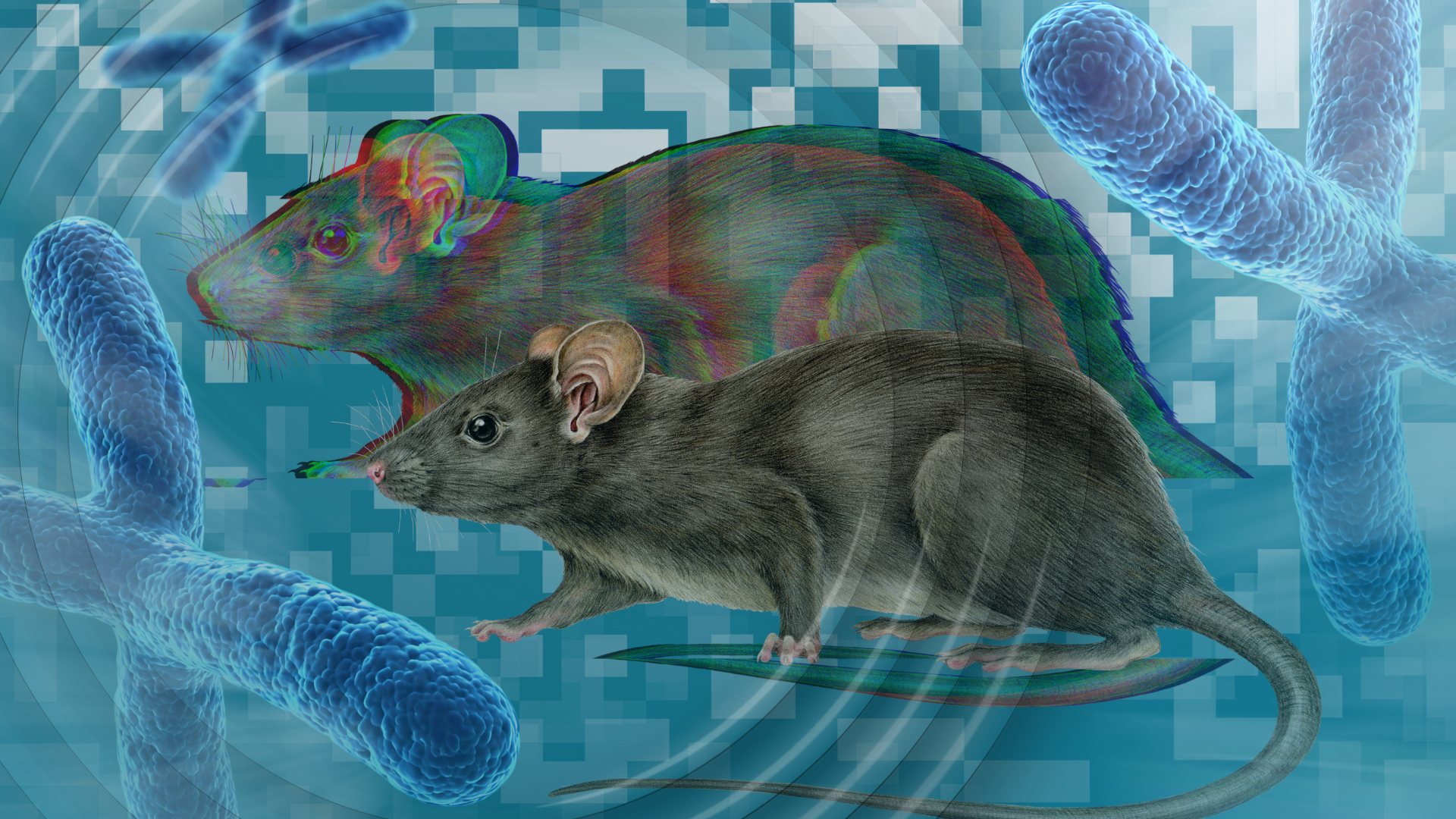
They kept copying life, until the copies could no longer live.
For years, cloning was seen as science’s closest attempt at perfection—a way to replicate life endlessly without change. But after decades of repetition, the more they copied life, the closer it came to breaking.
A long-term study has now confirmed that mammalian cloning cannot continue indefinitely, after researchers followed a single line of cloned mice across 20 years.
The experiment, conducted in Japan, started in 2005 when scientists first cloned a female mouse and used it to produce successive generations through continuous re-cloning.
Scientists used a cloning method called somatic cell nuclear transfer, where the DNA from a body cell is inserted into an egg cell with its nucleus removed. This technique creates a genetically identical organism.
And over the next two decades, they conducted more than 30,000 cloning attempts, producing over 1,200 cloned mice, with each generation copied from the previous one using the same cloning method.
At first, the results were promising. With its success rate reaching over 15% efficiency, early cloned generations appeared healthy, identical, and stable, suggesting cloning could be sustained long-term.
However, researchers identified a “critical turning point” around the 25th generation, when hidden genetic damage began to accumulate.
Over time, the effects became more severe. Survival rates dropped dramatically, reaching just 0.6% by the 57th generation, showing that the cloning process was failing.
The breaking point came at the 58th generation, when all cloned mice died shortly after birth, proving that cloning cannot continue indefinitely.
Cloning enables the precise replication of genetic material, supporting advances in medical research, disease modeling, agriculture, and regenerative therapies by allowing scientists to study and reproduce specific biological traits with greater accuracy.
However, the recent study revealed a limitation, where harmful genetic mutations accumulate with each generation— a process known as mutational meltdown— making long-term cloning unsustainable.
“We had believed that we could create an infinite number of clones. That is why these results are so disappointing,” said study’s senior author Teruhiko Wakayama of the University of Yamanashi.
While cloning remains valuable in medicine, agriculture, and conservation, it cannot serve as a permanent solution for sustaining populations or preserving species.
The experiment reveals a deeper truth about life itself: perfection cannot be copied forever. Over time, even the most precise copies accumulate errors—and those errors, eventually, become fatal.