

Now Reading: Here’s how NSPC changed the lives of these four campus journalists
-
01
Here’s how NSPC changed the lives of these four campus journalists
Here’s how NSPC changed the lives of these four campus journalists

Maria Samantha Cristobal
Some moments don’t stay on stage. They linger quietly, long after the lights dim, long after the applause fades, and long after everything else in between. NSPC is often remembered through medals and rankings, but there are parts of it that never make it to the podium. The parts that stay with you are softer, heavier, and far less visible.
Before the stage, there were years. Years of trying. Of showing up to competitions and leaving without hearing your name. Of watching others move forward while you stayed behind, wondering when it would finally be your turn. There were nights spent chasing deadlines, balancing schoolwork with training, learning how to carry both without dropping either. There were moments of doubt that came quietly, but stayed longer than expected.
And still, we continue. Because along the way, NSPC stopped being just a competition.
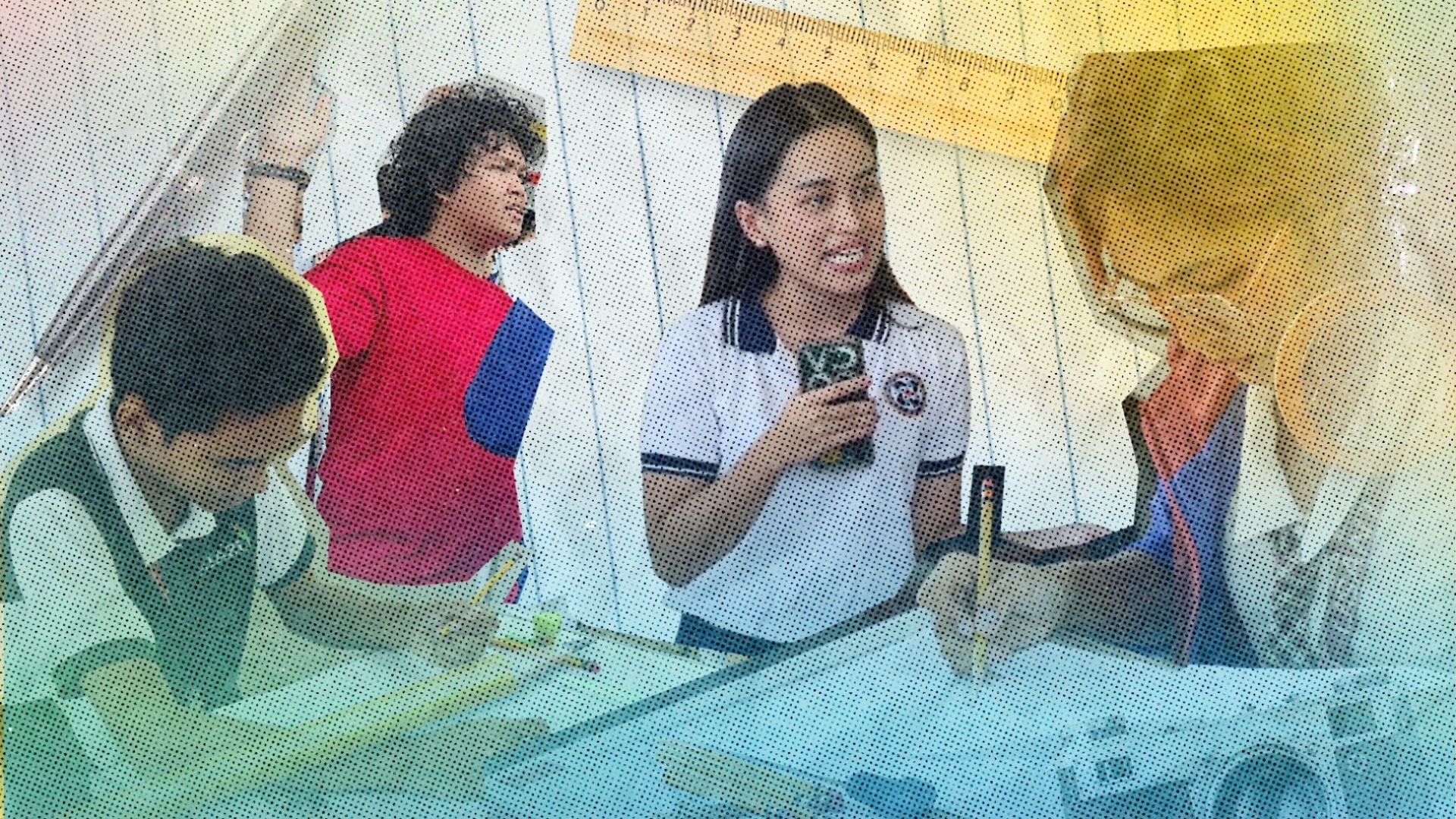
We interviewed four NSPC-winning campus journalists: Jascyl Sayson (NSPC 2023 Champion in Editorial Cartooning Filipino and NSPC 2024 MOCJ from R5), Caryl Opulencia (NSPC 2023 Champion in Pagsulat ng Lathalain and NSPC 2024 MOCJ from CALABARZON), Isaiah Hillario (NSPC 2025 Champion in Copyreading and Headline Writing from R3), and Gabriel Ibis (NSPC 2024 2nd Place in Science and Technology Writing from R5), to share their JOURNey before and after NSPC.
1. Before NSPC, who were you—both as a writer and as a person?
Jascyl: Before NSPC, I was simply a kid who loved to create and make sense of things through art. I grew up in a family of artists, so expression was something I learned at a very young age.
I entered campus journalism in Grade 3, learning the basics and slowly finding my footing. By Grade 5, I competed in my first ever DSPC and managed to qualify for RSPC 2016 as the first placer of my SDO, however, only placing 5th, back when only the top three advanced. The same thing happened during RSPC 2017. The universe blessed me enough to step on stage as the 5th placer, but not on the podium.
I learned early what it meant to fall short. But even then, I never really saw it as failing, but as returning to something I still wanted to master.
While balancing journalism with academics, I was also a swimmer. I trained, competed in regional meets like Palarong Bicol, and won medals, but never enough to reach Palarong Pambansa.
For the longest time, I was chasing two dreams in parallel, journalism and sports, both leading to the same goal: to stand on a national stage.
I wasn’t really the best but I was one stubborn kid who genuinely enjoyed what she did and refused to quit and kept trying.
Caryl: Before NSPC, I was someone who simply loved words. I loved poems, stories, and the freedom that came with creativity. Writing was how I expressed emotions I didn’t always know how to say out loud. There was a certain fulfillment in seeing my thoughts take shape on paper, and an even deeper pride in seeing my name printed in the byline, like a validation that my voice mattered.
I was also a very competitive person. As an achiever, I often attached my identity to recognitions and awards. So when people started telling me that I wrote well, and when I began winning in DSPC, RSPC, and other writing competitions, I pushed myself even harder. I experimented with different writing styles, expanded my vocabulary, and searched for ways to stand out. I wanted to be unique to impress judges. Journalism, at that time, became something I realized I could excel in, something I could add to the list of things I did well.
So at first, writing was really just about me, about how I could grow, improve, and succeed as a writer.
But through training, interviews, and the experience of producing an actual newspaper, I began meeting people from different walks of life, people with complex stories and silenced voices. Then came NSPC, where I encountered other campus journalists from across the country , individuals just as passionate, and often even more driven, than I was. Being surrounded by the country’s outstanding campus journalists was both humbling and inspiring. It shifted my perspective. Journalism became less about individual achievement and more about shared purpose.
That was when I began to understand that writing was never just about me.
Isaiah: [Answer to this question is integrated in the answers to the succeeding questions]
Gabriel: Before NSPC, I had a different discipline in writing, training built me, not only the actual NSPC. I liked to believe that it helped me in my discipline in both acads and journalism. It has a major role in how I conduct myself in all kinds of work, and I think that’s very helpful.
2. Can you share a specific moment during NSPC that changed the way you see yourself or journalism?
Jascyl: There were two moments. One that lifted me, and one that grounded me.
The first was during NSPC 2023, when my name was called as champion for Editorial Cartooning- Filipino (Secondary). For a moment, everything felt like it made sense. All the years of trying, the losses, and the sacrifices I had to make. It felt like everything I worked for finally paid off and that I was really meant for this.
The second was during NSPC 2024, my last NSPC, when my name (for the first time ever in joining press conferences) wasn’t called at all as part of the top 5.
And strangely, that silence taught me more.
Because I realized then that I didn’t need to always be the best to be worthy of what I do. That journalism was never meant to be reduced to rankings or medals.
It reminded me that what I do goes beyond rankings. That I was drawing and telling stories long before NSPC, and I can keep doing it even without being called on stage.
Caryl: It was during my second NSPC, my graduating year. I knew it would be my last, and the pressure was immense. I entered as the defending champion, and I had also been recognized as the Most Outstanding Campus Journalist of CALABARZON, and so expectations were really high, from others and from myself.
During the contest proper, we were given a topic, but there was no specific person or story to anchor the feature on. I found myself stuck. As a feature writer with a background in creative and literary writing, I knew what I could do if my goal was simply to win. I could craft a compelling narrative, create a character, build a realistic story, support it with existing data and statistics, and shape it into something powerful and featuristic.
And with one hour left, I had to decide. I chose not to. Instead, I wrote only based on what was provided. The result was barely like a feature article. And as expected, I lost. But despite that, I walked out with a sense of pride I hadn’t felt even in winning before. I may have written what I considered one of my weakest pieces, but I knew I stayed true to the principles of journalism. In that moment, I realized more clearly than ever that journalism was never about us, not about the awards, not about the recognition, but about integrity and truth.
That experience changed how I saw both journalism and myself.
Isaiah: Siguro right after NSPC, I didn’t go straight to my coach, maybe because bawal yung coaches. I went to the closest CR and I didn’t cry because it was hard or anything, but because I reached that far, that particular piece will be my last article that will be edited for the competition, and I realized that is very memorable and will be part of my core memories.
Sabi ko, “Thank you Lord for letting me experience that the last article I’ll edit is at NSPC,” and it really changed the way I see my life because I realized that kaya ko pala. Because I’ve been a journalist for 8 years, and in those 8 years, I never won. So it’s like stairs, I win [at] DSPC, then next year, wala, and so on. So I went through so much difficulty and sacrificed a lot.
Then I also had to balance academics at that time. And at that point, I realized that I can do it, as long as I won’t give up. I’ll just continue and believe in myself and those who believe in me, and of course in God. That moment also changed my perspective of journalism. Because at that time it gave me drive. So I told myself, it’s not the end. As NSPC is big, I realized, “What if ituloy ko pa? But this time, I’m going to widen my horizons and I’ll find ways to help as a journalist.” The world is so big, will I stop after the competition? No, because the world needs people to be voices of change.
Gabriel: Probably the opening. I just realized how many people there were, and how thankful I should be to have earned that competitive spot I was standing in. Before reaching the RSPC, you generally need to be a champion across 15 or so divisions in an area, and in every competition, there are about 45 different schools with 45 participants each. I remember for my division, Sci-Tech writing was a “full house”, an entire room was filled with writers, and it was the same during the Regionals. To have a spot in that competition is enough to make you realize that campus journalism is a big deal that we shouldn’t take for granted, unless we go into something deeper, and that is journalism.
3. What was the hardest part of your NSPC journey that people don’t usually see?
Jascyl: What people don’t see is that reaching NSPC is never an overnight victory.
It took years of losses, doubts, near wins, and missed chances just to step onto that stage. And when I finally did, that was only the beginning.
Carrying the weight of being the sole representative of your region was a different kind of pressure. The pressure was not just to perform, but to not disappoint people who believed in me before I even arrived. I wasn’t not just writing for myself anymore, but with expectations on my back, knowing that one output will define how far I go.
Every line, every idea, every output felt like it had to prove something.
Luckily, I was not alone, and I was able to get through the challenges through the help of my mentors, coaches, family, and fellow journalists turned friends.
The hardest part wasn’t the competition itself. It was everything it demanded from you long before you even got there.
Caryl: The hardest part was juggling everything behind the scenes. There was the preparation, the self-doubt, and the constant pressure to prove yourself again, especially after previous wins. But beyond that, there was also the reality that before being journalists, we were students first. Academic responsibilities were already heavy on their own, and we had to balance them with training, interviews, and producing a full newspaper.
There were also personal struggles happening quietly in the background, things people don’t usually see (I was personally grieving din kasi at that time) At the same time, there was the responsibility to gather and tell stories to listen to communities, to cover issues, and to remain updated with national events that seemed to shift every week.
It became emotionally draining. Journalism meant constantly absorbing other people’s realities, their struggles, their hopes, and their frustrations. Over time, you carry these stories with you, even when you barely have the space to process your own emotions anymore. That unseen emotional labor of balancing personal challenges while still showing up to tell stories with empathy and clarity was perhaps one of the most difficult parts of the journey.
Isaiah: Since I don’t win often, I reached a point where I doubted myself because I wasn’t winning, especially when I saw the people I was helping being the ones to take home the awards. I repeatedly questioned myself: “Am I not good enough? Can I not beat them or be like them?” Eventually, I realized that you don’t have to compare yourself with others because we all have different journeys.
Gabriel: Understanding that I wasn’t really “supposed” to be a journalist. Most of us aren’t originally meant to be in the press; we were there because we were built by our institutions to join. I was a science researcher before I joined the press conference. It was just a tangent; I joined because of my ability in a different field. The same goes for many others, like radio broadcasters. Most of them only jokingly report the news until they actually get in. That applies to almost every category, at least from my perspective.
4. In what ways did NSPC change your voice, mindset, or purpose as a writer?
Jascyl: NSPC changed how I see winning.
Before, it was easy to think that winning meant you were good and losing meant you weren’t. But NSPC taught me that competitions only measure your performance at a given moment, not your worth as a journalist.
It showed me that growth doesn’t end when the contest does. The real winners are the ones who keep writing, keep speaking, and keep creating, even after the stage and even without recognition. Even my work as an editorial cartoonist became less about impressing and more about expressing.
It also changed how I see other competitors—not as rivals, but as storytellers with their own battles. I used to have a habit of scanning the crowd around me during competitions, and in moments like that it was empowering to realize that these people were not just competitors, but allies in our shared pursuit of truth and change.
Because the real battle is not inside the competition. It is outside, where your voice actually reaches people.
Caryl: NSPC made my voice more intentional and, in many ways, braver. I began to understand more deeply the power of words not just as a form of expression, but as a tool that can shape conversations, highlight realities, and bring attention to stories that might otherwise remain unheard.
With that realization came a growing sense of responsibility. I became more conscious of the stories I chose to tell and how I told them. My writing became less about showcasing creativity and more about ensuring that narratives were grounded in lived realities and genuine experiences.
It also shifted my mindset. I stopped seeing journalism purely as a competition and began viewing it as a form of service, not in a grand or entitled way, but in the sense of being more mindful that writing can create space for perspectives that are often overlooked. It made me more thoughtful, more empathetic, and more aware that words carry weight and that using them responsibly requires courage.
Isaiah: It wasn’t the actual competition that changed me; it was the journey of how I got there. Again, it was eight years of sacrifice and hard work. There were times I questioned if I really wanted to continue. I also had to focus on my studies, and at that time, I realized I needed to be more practical. I asked myself, “Can I balance journalism and academics?” and “Just because I didn’t reach NSPC, will my life as a journalist end? Will my world in campus journalism stop?”
That was the most important question I had to answer. After reading several stories of NSPC winners, I realized: is my purpose as a journalist just to get a medal and reach NSPC? My heart’s true purpose is to help others using the skills and talents I have to be the voice of the voiceless. I became a journalist to write and para mamulat at magmulat. So, whether I win or lose, whether I reach NSPC or not, I will continue being a journalist. I may be only one person, but as a Filipino, I know my purpose, and that is to share what I know through my talents.
Gabriel: NSPC made me believe that community is better than anything else. Seeing the sheer number of people who might see you as their hero makes the shift to journalism feel worth it.
5. If NSPC became a turning point in your life, what did it turn you into?
Jascyl: It turned me into someone more grounded in my purpose.
Not just a competitor, but an editorial cartoonist who understands the weight of what I put out. Someone who uses art not just to win, but to comment, question, and connect. Now, I no longer wait for a stage to feel seen. I treat every output as its own space to speak.
NSPC was a big part of my journey, but it did not define me.
If anything, it taught me that my voice does not end on the stage. It continues in every piece I choose to create after it.
Caryl: Not just NSPC, but journalism as a whole turned me into someone who cares more deeply.
That perspective is something I carry with me even now as a civil engineering student, where the field can often feel technical, structured, and detached from human experiences. Journalism grounded me in empathy. It taught me to look beyond numbers, beyond systems, and beyond structures and to ask who these structures are really for.
NSPC transformed journalism from something I did into something I carry with me wherever I go.
Especially now, as the editor-in-chief of our civil engineering home organization in UP, that perspective continues to shape my purpose. I applied for the role because I wanted to bring back empathy and humanity into conversations within our field — especially now, in a time when infrastructure and development can sometimes feel hollow, disconnected from the lived realities of the communities they are meant to serve.
Journalism taught me that news and statistics are not just numbers, the same way that structures are not just concrete and steel — they are shaped by stories, experiences, and human needs. And in many ways, NSPC didn’t just turn me into a better writer — it turned me into someone who constantly seeks to ground technical work in compassion, understanding, and purpose.
Isaiah: I have this quote: “Kapit puhon, padayon. Kasi noong una, ang paniniwala lang namin sa publication namin is padayon lang or to keep moving forward. Binago ko siya, sabi ko, pwede ba yun papatuloy ka lang, wala nang ibang gagawin? Then may nabasa akong article na may “puhon” which is a Bisaya term that means “In God’s perfect time”, you’re going to hold on to God’s perfect plan. And when I became an EIC, doon siya nagsimula, yun yung naging paalala ko sa lahat. And this is an example of how NSPC changed me. It helped me to believe to keep on holding on to this phrase… na magpatuloy lang ako sa pagsusulat, sa pakikibaka, sa pagiging boses sa masa. Dahil in God’s perfect timing, maasam at maasam natin ang pagbabagong deserve na deserve natin. Dahil sa NSPC, nakabuo ako ng ganyang klaseng mindset at motivation.
Gabriel: It turned me into more of an activist and a journalist. Before, I had hesitations regarding public transactions and everyday life, but my time at NSPC was the point where I realized that “journal-activism” is about creating a better society. Originally, I had doubts, but now I see that my purpose is to use journalism to contribute to the common good.
…
For them and many other CJs, the most defining moment was not winning, but choosing to stay true to the story, even if it meant walking away without recognition. And somehow, that mattered more. It was no longer about reaching NSPC, or standing on a stage, or hearing your name called. It became about the stories themselves–the ones that needed to be told, the voice that needed to be heard, and the responsibility that came with holding both.
The medal, when it finally comes, feels lighter than expected. Not because it means less, but because everything it took to receive that weighs more unseen sacrifices.
All of it stays with you, long after that moment has passed. And maybe that is what NSPC really leaves behind. Not just winners, but people who carry stories with them—people who continue to write, speak, and to listen, even when there is no stage waiting in the end.
Special thanks to Jascyl Sayson, Caryl Opulencia, Isaiah Hilario, and Gabriel Ibis