





Now Reading: EDITORIAL | Senate is not a hideout
-
01
EDITORIAL | Senate is not a hideout


A walkout is usually meant to end a conversation. In the Senate, it became the conversation itself.
The Senate stands as the highest arena of lawmaking, not a refuge for power nor a shield for those who seek to bend procedure for convenience. Once rules are shaped to fit personalities rather than principles, democracy begins to weaken in silence.
On May 11, the upper chamber underwent a severe institutional shockwave when Senator Alan Peter Cayetano assumed the Senate Presidency following a sudden leadership coup. Almost immediately after taking the helm, a highly controversial procedural maneuver emerged when Senator Rodante Marcoleta filed a motion to amend Senate rules and proposed to allow lawmakers to participate and vote remotely in plenary sessions under vaguely defined justifiable circumstances.
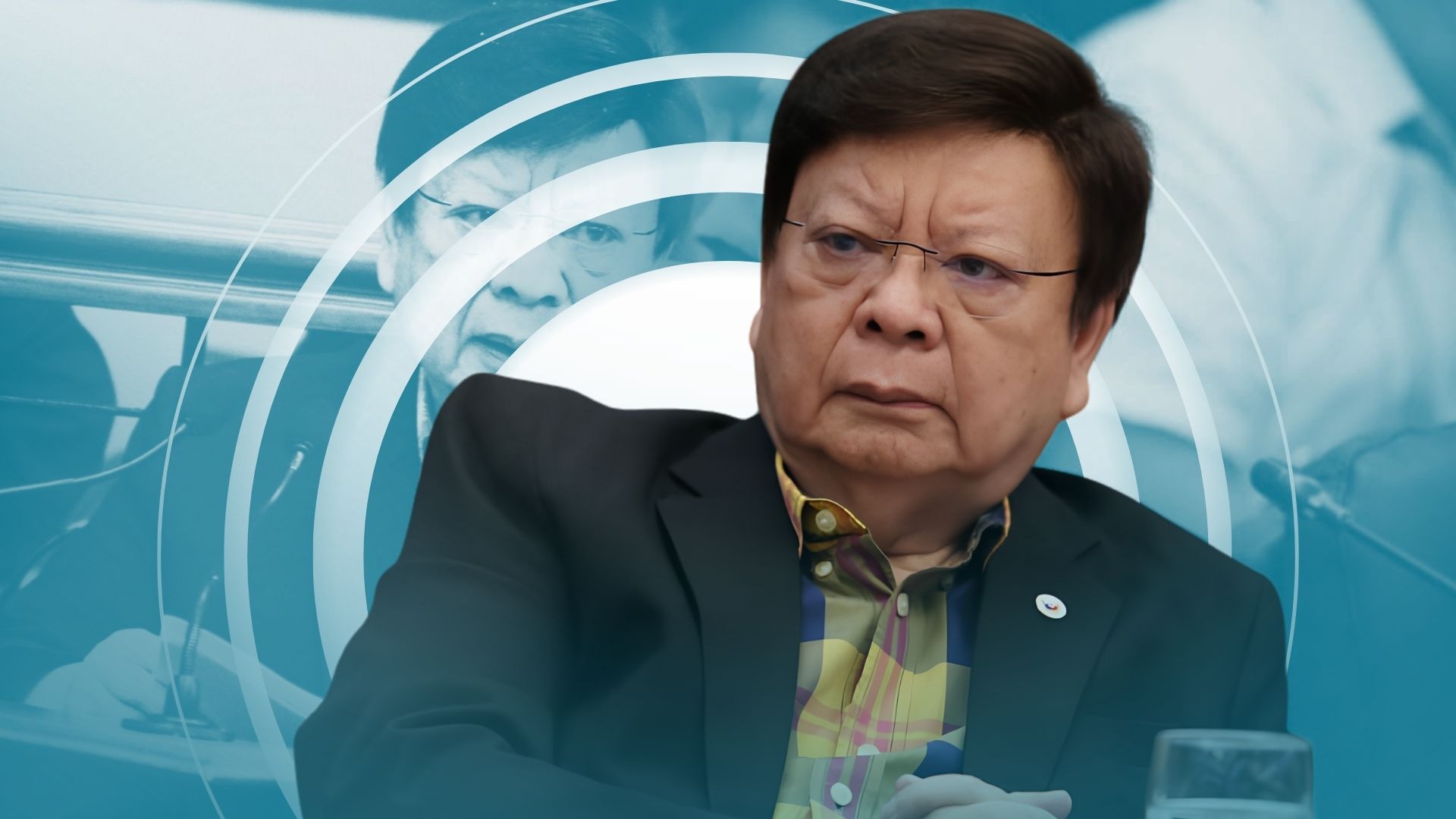
The suspicious timing of this proposal was impossible to ignore as the motion surfaced on the exact same day that Senator Ronald “Bato” dela Rosa resurfaced at the Senate after a six-month period in hiding. He returned briefly to cast a decisive vote that installed Cayetano at the helm of the chamber, after which he was placed under protective custody before again going into undisclosed whereabouts. Upon his return, he raised complaints that while his prolonged absence had been questioned and he was accused of drawing a salary without reporting for duty, his brief Senate appearance coincided with a reported incident in which National Bureau of Investigation (NBI) agents allegedly tackled and caused him injuries.
As the chief of the Philippine National Police (PNP) from 2016 to 2018, Dela Rosa served as the primary enforcer of the Duterte administration’s anti-drug campaign and led the implementation of Oplan Tokhang and operations that resulted in thousands of state-sanctioned killings. Now, the hunt is officially on as the Department of Justice has enforced an active arrest warrant issued by the International Criminal Court (ICC) against him for crimes against humanity, ordering the Philippine National Police (PNP) and the NBI to track him down and make the arrest.
One need not possess political instinct to connect the dots: the sudden urgency to institutionalize online voting appeared less about modernizing the legislature and more about accommodating a colleague evading international justice.
The proposal of Senator Marcoleta to allow remote participation and voting creates a direct risk to how the Senate enforces presence as a condition of power. It allows a senator who does not physically appear, such as Senator Dela Rosa, in a politically sensitive context, to still cast a vote that affects quorum, impeachment, and major national decisions. This weakens the rule that Senate authority depends on visible attendance and real-time deliberation inside the chamber.
The immediate effect falls on quorum arithmetic. With full membership at 24, the Senate needs 13 to proceed. If even one senator is absent and the minority refuses to attend, the majority loses the number required to continue business. A rule that permits remote voting removes that pressure and restores votes without restoring accountability. The minority then loses its only procedural check, while the majority gains a method to proceed without full physical presence. This changes how decisions pass in the Senate, especially in high-stakes cases like impeachment, where absence, presence, and visibility define legitimacy.
The tactical push by the Senate majority bloc to amend the rules can also be seen as a direct counteractive move to shield its members from legal actions that could actually strip them of their political power. The dynamic within the 13-strong majority has been thrown into crisis by the Office of the Ombudsman’s sweeping actions, which include the plunder charges against Senator Jinggoy Estrada and Senator Joel Villanueva in connection with the massive flood control project scandal, and a recommended plunder complaint against Senator Marcoleta over alleged campaign irregularities. Clearly, the growing scramble to preserve numerical control inside the chamber now appears inseparable from the fear of losing both legal protection and political survival.
This friction reached a boiling point during the May 26 session under SP Cayetano, which triggered a heated floor debate that ended in a walkout by the minority bloc. Members of the minority bloc, including Senators Panfilo “Ping” Lacson, Francis “Kiko” Pangilinan, and Risa Hontiveros, vehemently objected to what they described as a rushed, irregular process.
The dispute centered on whether the Senate could entirely bypass its traditional committee system. Lacson pointed out that the committee on rules had not even been constituted or convened to review the measure. In response, Cayetano insisted that Rule 51 allowed immediate plenary action by a simple majority vote. Refusing to allow a numerical majority to railroad structural rules, the minority bloc staged a walkout and left the chamber in disarray.
Amid the withdrawal of several senators, Senate Minority Leader Vicente “Tito” Sotto III chose a different course of action. Instead of joining the walkout, the choice to stay in the session can be seen as a smart and strategic move. Instead of joining a purely symbolic protest, he focused on the rules inside the chamber and raised the question of quorum. That decision placed procedure above gesture and showed a clear understanding of how the Senate actually works beyond political signals. The walkout alone did not automatically stop the session from continuing. The point was that the proceedings still needed a formal challenge on quorum to affect legitimacy. By bringing it up, Sotto shifted the situation from symbolism to procedure, which placed pressure on the chamber to respond within its own rules. This made the act more effective in practice than leaving the session without raising the issue.
It is also absolutely impossible to dissect this entire media circus without pointing a finger directly at SP Alan Peter Cayetano, whose political trajectory has long aligned with serving as a primary defender of the Duterte administration. During his tenure as Secretary of Foreign Affairs and later as Speaker of the House of Representatives, Cayetano consistently utilized his positions to champion the previous administration’s policies on the global and national stage.
His history of advocating for the controversial anti-drug campaign and navigating structural transitions makes his current role in the Senate leadership highly scrutinized. This latest procedural crusade regarding remote voting appears to critics less like a noble fight for administrative rules and more like a tailored mechanism to insulate close political allies.
The widespread public suspicion surrounding his motives did not just appear out of thin air, as it seems evident that this entire spectacle functions to protect Senator Bato from facing immediate, physical legal accountability. Cayetano’s handling of the session indicates a preference for shielding a colleague from scrutiny over maintaining traditional legislative integrity.
Adding more smoke to this fire is how this Senate president reorganized the Senate with the designation of vice chairpersons and members to various committees. The reallocation of committee leadership, alongside the ongoing Sara Duterte impeachment proceedings, signals alignment of institutional roles with partisan objectives. Senator Robin Padilla, assigned to the Education committee despite lacking background and expertise, contrasts with Bam Aquino, who previously handled the Education portfolio in the Senate, raising concerns on committee fit and specialization.
This same pattern shows how committee assignments function as instruments of political strategy rather than purely merit-based placement. The resulting structure strengthens bloc consolidation inside the chamber and places policy discussions under heightened partisan control.
However, what does this overall scene actually mean for the public? Laws are not optional for those in power, especially for public officials, and even more so for senators sworn to uphold the Constitution. A senate seat is not diplomatic immunity; it is not a shield that erases international accountability. If an ordinary Filipino can be arrested, prosecuted, and subjected to the full force of the law, then those who hold public authority must face the same legal processes without exception. If citizens are bound to obey the law, then senators must be held to an even higher standard. A republic starts to rot the moment justice becomes selective, that is, only brutal for the weak, but infinitely flexible for the politically connected.
No true democracy can afford to distort its rules to protect figures tied to human rights abuses. The Senate is a hall of laws, not a sanctuary for fugitives. It is a place of governance, not a bunker for political allies hiding from international scrutiny. The Senate’s mandate is to author the law, not to manipulate it for personal comfort. When the law is tested inside the very house that built it, our true integrity is measured by a simple metric: Does justice remain blind, or does it blink?