









Now Reading: Retiring PH flags are usually burned for disposal — DOST-PTRI says not anymore
-
01
Retiring PH flags are usually burned for disposal — DOST-PTRI says not anymore
Retiring PH flags are usually burned for disposal — DOST-PTRI says not anymore

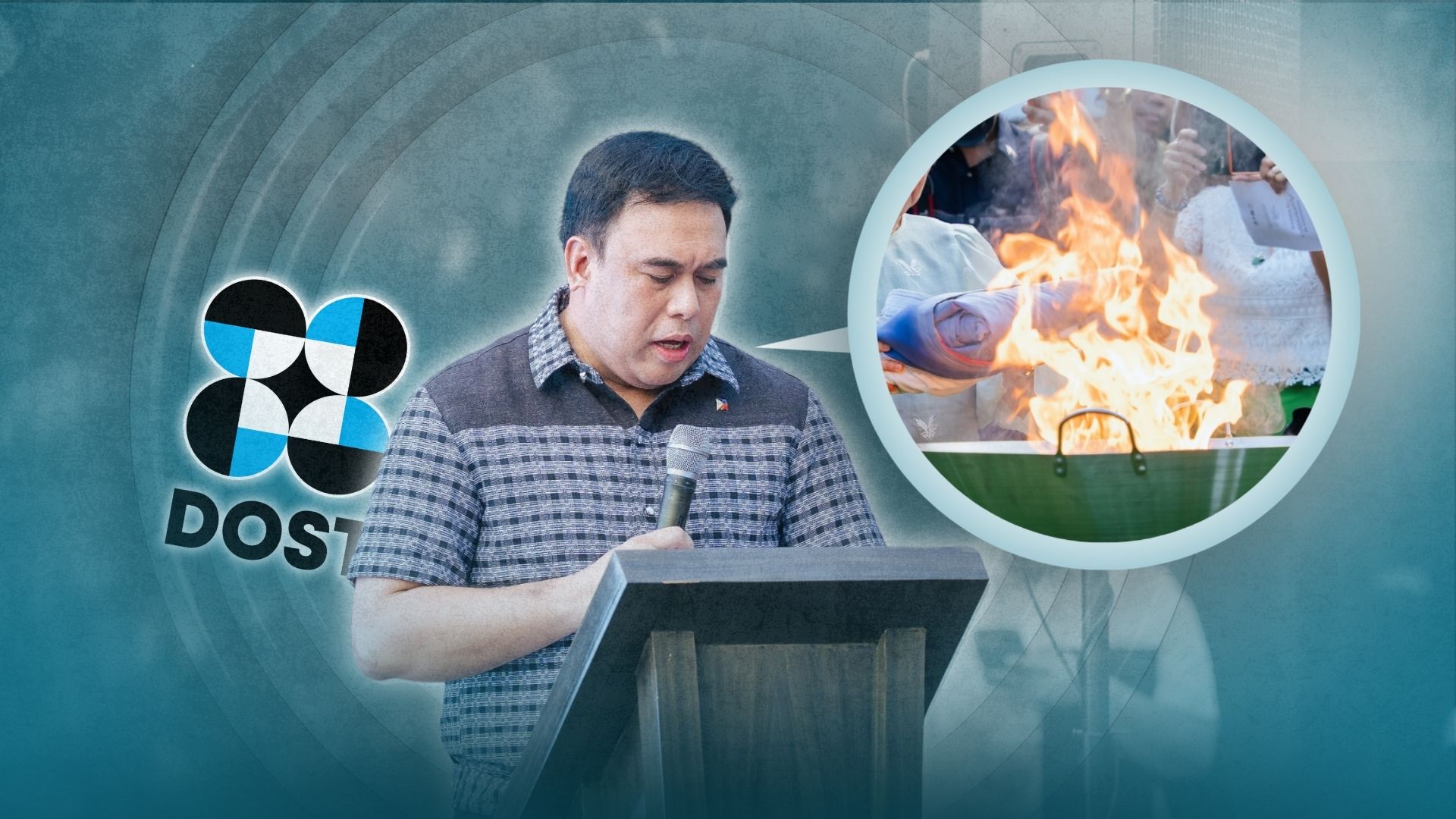
Raised in schools, government buildings, and homes across the country, the Philippine flag is a familiar sight for every Filipino. Yet when these banners become faded, torn or worn out by time, the final act of honoring them may leave behind an unexpected environmental cost.
That concern is now prompting the Department of Science and Technology– Philippine Textile Research Institute (DOST-PTRI) to push changes to Republic Act 8491 or the Flag and Heraldic Code of the Philippines, which currently requires worn-out flags to be solemnly burned before disposal.
The proposal to change this challenges a long-standing practice rooted in respect for the national symbol. However, according to DOST-PTRI, the issue does not lie in the tradition, but the materials used to make modern flags and the environmental impact of their burning.
According to Julius Leaño Jr., DOST-PTRI Director, the practice of burning flags was established at a time when the materials used to produce them were significantly different.
“Dati kasi cotton and silk ‘yun,” Leaño explained in an interview with Bagong Pilipinas Ngayon. Because these were natural fibers, burning them posed fewer environmental concerns.Today’s flags, however, are made from polyester and nylon.
“Right now, ang ating bandila ay made of polyester and nylon, so when you burn them, they are emitting toxic gases in the atmosphere,” he said.
The concern has led DOST-PTRI to advocate for an alternative method of retiring worn out flags— one that seeks to preserve the dignity of the national symbol while reducing its environmental impact.
Since April, the institute has been collecting old flags as part of its advocacy for a more sustainable retirement process. Instead of incineration, the agency is proposing the use of fiber recovery technology, which physically separates the fibers that make up the flag.
Under the proposed change, the retired flag would first be dismantled until it is no longer recognizable as a national symbol. The recovered polyester and nylon can then be processed into new threads for textile applications.
“Ang kailangan lang naman ay marangal yung pagre-retiro ng watawat at hindi mo na maaninag na ito ay watawat pa,” Leaño said.
For DOST-PTRI, this addresses one of the key objectives of the current law: ensuring that damaged flags are retired with respect and cannot be misused or desecrated.
“Mula kasi sa mga hibla na ‘yun, makakagawa ulit ng mga sinulid. So bumabalik siya sa textile supply chain,” Leaño explained.
Because the fibers are made of polyester and nylon, the recycled threads keep qualities that make them useful for a variety of applications. According to Leaño, these can be used for embroidery or converted into yarns for garments and other textile products.
“Eh dahil gawa ‘yan sa polyester at saka nylon, technically may kintab ‘yan. So napalaki ng kanyang application, pwede for embroidery, pwede rin siyang maging sinulid muli sa ating kasuotan,” he added.
Rather than ending their life cycle as smoke and ash, the materials can be given a second purpose. In doing so, the institution hopes to align the retirement of the national flag with broader efforts to reduce textile waste and promote sustainability.
The agency is also exploring similar recycling initiatives for worn-out military uniforms in partnership with the Armed Forces of the Philippines and private-sector groups. Since old uniforms cannot simply be given away due to security concerns, recycling offers another way to manage these materials responsibly.
“Kalakip din ito ng ating advocacy with the Armed Forces of the Philippines,” Leaño said, noting that the agency is working with partners to find ways to repurpose worn-out uniforms that can no longer be distributed.
The initiative reflects a growing effort to rethink how materials are used long after they have served their original purpose. For DOST-PTRI, textiles that are often treated as waste may still hold value when paired with the right technology.
More importantly, the proposal suggests that honoring the Philippine flag and protecting the environment need not be separate goals, as respect for a national symbol can also mean reducing the pollution and waste left behind after its retirement.
As discussions on amending the law continues, DOST-PTRI is making the case that the meaning behind a tradition can endure even as its method evolves. The goal, after all, remains unchanged: to retire the Philippine flag.
In the future, that dignity may no longer be measured by flames that consume a worn out banner, but rather by what remains after it is retired.
Through recycling, a flag that has weathered years of service could continue contributing to society in a new form—proof that respect for a national symbol does not have to end when it stops flying, and that patriotism and sustainability can be woven together into the same fabric.