







Now Reading: Of hearts that never stop beating: How student-led Project Kinabuhi keeps Carbon Public Market stories pulsating in Cebu
-
01
Of hearts that never stop beating: How student-led Project Kinabuhi keeps Carbon Public Market stories pulsating in Cebu
Of hearts that never stop beating: How student-led Project Kinabuhi keeps Carbon Public Market stories pulsating in Cebu

Awake, asleep, and in every moment in between, within each beat, the heart not only keeps blood moving through the body but also life coursing through every vein connected to it. In Cebu itself, these same pulses are profoundly felt within its oldest cultural and commercial hub — Carbon Public Market.
For generations, Carbon has pumped food, livelihood, and opportunities through the province and neighboring communities across the Visayas and Mindanao, sustaining thousands of families whose lives move to the rhythm of trade.
Yet, like any heart under strain, Carbon now faces a threat that many vendors fear could slowly weaken the lifeline that has sustained them for decades, as privatization raises questions about who will remain within the market’s future.
In the midst of all of this, freshmen students from the University of the Philippines Cebu chose to listen to its countless heartbeats and created Project Kinabuhi, an initiative documenting the lives, struggles, and aspirations of Carbon-hanons.
For organizers and vendors alike, the project became more than a class requirement and community activity, transforming into an effort to ensure that the heart of Carbon continues to be heard while it still beats.
A heartbeat in stall 13
It is six in the morning, and the city has just woken up. 68-year-old Gloria Tenchavez readies herself for another day at Stall 13, where she will remain selling flowers until seven in the evening. For 48 years, this has been her life in Carbon.
Every day, the scent of the flowers she sells never fails to entice passersby. For Nanay Gloria, however, it is a scent that has remained unchanged for nearly five decades since she began selling flowers at 20, following the trade her mother started in 1954.
Beneath their fresh, sweet fragrance lingers a memory of the Carbon she once knew. It carries her back to the days before Freedom Park was forcibly cleared in 2022 to make way for the market’s first phase of “redevelopment,” when vendors felt more secure about their place within the market.
“Sa unang panahon, dili i-privatize (ang stalls sa Carbon),” Nanay Gloria recalled. “Didto pamis Freedom Park maninda, nindot kaayo didto.”
(In the early days, the stalls in Carbon were not privatized. We used to sell at Freedom Park back then; it was very nice there.)
Today, as modernization projects continue to advance, many vendors find themselves confronting shrinking spaces, rising costs, worsening conditions, and the possibility that the market they helped build could eventually become inaccessible to people like them.
Still, each morning, she arranges flowers brought from Davao and Busay, continuing a legacy passed down to her, even as uncertainty looms over what the future may hold for Carbon-hanon vendors and the families they continue to sustain.
“Sa umaabot na panahon, naa pay mga bata ug apo. Maglisod na kay i-privatize nila (ang Carbon),” the 68-year-old lamented.
(In the future, we will still have our children and grandchildren. They will struggle because Carbon will be privatized.)
Nanay Gloria’s story is just one of countless stories within the bustling spaces of Cebu’s Carbon Public Market, and it was these very stories that UP Cebu freshmen from NSTP Class O came searching for when they stepped into the country’s oldest public market.
Pulses of Carbon beyond Carbon
What the students found inside Carbon were not simply vendors selling fruits, vegetables, and goods, but people whose lives were deeply entrenched in a place that has long served as one of Cebu’s most important centers of trade and livelihood.
According to Carbon-hanong Alyansa co-head Jovelyn Sipalay, Carbon goes beyond being a market for vendors like her to trade and sell their goods to customers.
“Para namo, ang Carbon mao juy tinugdan sa amoang panginabuhian,” she said. “Maoy nagahatag namo og pag-kaon para sa among mga pamilya, pangpa-eskwela sa among mga anak. Kinabuhi jud namo ang Carbon.”
(For us, Carbon is truly the source of our livelihood. It is what provides food for our families and sends our children to school. Carbon is truly our life.)
Moreover, Sipalay emphasized that Carbon has become an extension of home for many mothers like her, addressing household shortages, while also serving as a dependable refuge that supports family survival.
Driven by this reality, Project Kinabuhi was created to center the stories of Carbon-hanons, aiming to humanize Carbon’s narrative by highlighting the everyday experiences, struggles, and aspirations of the vendors themselves.
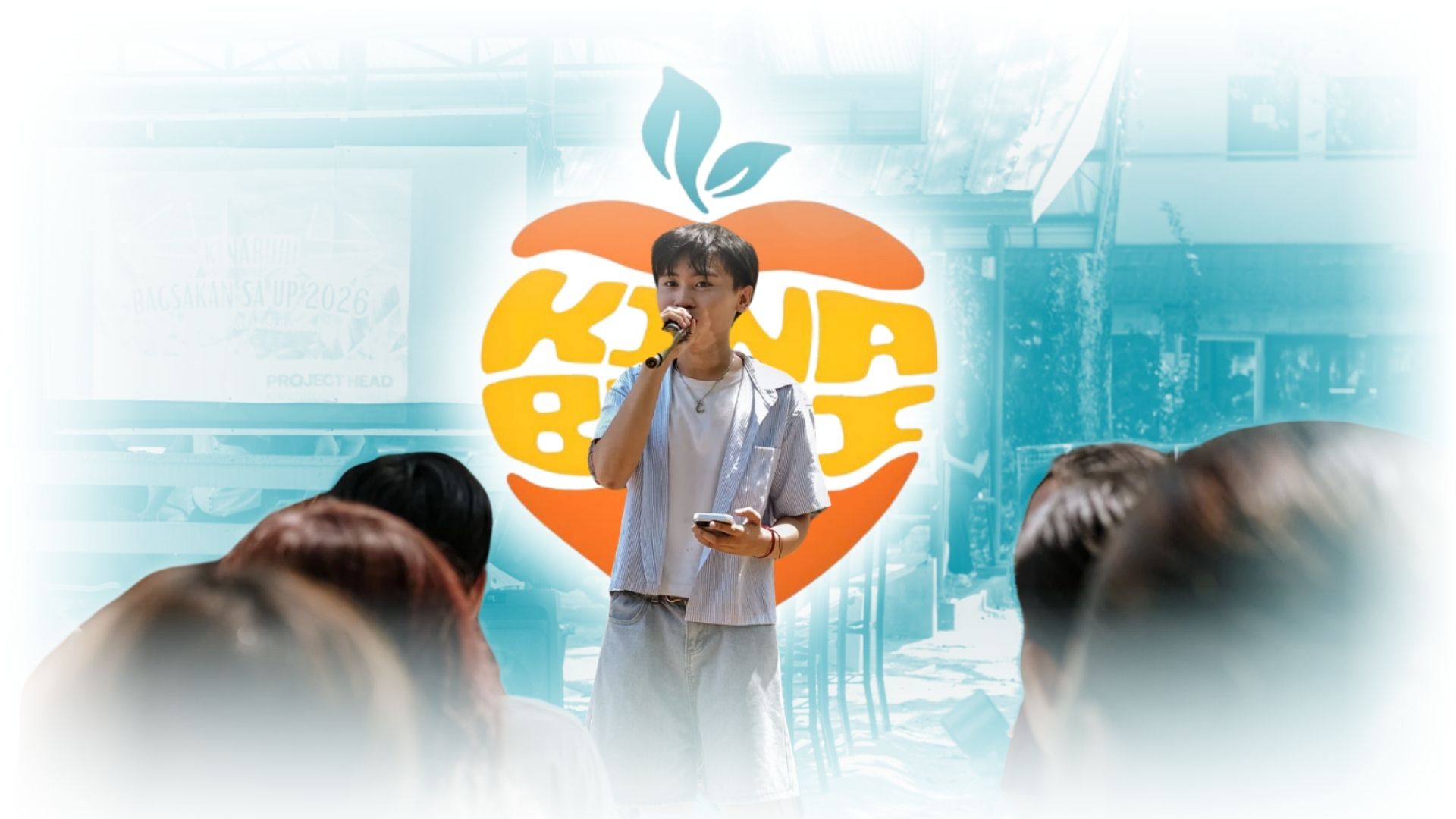
“Ang tumong aning initiative is ipa-lanog ug i-hulagway ang tinood nga panginabuhian sa atong mga kauban sa Carbon sa matag adlaw,” Kenneth Bendol, the project’s head, remarked. “Para maka-igo ta sa kasingkasing, sa dughan sa mga tao.”
(The goal of this initiative is to amplify and show the real livelihood of our fellow vendors in Carbon every day, so we can reach people’s hearts.)
This vision took shape through Project Kinabuhi’s Facebook page, where the students posted photojournalistic feature stories about Carbon-hanon vendors, such as Nanay Gloria’s, from April to May.
The written pieces and captured photos told stories of vendors and everyday people in Carbon, unveiling their routines, sacrifices, and interactions, and showing the market as a living space and community that sustains families for generations.
Project Kinabuhi, moreover, culminated on the 22nd of May through “Kinabuhi: Bagsakan sa UP,” where Carbon vendors entered UP Cebu to sell products directly to students while participating in conversations, exhibits, and photowalks.
As visitors and campus-goers browsed apples, mangoes, ngohiongs, and other goods for sale, discussions with the vendors focused on the realities behind the ongoing concerns about privatization.
“Dili jud mi babag sa kalamboan,” Carbon-hanong Alyansa Co-head Jovelyn Sipalay stated. “Kay para namo kinahanglan jud tang mulambo pero ang paglambo tana kanang ma-isa ang panginabuhian gikan sa kina-ubsan.”
(We are not against development because, for us, we truly need to progress, but that development should include and uplift the livelihood of those at the grassroots level.)
A flatline amongst the pulses
Yet, when grassroots narratives challenge corporate agendas, advocacy often invites hostility. Not long after the successful bagsakan, the project became the subject of online trolling that portrayed the initiative as something it was never intended to be.
This backlash reflected a wider, insidious pattern of red-tagging in the Philippines, where activist groups, students, and even ordinary vendors are baselessly labeled as state enemies simply for expressing dissent.
The accusations surfaced despite Kinabuhi’s primary objective of documenting lived experiences, encouraging dialogue, and raising awareness of the socioeconomic effects of privatization on the people whose livelihoods depend on Carbon.
“The intention of the project was good. It aimed to talk about people and to stand in solidarity with those who are oppressed,” Bendol said in an interview. “Unfortunately, as students, as people who are trying to do good, there are always people who misunderstand these intentions.”
The red-tagging also mirrored what the Carbon-hanong Alyansa itself had already faced when it was labeled a subversive, despite its advocacy focusing solely on livelihood protection and public ownership of the market.
For organizers, the incident showed how easily stories rooted in empathy can be overshadowed by fear-mongering, even when their purpose is to create space for communities whose voices are rarely heard in conversations about development.
Yet, despite the accusations, organizers maintained that the project’s purpose remained unchanged.
“We must not let black propaganda stop us,” Bendol stressed. “We must also check ourselves if this is right, or if it’s still human to spread this online when it affiliates people to something that may risk their lives.”
Keeping every beat heard
The digital friction may have threatened to disrupt the narrative, but it ultimately underscored why these stories needed to be told.
Although the exhibit has ended and the photographs have been taken down, the stories gathered through Project Kinabuhi continue to circulate among students, vendors, and communities beyond Carbon’s crowded streets.
Bendol hopes the initiative becomes a model that can be shared with other communities, carrying forward the lesson that meaningful engagement continues through sustained solidarity with those experiencing structural challenges.
“Important man gud ang kaning project, ang mga nakat-unan sa pag-immerse nato, it doesn’t end after the conversation,” the project head said. “Unta dili ni ang last nga lakang nga buhaton sa mga ka-estudyantehan para sa Carbon.”
(This project is important because what we learned from immersing ourselves does not end after the conversation. I hope this will not be the last step that students take for Carbon.)
For field committee member Bianca Razon, one of the project’s most important realizations was discovering how communication itself can become a tool for empowerment when communities are given platforms to tell their own stories and broaden public understanding of their realities.
Sipalay likewise said that initiatives like Kinabuhi help vendors educate others about Carbon’s struggles while allowing students to encounter the human side of issues that cannot be fully understood through theories alone.
“So kung maka-interact mi sa mga ka-estudyatehan, direkta sab nilang mabate, makit-an ang human side, ngano man jud nakigbisog maning mga vendors, unsa ka importante ni sailaha,” Sipalay stressed.
(So when we interact with fellow students, they can directly feel and see the human side of it, why these vendors are really struggling, and how important this is to them.)
And perhaps that is the legacy Project Kinabuhi leaves behind. It is a reminder that a heart never ceases to beat, not because it never faces danger, but because people continue protecting its pulses, and as students, vendors, and Filipinos choose to listen, remember, and stand with one another, the heart of Carbon will keep pumping life through the city it has nourished for generations.