









Now Reading: Not every Filipino family wants to have children, because love’s definition becomes broader
-
01
Not every Filipino family wants to have children, because love’s definition becomes broader
Not every Filipino family wants to have children, because love’s definition becomes broader

John Luis Soriano, Germin Vladimer Ternida, and Shaunte Ong
Footsteps echoing through a crowded hallway, the chaotic harmony of a relative dominating the karaoke machine, and an endless spread of food over flowing tables have long defined the true sound of a Filipino home.
Generational wealth in our culture was never measured in bank accounts, but in the sheer number of people we call family. For decades, our booming population was seen as a permanent part of our identity, an unstoppable engine fueled by deep faith, cultural tradition, and the comforting warmth of crowded rooms.
Today, however, that familiar rhythm is beginning to break. We are witnessing the quiet collapse of a cultural empire built on large families. Cradles are staying empty longer, the homes we took for granted are growing smaller, and young Filipinos are actively walking away from the sprawling family structures that once felt completely non-negotiable.
What’s behind the shift
Stark statistics from the Philippine Statistics Authority (PSA) Vital Statistics reveal a deep shift that a traditional, Catholic nation is still hesitant to confront. Recent data shows that the total birth rate of Filipino women has plummeted to just 1.9 children per woman, a staggering decline from the 2.7 average recorded only a decade ago. Human societies require a baseline average of 2.1 children per woman simply to keep a population stable from one generation to the next. This means that within a single decade, our country went from a state of rapid growth to a point where we are no longer replacing the current generation, creating a sharp demographic drop that leaves our future workforce up in the air. By slipping beneath this invisible line, the current generation is conducting a quiet mutiny against centuries of tradition. We are proving that even our most deeply rooted ideas about family are bending under the heavy weight of modern financial realities.
Looking across the ocean invites a chilling comparison to Japan, a society currently trapped in a deep demographic winter where rural schoolhouses have become silent monuments to a missing generation. While our local towns are not yet experiencing Japan’s extreme aging crisis, thanks to our current cushion of a young working-age population, we are officially walking down that exact same path.
Economists and policymakers warning of a shrinking future workforce, as detailed in the official NEDA Philippine Development Plan 2023-2028 Core Document, point out that a smaller pool of young citizens will eventually be forced to shoulder the immense economic burden of supporting an older generation.
In a country that has always used children as an unwritten social security policy, we are realizing too late that a young population is a perishable resource. This shift will completely break the unwritten contract between generations that has long taken the place of a real government welfare system.
Re-writing the script of success
Driven not by a single radical group, but rather by a generation of young, urban, and educated citizens, this quiet revolution represents a profound unlearning of what it means to grow up.
The decision to bring life into the world is no longer treated as something that just happens, but as a calculated negotiation with survival. Suffocating expenses and the constant stress of modern existence dictate every household boundary set by young couples today.
Raising a child in our current economy has changed from a natural next step into an immense, lifelong financial risk. High costs of quality education, privatized healthcare, and the grinding daily pressures of inflation have forced young adults to take apart the large-family blueprint that carried their parents, exposing it as entirely impossible to maintain in today’s expensive world.
Government policies have also accelerated this departure from traditional expectations. Enactment of the historic Responsible Parenthood and Reproductive Health Act of 2012 (Official Gazette) provided the legal and educational framework that normalized family planning across the country. Though the law was initially met with fierce, emotional resistance from conservative religious groups, its long-term impact succeeded in shifting parenthood from a matter of “divine fate” to a matter of conscious personal choice.
By expanding access to health education, the state inadvertently gave young couples the tools to reclaim their futures. This policy shift allowed them to collectively challenge the heavy societal pressure to have many children at the expense of their own financial survival.
Carrying on the family surname once stood as an unquestioned social duty, a sacred proof of a life well-lived and an essential obligation to the past. Modern Filipinos, however, are completely dismantling this old concept of legacy, transforming it from an obligation to the bloodline into a deeply personal pursuit of peace of mind, career equality, and personal freedom.
We no longer view ourselves merely as anonymous links in an endless family chain, but as conscious human beings refusing to inherit the exhaustion of previous generations. Choosing to have fewer children, or deciding to opt out of parenthood entirely, is no longer felt as a failure of family duty, but as a responsible, logical choice.
In a world defined by constant economic crises, we are learning that a successful life is no longer measured by how many cradles we fill, but by the control we reclaim over our own lives.
Redefining the Filipino family
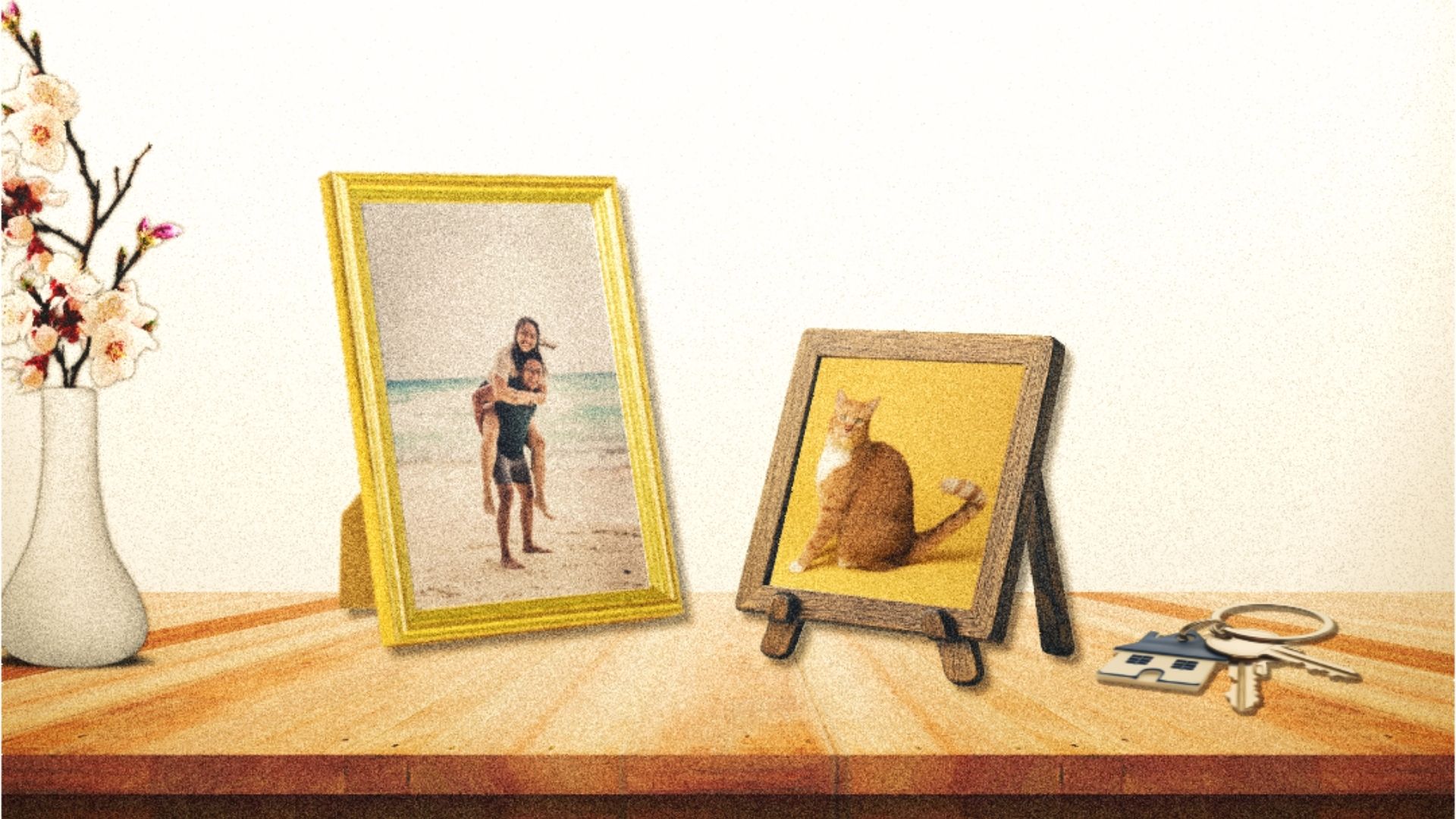
The familiar familial image of a bustling Filipino household filled with children is gradually changing to give way to homes shared with four-legged companions.
Across the country, more young adults are embracing the roles as fur parents, treating pets not merely as animals but as cherished and loved family members. Unlike raising a child — which demands decades of financial commitment for education, healthcare, and daily needs — caring for a pet offers companionship and the opportunity to nurture another life at a far more manageable cost. While responsible pet ownership still requires time, attention, and resources, it remains significantly less financially demanding than parenthood, making it an increasingly practical choice for many Filipinos navigating today’s economic realities.
The rise of furparenting is no passing trend, because it is a cultural shift that took root during the isolation brought by the COVID-19 pandemic. Confined within their homes, many Filipinos sought comfort in the companionship of pets, transforming them from simple household animals into beloved family members. This growing attachment was reflected in online behavior, with Google search volume data analyzed by Vero’s Data and Insights Team, showing a 30% surge in pet-adoption related searches in 2021.
Rather than fading after lockdowns, interests continued to climb annually in 2022 and 2023, reaching its peak in 2023. Today, that momentum is mirrored in the 2023 Pet and Plants Parentship study by the Social Weather Stations, which found that 64% of Filipino households own at least one pet, placing the Philippines among Asia’s most pet loving-nations.
Far from a fleeting trend, fur parenting reflects how Filipinos are redefining the meaning of family in an era shaped by financial uncertainty and changing priorities. Many young professionals and couples are choosing pets because they provide emotional companionship without the lifelong economic responsibilities attached to raising children.
This decision does not signify a decline in the Filipino capacity to love or care for others, instead, it reveals a generation adapting timeless values to modern circumstances. As the familiar familial structure continues to evolve, the Filipino home is proving that love is not measured solely by the number of children it raises, but also by the lives it chooses to nurture — whether it walks on two or four feet.
Parenthood is now a choice
Not every person is meant to be a parent. Sometimes, the failing economy chokes dreams of a family yearned to be built. And sometimes, we each have our own visions for life’s trajectory.
Recent years have seen the rise in Dual Income No Kids (DINKs) households, where couples simultaneously earn while having no children. Today, oftentimes, it is by choice. In a 2024 study, women have been “increasingly considering a DINK lifestyle” 62 percent more than men. Reasons differ from prioritizing careers, rejecting societal norms, all the way to investing in hobbies and travel. But these are not the sole factors. With the inflation rate standing at 6.8 percent in May 2026, the cost of living continues to rise, despite the recent increase in the minimum wage.
A 20-year-old college graduate, alias “Cherry,” shared that “Parang familyhood is being redefined to adapt to the economic climate of the country.” With an average monthly income of P15,000 to P25,000 for an entry level position in Metro Manila, living a comfortable life is almost impossible. If daily expenditures become difficult to maintain, investing in a child’s future will go beyond emptying pockets, especially when tuition fees increase 3-7 percent annually.
She also stated, “People are accepting that marriage isn’t a necessity that defines their personhood. Before, there wasn’t much of an option in regards to the mindset with children.” Despite the growing number of DINK households, it remains a challenge to be accepted among older Filipinos.
Not fitting the conventional mold
Traditionally, women and men getting married are viewed as key life milestones, where a common kamustahan during gatherings revolves around “Ilan na anak mo?” or even “Kailan ka mag-aasawa?”
Regardless of the expectation to have children among families, attitudes are now changing. The younger generation is more open to different family structures, realizing that having children is a choice not confined by cultural expectations.
DINK households do not fit the conventional Filipino family. Even then, it is a reflection of how Filipinos understand the economic reality and shifting values in the meaning of family.
Filipino families don’t always have to be so crowded. As economic pressures persist, values take a turn to redefine what love and success stand for. From raising children, taking care of pets, to choosing a DINK lifestyle, decisions are made to adapt to living conditions, beyond mere rejection of traditional values.
Family was never solely about the blood line, but the care and comfort that each member brings.