










Now Reading: Ninoy need not die
-
01
Ninoy need not die

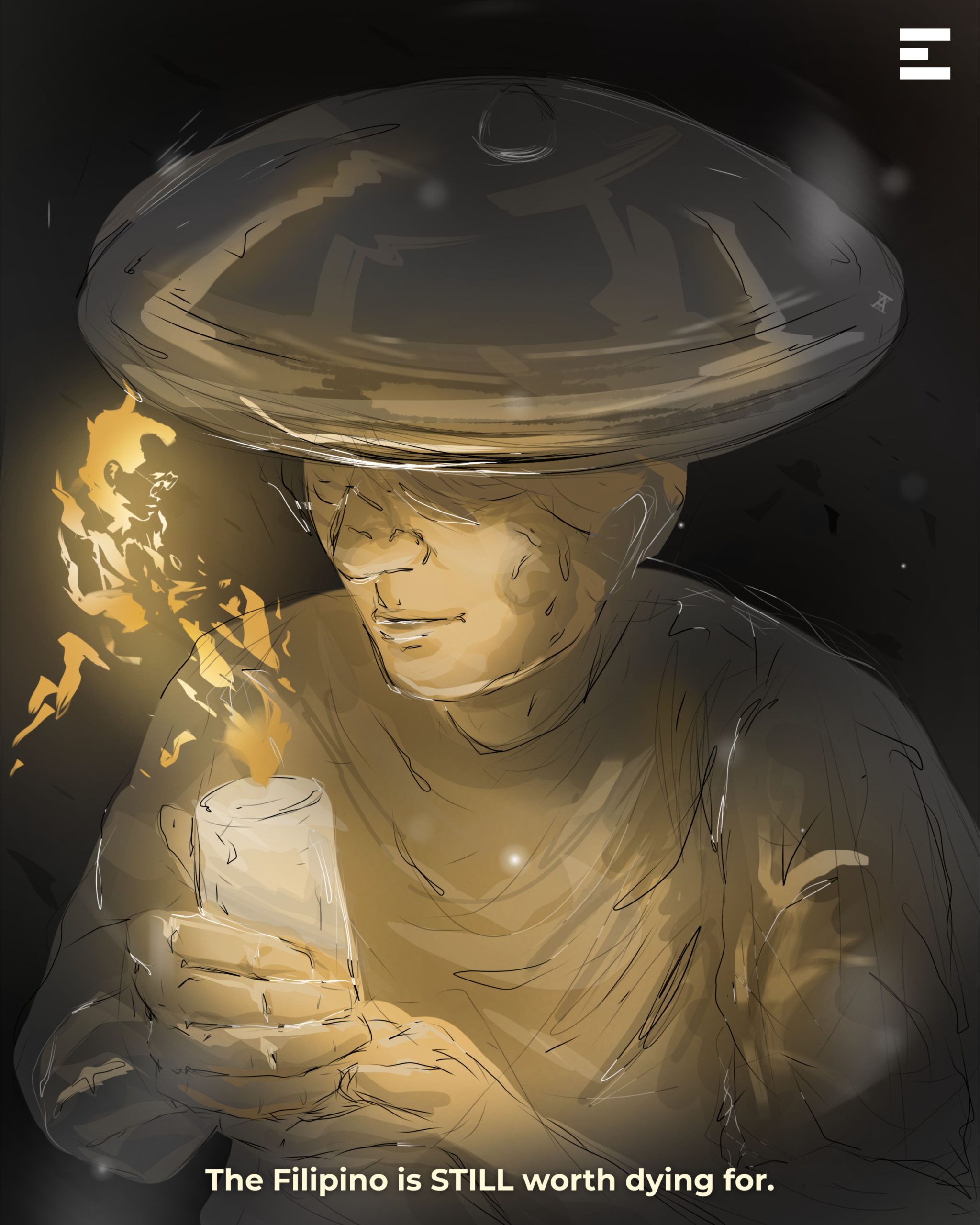
It’s easy to appreciate the life led by a man who selflessly fought for his country until his parting breath, but it’s difficult to confront the system that enabled his demise.
Today marks the 43rd anniversary of Benigno Simeon “Ninoy” Aquino Jr.’s assassination.
He was a husband, a father, a journalist, a senator, a prisoner of the Marcos regime, and a Filipino who believed that we are meant for great things.
The life that Ninoy led is one that can easily be romanticized, his name likewise easily partners with the word ‘martyr.’ But commemorating his assassination should never be confused with hearing the story of the one who fought selflessly. Instead, it should be taken as a means to prevent the same story from happening again.
Because the assassination of Ninoy was not mere death; it is a testament of what happens when power becomes exclusive to one and unfair to those who question it.
At the peak of the Marcos regime, Ninoy had long established himself as one of the leading individuals against the administration. His being a staunch critic of former President Ferdinand Marcos Sr. and his intent to run for president proved to be a real threat to the Marcoses.
Less than a week after the declaration of Martial Law, he was among those arrested and brought to Camp Crame and later to Fort Bonifacio.
But his battle did not end even behind bars.
Even while detained, Ninoy still managed to write 10 open letters against the Marcos regime and was able to publish them in the Bangkok Post. This eventually earned him and his companion, Jose “Pepe” Diokno, 30 days in solitary confinement.
Later, during his trial before the Military Tribunal, he refused to participate and instead delivered a speech denouncing the court.
Thereafter, Ninoy even staged a hunger strike to protest the reinvestigation of his case but was still found guilty in the end and sentenced to death by firing squad.
However, Ninoy was never executed. He was even allowed to run during the 1978 Interim Batasang Pambansa (Parliament) elections. There, he formed the Lakas ng Bayan or LABAN party, which garnered zero votes in Metro Manila against Imelda Marcos amid the mounting support from the masses.
Years later, after suffering from a heart attack, he was permitted to seek medical care in Dallas, Texas, and later settled down in Newton, Boston, Massachusetts, where he spent his time in self-exile with his family.
But his mind remained on the political state of the country, which ultimately led him to decide to return home.
But he never made it beyond the airport tarmac.
43 years later, we find ourselves in a very ironic coincidence.
Another Marcos has taken the highest office of the land, while an Aquino sits in the Senate.
Of course, President Ferdinand Marcos Jr. is not his father, just as much as Senator Bam Aquino is not Ninoy. But the same fact remains: the people who preceded them have shaped our present today.
If anything, the emergence of these names once again in the political landscape of the country should remind us of the past that led to this moment and how we can leverage it in the present.
Ninoy lived in a time when openly calling out the government could mean either imprisonment or worse, death. Today, we experience a Philippines where freedom that was once heavily restricted during the barrage of Martial Law is now something we live with. We can now freely voice out our grievances, organize massive protests, and choose the leader we want in office.
But these facts do not necessarily translate to a secure democracy.
It is our daily decisions that will determine that; whether the sacrifices of yesterday to uphold our democracy will not go in vain today.
Moreover, he understood what happens when power becomes concentrated in one. His arrest up to the very moment when he was found guilty is a reflection of what transpires when those in government are afforded the power to silence those who oppose them.
That is why, as we commemorate Ninoy’s assassination today, we should not merely look at what happened on that date but rather at why it happened in the first place.
At present, the Philippines continues to struggle with corruption, as reflected by the flood control scandal whose effects continue to wreak havoc a year since it became known to the public.
The call for accountability and justice remains as the victims of the brutal drug war await the final verdict.
Disinformation campaigns have since then become more concerning as troll farms slowly saturate credible news sources with sensationalized content.
And the question of whether or not our democratic institutions have the ability to remain free of political partisanship lingers with the ongoing impeachment trial in the Senate.
With such a status quo, the lessons from Ninoy now carry more weight and relevance. And one of those great lessons is not to see him only as a hero, but also as the outcome of a state that failed its own people.
Only then will we realize that we do not need another martyr among us. What we need is a country where no one has to risk their life just to remind us that democracy is worth defending and justice and accountability are worth pursuing.
Ninoy need not die again for us to remember why he fought.