









Now Reading: Dream big if you must, but dream deep enough to know why
-
01
Dream big if you must, but dream deep enough to know why


From the moment we are old enough to understand what the future means, we are asked the same question over and over again: What do you want to be when you grow up? And at some point, we learn that our answers are supposed to become bigger, bolder, and more ambitious with time. We are taught to look farther, aim higher, and believe that the worth of a dream lies in how far it can take us.
But at some point, I wonder if we began mistaking the height of a dream for its depth.
A while ago, I came across a line from Daryl Pasion’s piece “Skip Telling Our Kids to Dream High” that quietly stayed with me:
“To teach our children “mangarap ng malalim” (dream deep) is to give them not wings to fly, but roots to grow.”
At first, I admired it simply because it was beautifully written. The more I looked back to it, the more I realized it wasn’t asking us to dream less. It wasn’t even asking us to dream differently.
It was asking us to dream deeper.
Perhaps that is the part we often forget.
Somewhere along the way, we began treating dreaming big as dreaming of what society has decided is big. We celebrate dreams that come with prestigious titles, impressive salaries, and the kind of success that is easy to recognize. We applaud children who dream of becoming doctors, lawyers, engineers, or CEOs—not because those dreams are wrong, but because we have quietly agreed that they represent what a ‘big dream’ looks like.
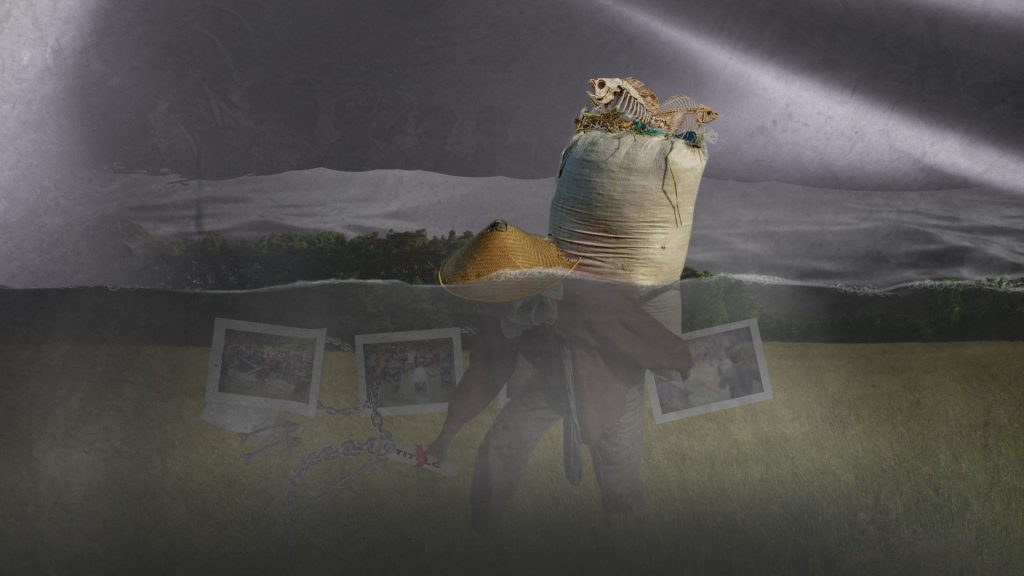
But what if a child dreams of becoming a farmer because they have watched a harvest feed an entire community? What if they dream of becoming a simple vendor because they have seen their parents build an honest life through quiet perseverance? What if they dream of becoming a carpenter because they find meaning in building homes where families will one day belong?
Are those dreams any less worthy?
Or have we simply become accustomed to measuring dreams by society’s standards rather than by the dreamer’s heart?
In reality, a dream can grow in places society does not always think to look, taking shape in ordinary lives and quiet purposes.
We often see the branches first. We notice how high they reach, how wide they spread, and whether they are beautiful enough to be admired from a distance. A title works in much the same way. It tells the world what we have become, offering something visible for others to recognize and celebrate. Yet no tree begins with its branches. Before anything reaches upward, something must first grow beneath the ground.
The purpose is that root.
It is the reason behind the title—the quiet understanding of why a particular life, a particular work, or a particular dream matters to the person holding it. Without that understanding, we can spend years reaching for heights that were never meant for us. We may choose a dream because it looks impressive, because it promises recognition, or because we have been told that it is what success should look like. In doing so, we risk building our ambitions on soil too loose to carry them.
We dream lightly when we do not know what holds our dreams in place.
A dream rooted only in a title can easily lose its direction. When the title becomes impossible to reach, when the path changes, or when life asks us to become something else, there is little beneath the dream to keep it standing. The future becomes frightening because everything we wanted was tied to one shape, one profession, one version of success.
Purpose gives a dream more room to live.
The doctor who dreams of healing and the farmer who dreams of feeding others may walk different paths, yet both are guided by something greater than recognition. Their professions are different, and society may assign different measures of prestige to their work, yet neither dream is made deeper by its title. What gives each dream weight is the purpose beneath it, the reason that allows it to remain meaningful even when no one is watching.
Big dreams are not sustained by height alone. The farther a tree reaches toward the sky, the deeper its roots must grow to support the weight of its branches. Dreams ask the same of us.
The life we hope to build cannot stand on ambition alone; it needs something beneath it, something strong enough to hold when recognition fades, when plans change, and when the future no longer resembles what we once imagined.
Life will reshape many of our dreams. Some will change direction. Others will be interrupted, delayed, or left behind. Yet a dream rooted in purpose does not necessarily disappear when its original form is lost. Its branches may grow elsewhere. Its shape may become unfamiliar. Still, the roots remain, and from them, something else can begin.
That is why dreaming deeply does not mean dreaming less. It means giving our dreams enough ground to stand on.
So dream big. Reach for the sky. Want the life that feels distant from where you are now. Just make sure that as your dream grows upward, something within you is growing downward, too.
The biggest dreams are not simply the ones that reach the highest. They are the ones whose roots have grown deep enough to hold them there.