










Now Reading: Beyond the date: Rethinking National Campus Press Freedom Day
-
01
Beyond the date: Rethinking National Campus Press Freedom Day
Beyond the date: Rethinking National Campus Press Freedom Day

Jamayka Rhose Pascual
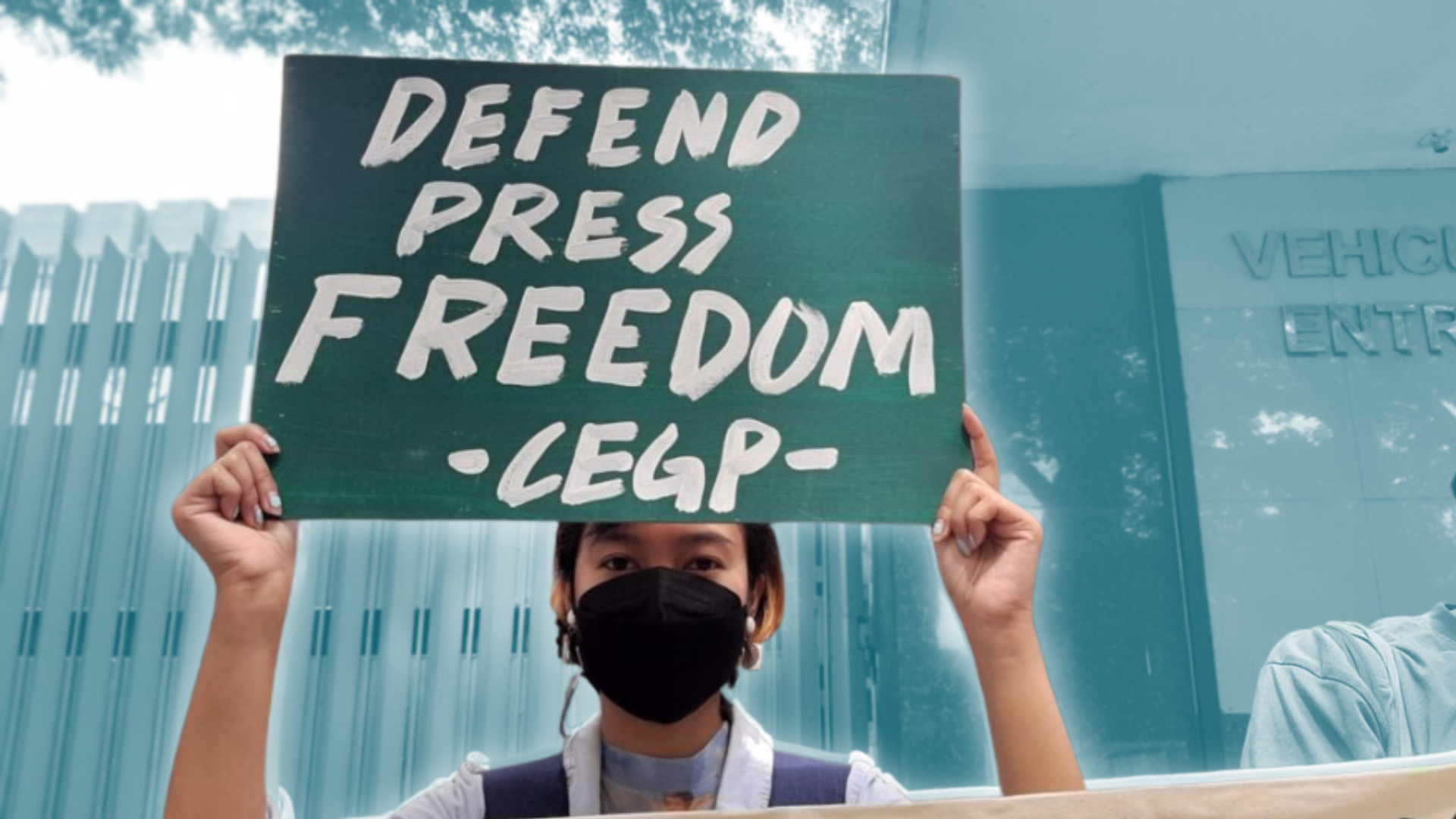
Every July 25 marks the observance of National Campus Press Freedom Day, enacted through Republic Act No. 11440 in 2019. The law formally recognizes students’ constitutional right to publish, express, and report freely through the campus press. However, six years since its passage, reports from various campuses indicate that these rights are still not consistently upheld.
This date is not purely ceremonial. It also honors Ernesto Rodriguez Jr., founder of the College Editors Guild of the Philippines, and acknowledges the long-standing tradition of student journalism in shaping public opinion. More broadly, the law reaffirms a principle often overlooked in academic settings: that the pursuit of truth, critical dialogue, and freedom of expression are integral to education. For many student journalists, however, these principles remain more legal ideals than everyday realities.
Because if a school constrains the room for students to question, inform, and reflect — what sort of education is it actually providing?
Campus journalism as a function of education
Campus journalism serves a role beyond school announcements or event coverage. Student publications document campus life, critique policy, and initiate early forms of civic engagement. These publications act as entry points into public discourse, allowing students to practice verifying, contextualizing, and communicating facts. In this sense, the newsroom operates as a civic classroom, equally formative as traditional lecture halls.
Despite this, student journalism often encounters institutional pushback. Administrative interference remains a recurring issue.
For example, on January 15, 2025, Today’s Carolinian, the student newspaper of San Carlos University in Cebu, lost access to its remaining office space after publishing reports critical of tuition hikes. The publication had been operating without university funding since 2019.
In Camarines Sur, members of The SPARK were asked to retract a pre-election poll indicating that an incumbent politician was trailing. Despite the poll’s methodological soundness, local officials labeled the article as “fake news.” This illustrates how the term can be used to dismiss uncomfortable but factual reporting.
Meanwhile, Atenews in Davao experienced online abuse — including rape and death threats — for publishing content in support of the International Criminal Court’s investigation into alleged human rights violations. This kind of harassment recalls earlier incidents, such as the red-tagging and assassination of former Atenews editor Benjaline Hernandez in 2002, highlighting a long-standing vulnerability faced by student journalists.
These cases point to an enduring tension: when student journalists seek to fulfill their mandate of truth-telling, some institutions respond by restricting, penalizing, or marginalizing them.
Fear replacing learning in repressive campuses
Educational institutions are often praised for developing critical thinkers and future leaders. However, when environments discourage inquiry and penalize dissent, the emphasis shifts from learning to conformity. This can discourage students from participating in meaningful dialogue or pursuing truth-based reporting.
In such cases, repression does not only impact journalism; it also affects broader academic culture. When curiosity and critique are treated as threats, it undermines the purpose of education itself.
An academic campus that seeks excellence must also tolerate dissent — not as disorder, but as the mark of active minds. Censorship, harassment, and red-tagging simply substitute learning with fear. Instead of cultivating responsibility, they educate students to keep quiet. In doing so, schools do not teach students to think — they teach them to obey.
The price of suppressing student journalism isn’t merely institutional embarrassment. It’s the degradation of a healthy learning culture. When curiosity is regarded as hazardous, we risk losing the heart of education itself.
Journalism being reduced to a contest
Not all threats to campus journalism are overtly punitive; some are cultural. In many cases, student journalism is framed primarily as a competitive activity. Stories are written to win awards rather than inform peers. Publications become active during press conference seasons but often go dormant afterward. This approach encourages journalism as performance rather than public service.
This orientation is shaped not only by students but also by school systems that prioritize accolades over accountability. While contests can foster motivation and growth, an overemphasis on prestige may divert attention from journalism’s essential role: informing communities and encouraging dialogue.
The newsroom as civic classroom
For most students, their first act of citizenship occurs in the newsroom, which includes writing a story, verifying a fact, and asking a tough question. Campus journalism is where they learn how public life is done and where they develop the confidence to get involved.
Suppressing that experience teaches a different lesson — that systems are more important than voices, that speaking up invites punishment, and that silence is the safer path.
If education is to equip young people for life in a democratic society, then defending campus journalism is not a favor, but an obligation. We cannot assume students will be responsible citizens if we keep them from practicing responsibility while they are students. Educators, parents, and institutions must not simply permit student expression; they must actively protect it. Because when we discourage young people from questioning, reporting, and holding power to account, we are not cultivating civic leadership. We are teaching them that silence is safer than truth.
Press freedom requires more than commemoration
RA 11440 acknowledges that the campus press freedom right needs to be preserved. But not symbolically. Structural, cultural, and persistent is what it needs to be.
This begs to the question, are student journalists really free to call out on our campuses? Are our institutions making space for uncomfortable conversations, or silently discouraging them? And are we building a world in which speaking truth is seen as essential — or something to be managed, domesticated, or concealed? And will press freedom be practiced daily, or remembered only once a year?
Because when we boil campus journalism down to a competition, we undermine its civic potential. And when we permit student voices to be silenced by censorship, by budget cuts, or by intimidation, we are not merely failing the students. We are failing the very mission of education. We are failing education itself.
So on this July 25, let us break past ritualistic slogans. Let us consider earnestly what it takes to cultivate critical thinking in our schools. And let us not forget that the youth we term as the future will only be able to make it their own — if we protect their right to voice their opinions today.
Commemoration is not enough. Without protection, practice, and participation, press freedom becomes a slogan — hollow, annual, and too easy to ignore.