



Now Reading:
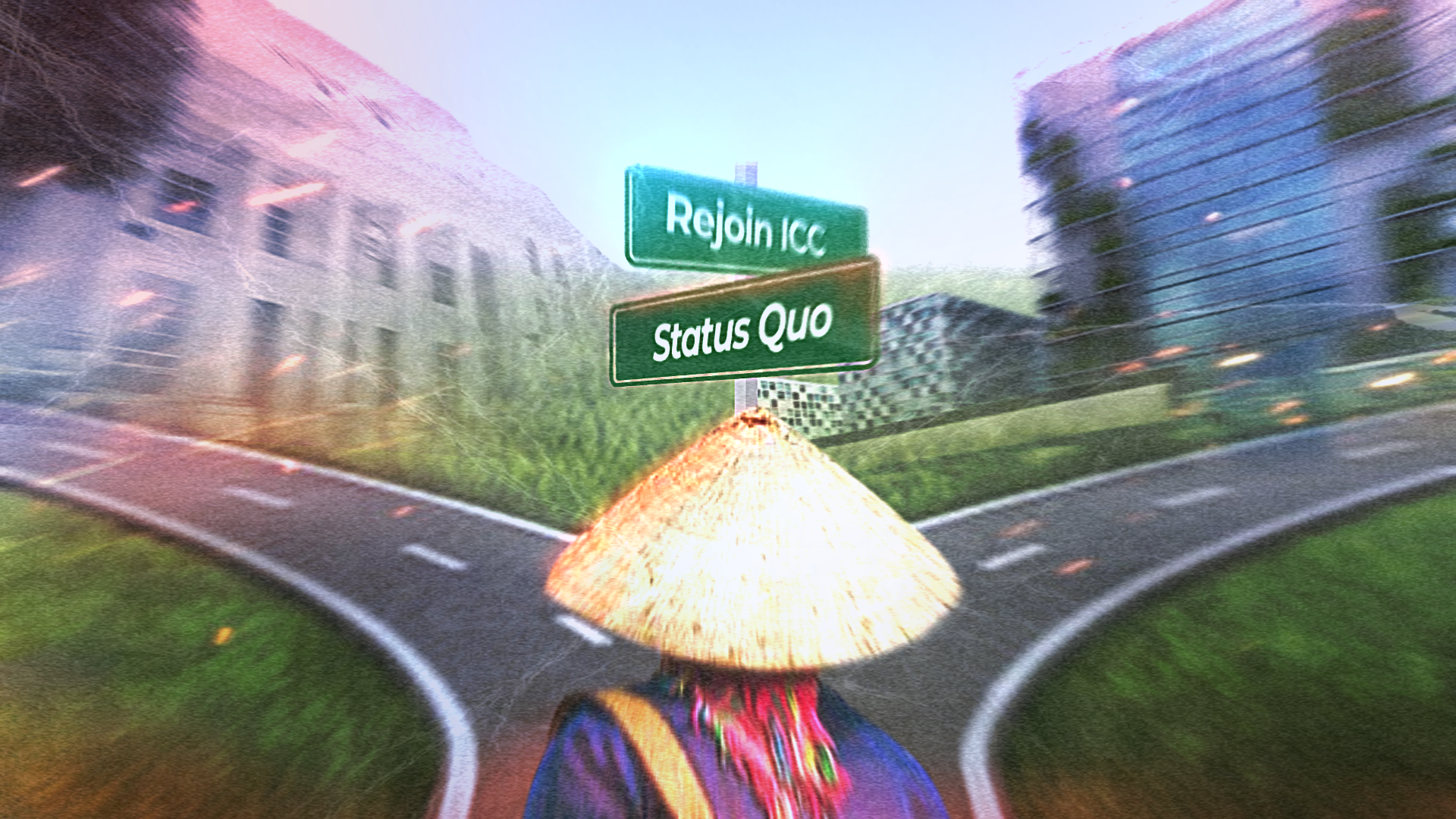
Back to Friends: Should PH rejoin the International Criminal Court?
-
01
Back to Friends: Should PH rejoin the International Criminal Court?

Enzo Verzosa
How can the Philippines and ICC go back to being friends when they just shared a conflict?
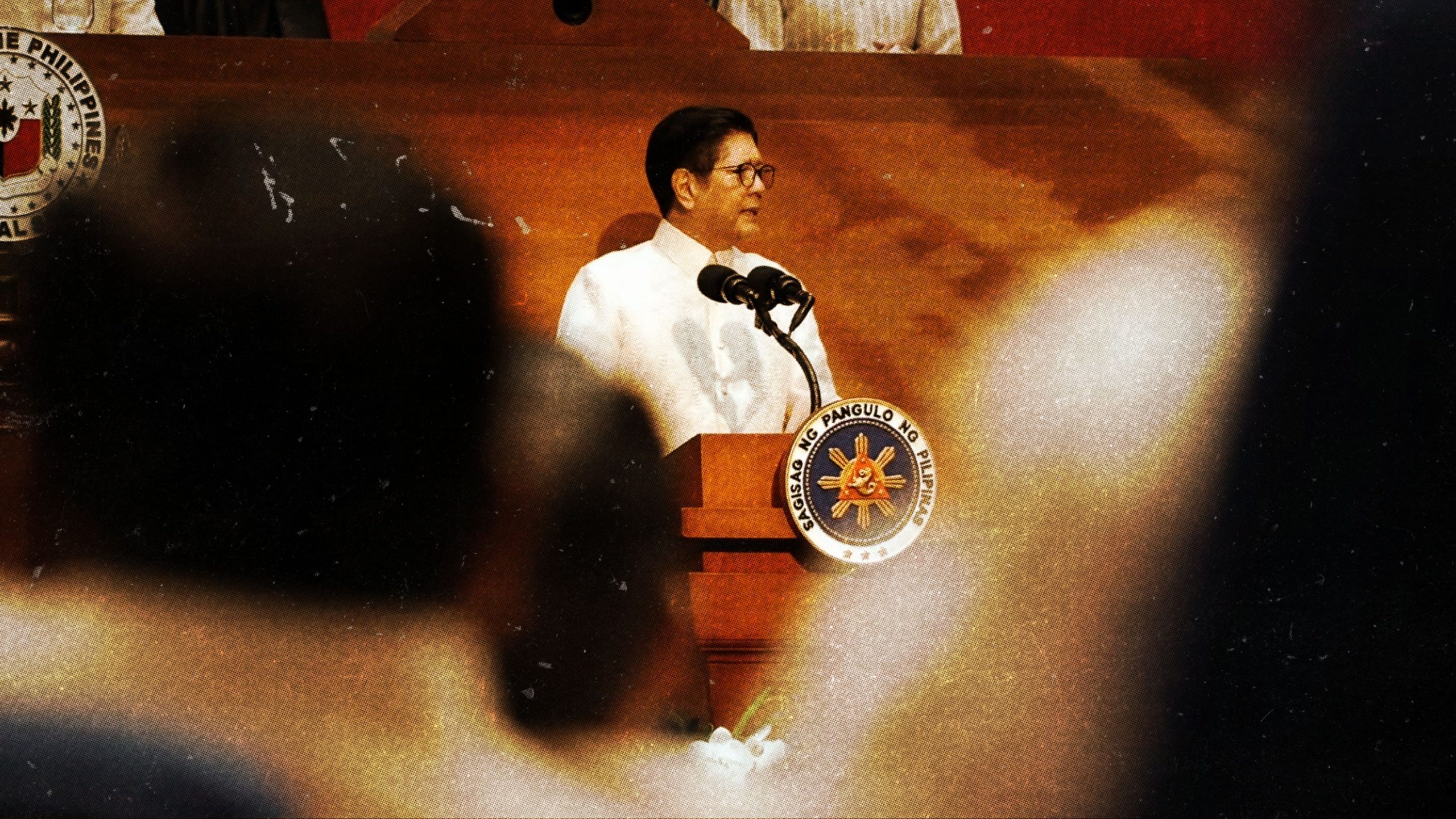
To this day, President Ferdinand Marcos Jr. continues to walk a diplomatic tightrope, keeping the International Criminal Court (ICC) at arm’s length while leaving his future strategic options open. As rejoining the tribunal resurfaces amid Duterte’s trial in The Hague, the president’s position remains unchanged, said Malacañang.
At its core, the ICC functions as a ‘court of last resort’. It can only intervene when national courts are unwilling or unable to prosecute the world’s most severe crimes:
- Genocide
- War crimes
- Crimes against humanity
- The crime of aggression.
Currently, the tribunal investigates former President Rodrigo Duterte for crimes against humanity linked to his drug war campaign. This probe continues despite the Philippines officially withdrawing from the ICC in 2019.
With the unresolved legal fallout of the past administration still hanging over the country, the government is forced to grapple with whether it can, or should, mend fences with the international court. But before it can even move forward, it must first navigate the intense political agendas driving the current domestic landscape.
The Falling Out
In 2000, the Philippines signed the Rome Statute — ICC’s founding document — signaling the country’s intent to join the international court. Eleven years later, the Senate ratified the treaty, formally making the Philippines the 117th State Party to the International Criminal Court.
Yet, what took more than a decade to build was dismantled by a single decision, showing how swiftly a system can unravel when those in power face scrutiny.
In 2018, ICC kickstarted a preliminary examination on killings linked to Duterte’s drug war, which he initially welcomed to exonerate his administration from the allegations. However, only a month later, he ordered the Philippines’ withdrawal from the Rome statute which took effect in 2019.
Duterte cited “baseless, unprecedented, and outrageous attacks” against him and his administration as reasons for withdrawal. He also argued that the court violated due process and lacked jurisdiction because the Rome Statute was never officially published domestically.
The claim was heavily rejected by the University of the Philippines (UP) Law Center who pointed out that international treaties do not require publication before they become effective to State Parties, unlike domestic laws. They also emphasized that the country cannot use its own internal rules as an excuse to break an international commitment.
In June 2021, ICC former chief prosecutor Fatou Bensouda formally requested the ICC Pre-Trial Chamber to open an investigation into alleged crimes committed in the Philippines between November 2011 and March 2019. By September that year, the court granted the request.
Duterte’s camp argued that the allegations should be litigated domestically, since the country is no longer a state party to the international tribunal.
However, the Supreme Court ruled that the Philippines must still cooperate with the ICC, as withdrawing does not cancel criminal proceedings for acts committed while the country was a state party.
“Consequently, liability for the alleged summary killings and other atrocities committed in the course of the war on drugs is not nullified or negated here. The Philippines remained covered and bound by the Rome Statute until March 17, 2019,” the SC said.
The ICC probe was briefly halted in November 2021 at Manila’s request, but the case landed squarely on the newly elected Marcos Jr. administration in 2023 when ICC Prosecutor Karim Khan successfully reopened the investigation, arguing the PH government had failed to prove genuine efforts to investigate the drug war killings.
According to Khan, local investigations completely ignored crimes committed before July 2016, filtering out non-police operations, and refusing inquiry into the systemic nature of the state-sponsored violence.
Although the president initially rejected cooperation with the ICC by asserting national sovereignty, he later pivoted– stating that returning to the tribunal was “under study” in response to House resolutions urging the government to cooperate.
Nonetheless, the administration maintained that major jurisdictional issues still remain regarding the Duterte probe.
A Second Chance?
Duterte’s arrest on March 11, 2025, jolted the country, putting the long-standing clamor for the Philippines to rejoin ICC squarely in the spotlight. Meanwhile, Marcos Jr. maintains being open to discussing the country’s ICC re-entry, following calls from a UN Special Rapporteur.
Malacañang said that the President listens to the public regarding an ICC return. An OCTA Research survey conducted last year shows that a majority of Filipinos support the move:
- 57% want the country back in the tribunal
- 37% oppose it
- 6% remain undecided
Some public officials also expressed their concern over the issue, stating that rejoining the ICC is already long overdue. In a statement, House Senior Deputy Minor Leader and ML Party-list Representative Leila de Lima questioned why the administration continues to hesitate.
“Rejoining the ICC would assure the Filipinos that future tyrants and mass murderers would be brought to justice and held to account for their atrocities (and) crimes, should our domestic system prove unwilling or unable to investigate and try the cases,” she said.
Human rights groups echoed this urgency. Karapatan Secretary General Cristina Palabay asserted that a return to the tribunal “should happen now,” adding that accountability must extend beyond Duterte to encompass “both past and present administrations.”
Meanwhile, Duterte’s allies remain firm in their defiance, arguing that rejoining the ICC would compromise Philippine sovereignty. Senator Imee Marcos formally demanded that her brother’s administration publicize all official communications and requests coordinated with ICC, warning that keeping these details under wraps sets a dangerous precedent that could eventually be weaponized against other law enforcers.
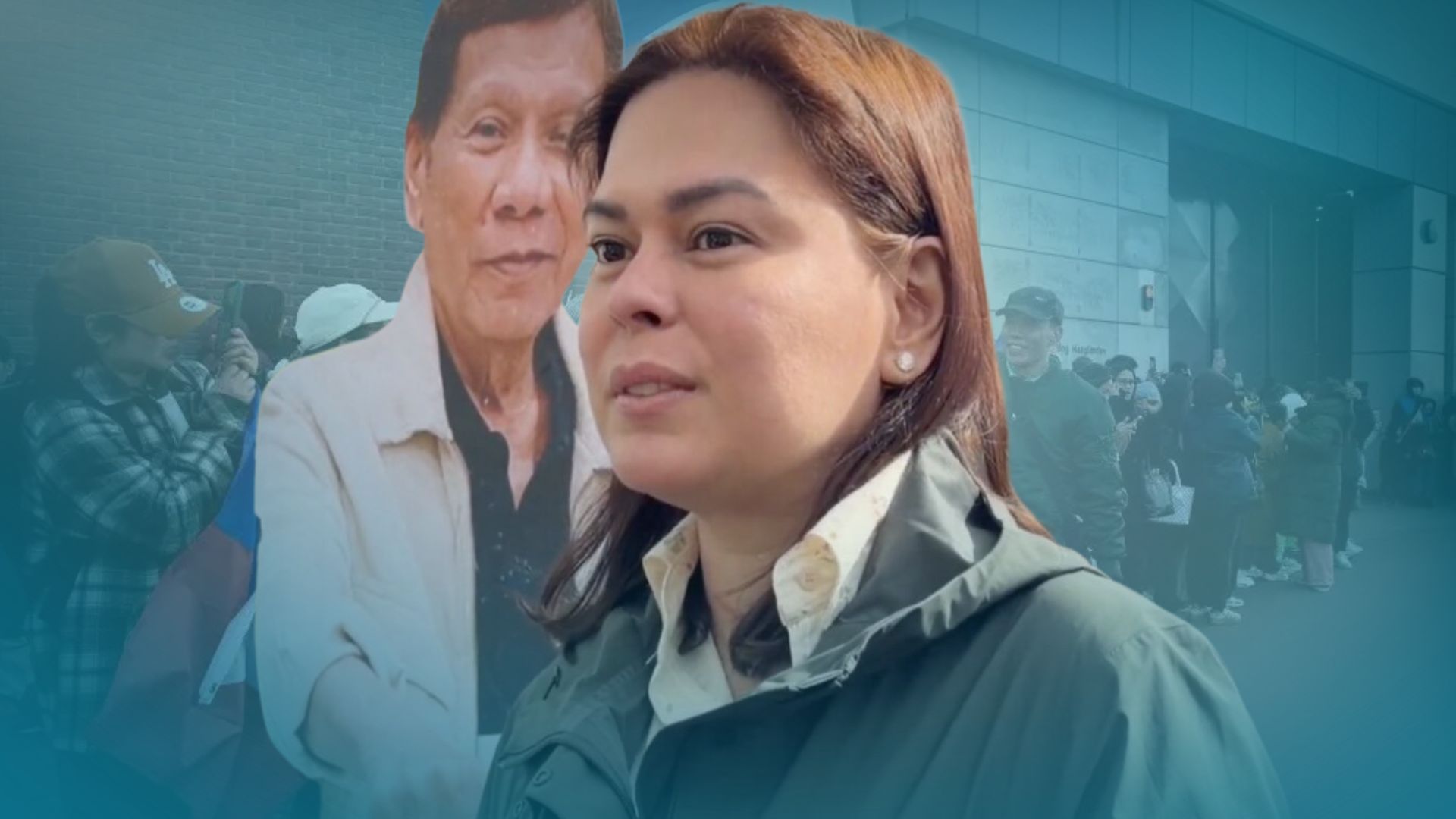
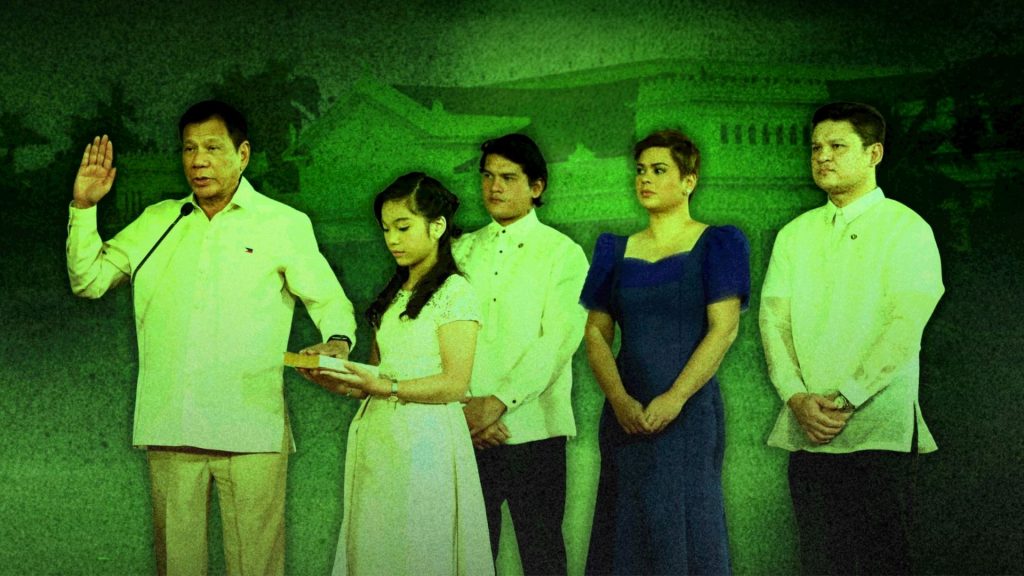
Vice President Sara Duterte, who is also currently facing a trial for impeachment, earlier lobbied the Department of Justice to refuse cooperation with the ICC probe, arguing that it infringe on national sovereignty. Following her father’s arrest, she escalated her position by labeling it as an act of “kidnapping”, calling on Filipinos to remain vigilant against external interference that undermines democratic independence.
For its part, legal scholars countered that the ICC does not undermine national sovereignty, since entering into treaties is actually an exercise of it. Moreover, they said that the investigation into alleged crimes against humanity ultimately serves the very people whose rights the Constitution seeks to protect.
Currently, a house resolution has been filed by Leila De Lima pushing President Ferdinand Marcos Jr. to renew the country’s ties with the ICC.
Palace Press Officer Claire Castro addressed De Lima’s call, saying that there is no need for the Philippines to return to the ICC to prove its commitment to combating impunity. She added that the country already implements Republic Act No. 9851, or the “Philippine Act on Crimes Against International Humanitarian Law, Genocide, and Other Crimes Against Humanity.”.
However, echoing ICC Pre-Trial Chamber I’s landmark decision, the judges explicitly declared that the Philippines’ fragmented domestic inquiries failed to demonstrate the “tangible, concrete, and progressive” investigative steps required to mirror the international tribunal’s scope. The court proceeded with its investigation despite the statutory presence of RA 9851 which provides a local legal framework but has yet to be widely enforced against high-level figures.
What Coming Back Means
Beneath the issue of reviving the treaty lies an intense debate over how the re-entry should be executed– specifically, whether the executive action by President Marcos Jr. is enough, or if a full senatorial ratification is legally necessary.
Before becoming a fugitive, Senator Ronald “Bato” Dela Rosa strongly argued in 2023 that President Marcos could not unilaterally rejoin the ICC, something his predecessor did to withdraw the country in 2018.
“So that’s the process. [It’s] back to zero, back to square one,” Dela Rosa said, insisting that re-entry requires a rigorous process culminating in a two-thirds majority vote of the Senate.
When former President Duterte withdrew the Philippines from the ICC, human rights groups and opposition senators also condemned the decision, arguing that the president could not solely revoke the treaty without Senate concurrence, especially since the Rome Statute functioned as domestic law and carried a binding, international legal status.
Former Senator Franklin Drilon contended that President Marcos can rejoin the ICC without a Senate vote, explaining that the original 2011 ratification remains legally binding since it was never officially repealed.
While the Supreme Court dismissed a previous challenge to Duterte’s 2018 withdrawal as moot, Drilon pointed out that the court’s ruling in Pangilinan v. Cayetano actually clarified that a president’s power to cancel treaties is not absolute. Therefore, since the Senate is an equal partner in managing these international agreements, Drilon argues that the original permission to be part of the ICC still stands for Marcos to use.
Should the Philippines revive the Rome Statute, the ICC will regain the power to investigate and prosecute core international crimes committed inside the country. Consequently, the government can no longer legally debate its obligation to cooperate.
If rejoining the ICC provides the country a legal shield against future atrocities, it begs the question, why hasn’t President Marcos simply forged it?
The answer may lie in the political ripples beneath this issue that Marcos must navigate, including the repercussions of the UniTeam breakup that could complicate the administration’s legislative agenda and political stability. As various controversies were exposed after the flood control scandal, powerful allies are also bound to be left vulnerable to international scrutiny, adding high stakes to an already volatile domestic landscape.
Above all, the issue should not be whether checks and balances are fundamentally right and beneficial for the Philippines. The need for mechanisms that hold those in power accountable is undeniable, especially in a country that often fails to deliver justice for victims. Rather, the crux of the matter is whether the country’s existing legal and political systems are truly capable of prosecuting individuals with a heavy hand.
Because if the Philippines can uphold justice impartially through its legal system, then no one would ever need to seek accountability elsewhere.