











Now Reading: Do ecobrick desks provide the ‘safe’ solution they claim to fulfill?
-
01
Do ecobrick desks provide the ‘safe’ solution they claim to fulfill?
Do ecobrick desks provide the ‘safe’ solution they claim to fulfill?

Whnzel Alvaran
One man’s trash is another man’s treasure — or as the proverb says. But what if the treasure contains toxic chemicals, can easily combust, or a pure myth that provides no value?
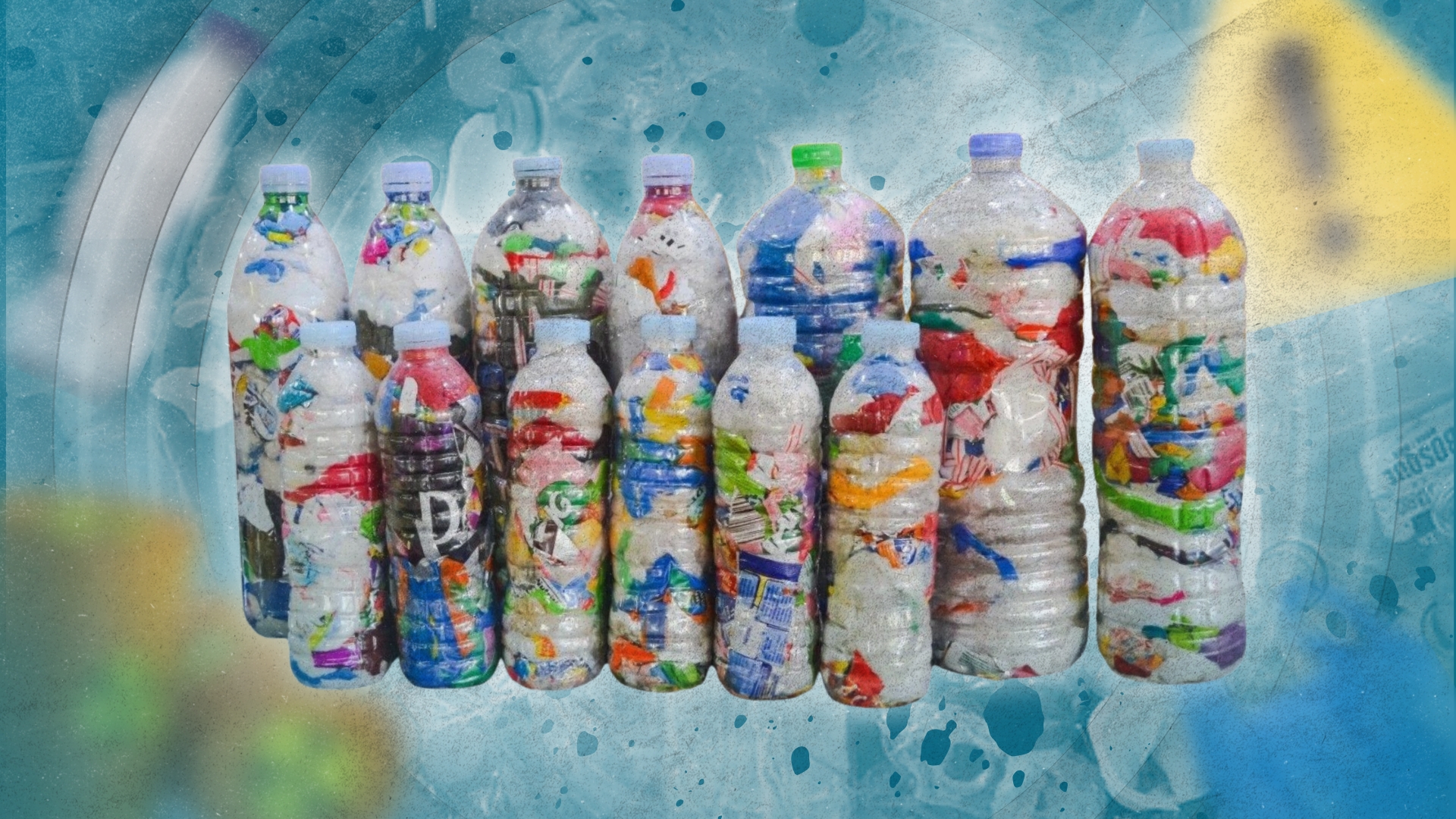
Eco-bricking, as defined by Seaside Sustainability, is a modern innovative method to limit plastic waste by stuffing packaging into a bottle to be turned into “bricks”.
The practice was developed in the Philippines in response to a shortage of shelter and a surplus of plastic waste dumped by the West. It was introduced as a “bayanihan” effort, where families can contribute by making the ecobricks themselves using the discarded plastics in their backyard. These bricks would then be donated as construction materials, most commonly seen as lining for school gardens.
A noble effort at first, especially with the influx of companies producing school desks made of eco-bricks; yet when seen beyond the surface, heavy risks may question the desks’ status as solutions.
Toxic to the students
Plastic waste isn’t like wood or metal. While it gradually breaks down, it can release toxins that can cause hormonal imbalance or even cancer.
Microplastics, tiny pieces of plastics that measure less than 5 millimeters, have been found to destroy DNA structure, injure organs, and drive toxic materials deeper into the body according to a study from the American Cancer Society.
They also melt very easily, beginning to melt at around 100 degrees celsius to 200 degrees celsius. This low melting point can result in the release of several poisonous gases such as formaldehyde and benzene, damaging the spleen and potentially causing cancer.
In comparison to other materials
A good construction material requires high standards, which environmentalists say ecobricks don’t meet. Even the tiniest contamination, like bits of food, can produce gases that cause the bricks to collapse. The bottles must also be tightly packed, otherwise it’ll break down and render the desks unusable. The bricks could also scatter microplastics all over, repeating the cycle and making minimal impact.
Compare that to wood, a material that has been trusted for decades. Unlike the eco-bricks, desks made from these are tactile and resist damage very easily. While a broken eco-brick desk could spill microplastics and heighten the health risks for students in the vicinity, a broken wooden desk can be easily cleaned and replaced.
Metal, another trusted material for school desks, ticks the durability factor that ecobricks lack. While one would argue wood can also easily combust, therefore it is no better than ecobricks, metal — specifically steel — has a melting point of 1370°C to 1540°C.
Eco-brick desks, while innovative and allow communities to be aware of their environment; a quick Google search or journal article later can disprove the “eco-friendly” and “safe” facade. Like plastics and poison, digging beneath the surface reveals the harrowing parts of the supposed “alternative”. Sometimes, maybe the sweetest looking change may drip toxins when under heat.