










Now Reading: Filipino-led biomedical techs are upgrading PH healthcare — here’s what you should know
-
01
Filipino-led biomedical techs are upgrading PH healthcare — here’s what you should know
Filipino-led biomedical techs are upgrading PH healthcare — here’s what you should know

After decades of relying on foreign medical tech, the Philippines is finally claiming its own narrative. A new wave of local scientists and engineers is upgrading the health sector with homegrown biomedical innovations built specifically for Filipino needs.
The Department of Science and Technology–Philippine Council for Health Research and Development (DOST-PCHRD) continues to support Filipino researchers in developing medical technologies aimed at improving healthcare access, enhancing patient safety, and reducing dependence on imported medical solutions.
Through its Biomedical Engineering for Health (Biomed) Program, DOST-PCHRD has funded dozens of projects that display how local innovation can contribute to a more responsive and sustainable healthcare system.
With over P795 million invested in 75 biomedical projects, the program reflects the government’s commitment to supporting research that can eventually translate into practical healthcare applications for Filipino communities.
Among the efforts supporting this direction are the following developments aimed at improving healthcare training and services in the country.
Train future OB-GYN specialists
One of the most promising projects under the Biomed Program is the development of a modular phantom model system for gynecologic and obstetric ultrasound-guided procedures.
Led by Dr. Melissa D.L. Amosco and Dr. Leslie Joy Lantisa Diaz, the project seeks to improve the way clinicians learn ultrasound-guided interventions by providing realistic training models that mimic human anatomy and tissue behavior.
Ultrasound-guided procedures have become increasingly important in obstetrics and gynecology because they are minimally invasive, highly accurate, and often less expensive than conventional surgical techniques. However, mastering these procedures requires extensive training and precise hand-eye coordination.
Traditionally, clinicians gain experience through direct patient interactions, a method that raises concerns about patient safety during the learning process. Recognizing this challenge, the research team developed modular training models that replicate structures such as the uterus, kidneys, tumors, and cysts using tissue-like materials that simulate real human anatomy under ultrasound imaging.
The system allows healthcare professionals to repeatedly practice needle insertions, biopsies, and fluid aspiration procedures without exposing patients to unnecessary risks.
What makes the innovation particularly valuable is its local adaptability. Imported training models are often expensive, difficult to modify, and inaccessible to many Philippine healthcare institutions. The locally developed version is modular, portable, customizable, and designed to reduce material waste.
Researchers believe wider adoption of the technology could improve the quality of medical training while minimizing risks to patients. Plans for patent protection and small-scale manufacturing indicate the project’s potential for future commercialization and broader distribution.
3D bioprinted human skin
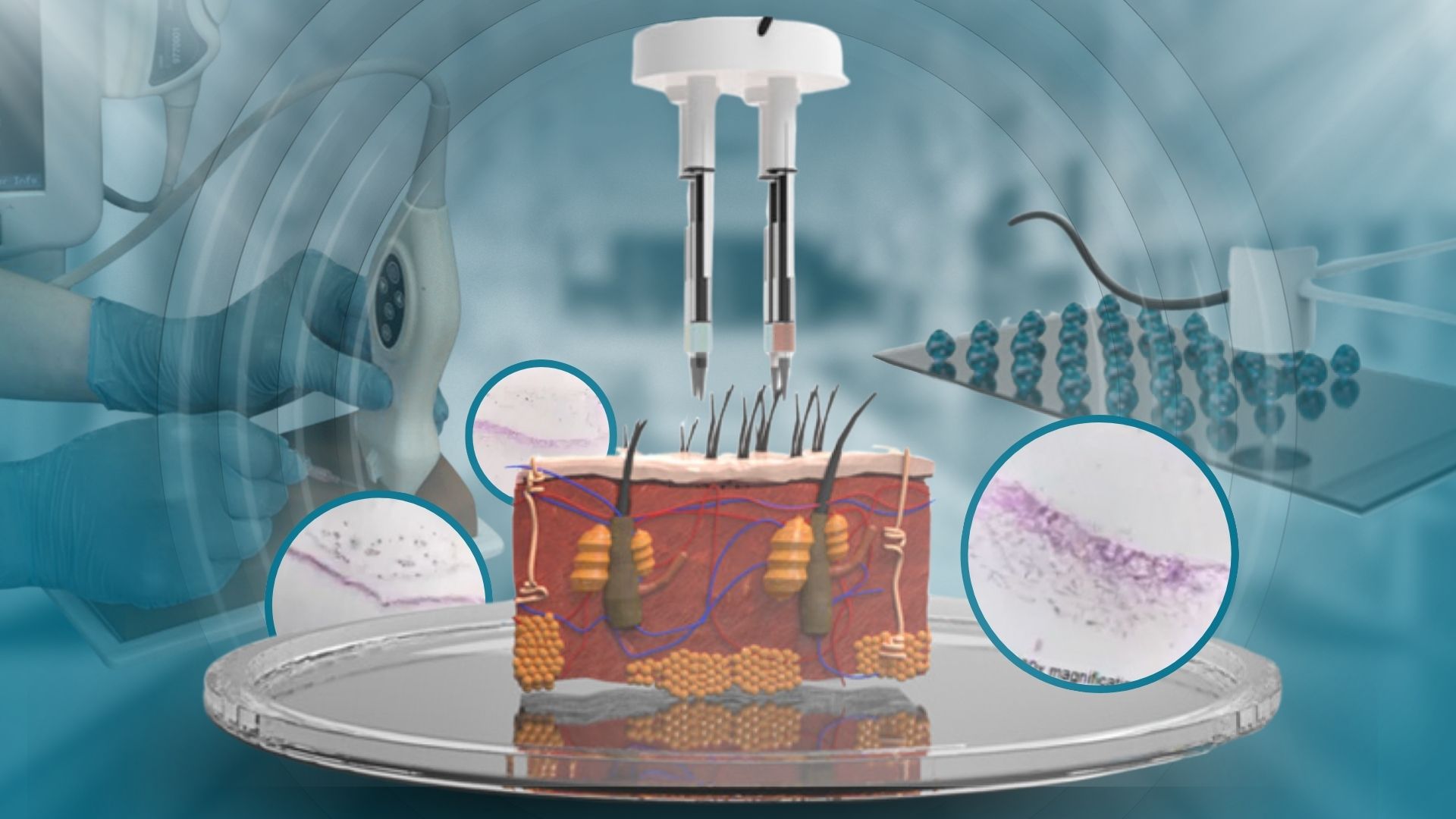
Another promising project is being developed by Iloilo-based pharmaceutical company GalenX Inc., which is creating a three-dimensional bioprinted human skin model for research and product testing.
The initiative aims to provide a more ethical, accurate, and cost-efficient alternative to traditional animal testing used in developing pharmaceuticals, cosmetics, and medical devices.
Using actual human cells combined with bio-ink and tissue scaffolds, researchers employ advanced 3D bioprinting technology to create skin models that closely resemble natural human tissue. These laboratory-grown skin models can be used to test product safety and effectiveness before clinical application.
According to project leader Jan Vincent Sollesta, animal testing remains expensive and often produces results that do not perfectly reflect human biological responses. By contrast, bioprinted human skin can provide more reliable data because it is developed from actual human cells and designed to mimic the structure and behavior of human tissue.
The technology also addresses growing global concerns regarding animal welfare while reducing the costs associated with maintaining animal testing facilities.
Beyond its practical applications, the project is helping cultivate expertise in tissue engineering, regenerative medicine, and advanced manufacturing technologies within the Philippines. Through collaborations with the University of San Agustin and DOST researchers, scientists are being trained in cell culture techniques and 3D bioprinting processes that were previously limited in the local research environment.
If successfully validated, the technology could open new opportunities for biomedical research and development within the Philippines.
Newborn assistive device
A team led by Dr. Alvin Caballes, in collaboration with the University of the Philippines Manila and UP Diliman, is developing a pediatric abdominal wall defect closure assistive device intended for newborns suffering from gastroschisis and similar conditions.
Gastroschisis is a congenital defect in which a baby’s intestines and other abdominal organs develop outside the body through an opening in the abdominal wall. The condition requires immediate medical intervention after birth and carries risks such as infection, dehydration, and hypothermia.
The device being developed aims to assist clinicians in gradually and safely returning exposed organs into the abdominal cavity while minimizing complications.
Although the technology remains in the prototype stage, researchers have already established a foundational design and begun evaluating the safety and biocompatibility of the materials involved.
The project highlights one of the realities of biomedical innovation: creating medical devices requires rigorous testing and strict compliance with regulatory standards. Researchers must ensure that every component remains stable and safe when exposed to biological environments before the technology can proceed to clinical use.
Despite challenges involving specialized materials, regulatory requirements, and supply chain limitations, the team continues to refine the prototype with the goal of eventually providing a locally developed solution for a critical pediatric healthcare need.
Why local biomedical technologies matter
Developing biomedical technologies within the country can help reduce costs associated with imported medical equipment and create solutions tailored to the realities of Philippine healthcare settings.
Local production also strengthens national self-reliance by ensuring that critical healthcare innovations are more accessible and adaptable to the needs of hospitals, clinics, and research institutions.
Beyond affordability, these initiatives create opportunities for Filipino scientists, engineers, and healthcare professionals to develop specialized expertise that can drive future innovations.
The growth of the biomedical sector also positions the Philippines as a contributor to global healthcare technology development rather than merely a consumer of foreign innovations.
Strengthen collaboration
The growth of locally developed biomedical technologies highlights the expanding capacity of the Philippines to generate healthcare innovations. However, their full impact depends on coordinated action among researchers, healthcare professionals, and government institutions to ensure that these solutions move beyond development and into consistent real-world application.
While many biomedical projects already exhibit potential to improve affordability, safety, and efficiency in healthcare delivery, their implementation often requires stronger and sustained public sector support. Adequate funding, clear policy direction, and institutional backing remain essential to bridge the gap between innovation and widespread clinical use.
For these advancements to truly benefit the public, healthcare innovation must be treated as a shared responsibility between scientific communities and government systems to ensure that research efforts are translated into accessible and long-term improvements in the country’s health services.