








Now Reading: From fertilizer to energy supplier—how fertilizer waste can power PH nuclear energy
-
01
From fertilizer to energy supplier—how fertilizer waste can power PH nuclear energy
From fertilizer to energy supplier—how fertilizer waste can power PH nuclear energy

They say one man’s trash is another man’s treasure. Who would expect that from the simple process of creating common fertilizer, the country would be introduced to ways of strengthening the energy industry?
The Philippines, a country rich in natural resources, still faces a scarcity of a few important resources. Just recently, the National Grid Corporation (NGCP) has reported a risk of power outages lasting up to seven hours due to the heightened demand for electricity across the country.
As many have been forging other alternatives to sustain the demands for energy, a research study conducted by the Department of Science and Technology – Philippine Nuclear Institute (DOST-PNRI) found a way in efficiently extracting uranium yellowcake during fertilizer production.
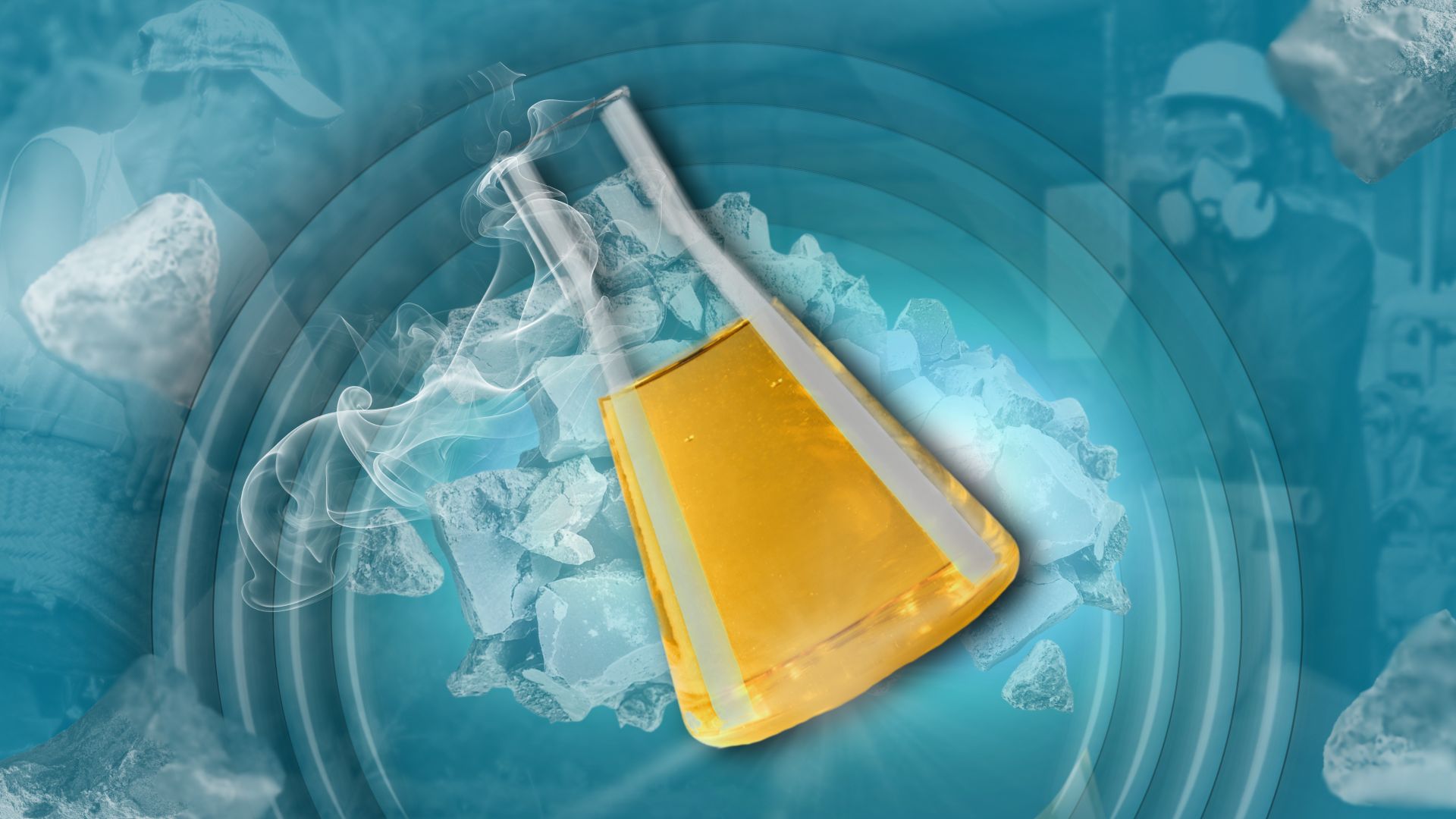
Uranium yellowcake is a concentrated form of uranium oxide from uranium ore. It is considered to be one of the most basic components in producing nuclear energy.
Countries such as Kazakhstan, Australia, and Canada are known for mining uranium in order to produce yellowcake that is used for nuclear energy production in power plants for electricity.
However, it only serves as a component and cannot be made fuel as to how flour is only an ingredient to bread and requires further processing before being made into the final product.
Through laboratory-conducted research, the DOST-PNRI team led by Jennyvi D. Ramirez developed a continuous-scale technique of extracting uranium from a common industrial liquid—wet phosphoric acid (WPA).
Phosphoric acid is a chemical yielded when processing phosphate rock to produce fertilizers. With the rock naturally containing uranium, 80 percent of this ends up as acid when processed into fertilizer.
WPA is used across the agricultural sector in common fertilizer, animal feed supplements, and in more purified forms such as food additives.
In their project called “Micro-scale Continuous Extraction System for the Recovery of Uranium from Philippine Wet Phosphoric Acid,” they found that through a mixer-settler system, uranium may be able to be extracted.
Yellowcake production is seen to come with health and environmental risks which was why it was once considered a waste product. With this uranium extraction method, the researchers have found a way to extract it efficiently while keeping it safe and environmentally friendly.
Additionally, in a 2023 study co-authored by Ramirez, it was found that if uranium was extracted from phosphoric acid fertilizers such as WPA, it could be able to supply 12 to 21 percent of the country’s yearly fuel needs in order to supply the Bataan Nuclear Power Plant.
This breakthrough is funded by the DOST-Philippine Council for Industry, Energy, and Emerging Technology Research and Development as well as the International Atomic Energy Agency under the TC PHI2013 “Enhancing Bench-scale Simulation for the Development of Continuous Extraction Technology of Uranium and Other Valuable Elements from Phosphates-Phase II.”
The study is seen to be a big step in the country’s use of local unconventional uranium resources to be used in energy supply — including nuclear energy.
Albeit the country is still not opening its doors to its own nuclear energy production, this yellowcake extraction from what was once seen as merely waste helps set the path towards local expertise of safe and efficient radiochemistry and hydrometallurgy.
Once again, research has struck gold in the possibilities of energy and potential of nuclear power to sustain the entire country.