






Now Reading:
House panel pushes AI regulation bill with risk-based framework
-
01
House panel pushes AI regulation bill with risk-based framework

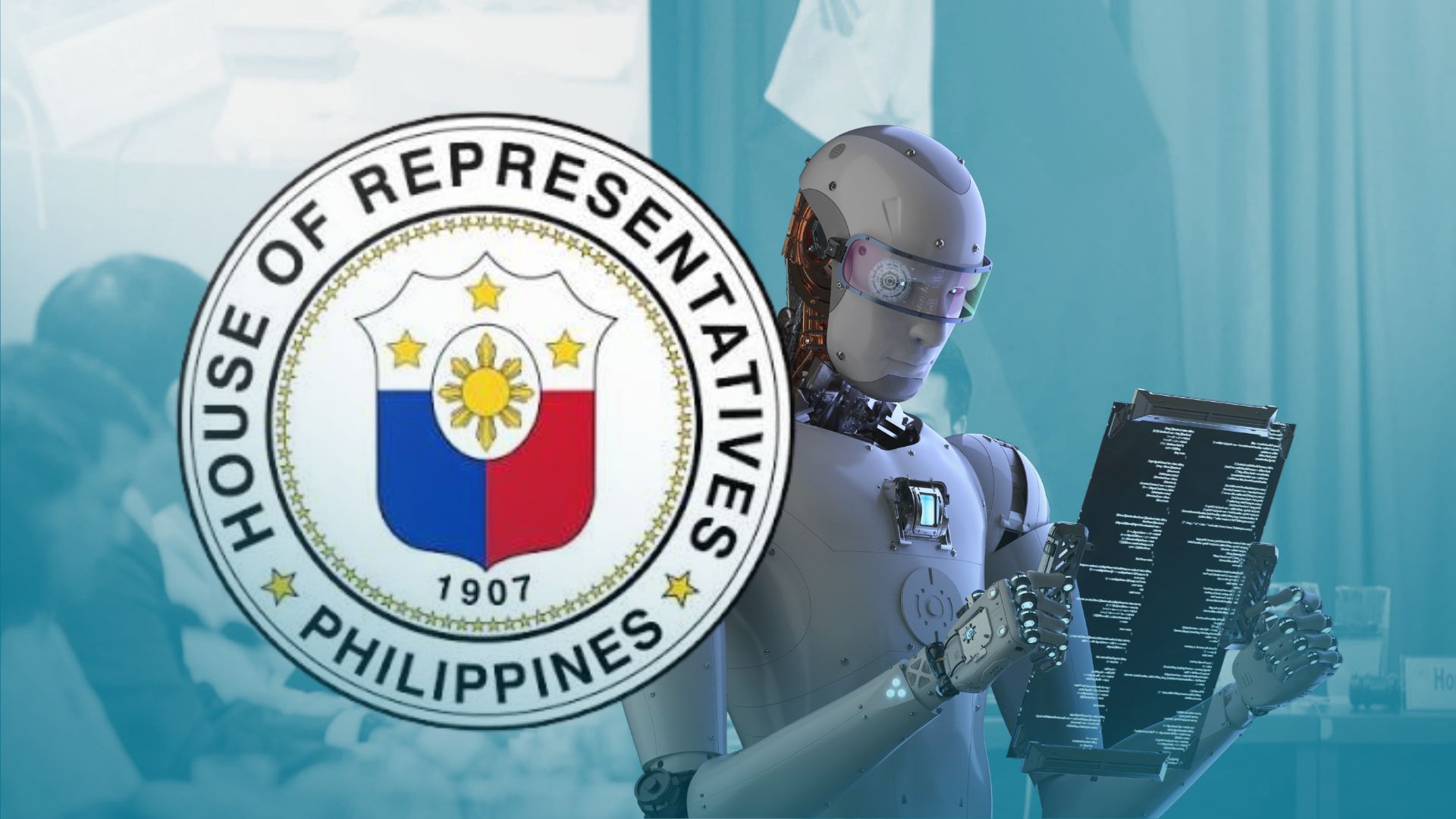
A House of Representatives technical working group (TWG) has advanced the proposed Artificial Intelligence (AI) Development and Regulation Act, a measure that seeks to regulate high-risk AI systems while promoting innovation, workforce protection, and wider AI adoption across the country.
The substitute bill, which consolidates 26 House bills, three House resolutions, and one privilege speech, establishes a phased Philippine AI Commission under the Department of Information and Communications Technology (DICT) and adopts a risk-based regulatory framework that limits government oversight to AI systems deemed high-risk.
The proposal exempts most AI systems from government registration, requiring regulatory approval and safety assessments only for AI applications used in critical areas such as employment, lending, healthcare, and other sectors where automated decisions could significantly affect people’s rights and welfare.
Under the proposed measure, regulatory sandboxes will allow startups to develop, test, and validate AI systems under government supervision before commercial deployment.
To address concerns over automation, the bill prohibits employers from terminating workers solely through automated algorithmic decisions. Employers would also be required to provide a 60-day notice and retraining opportunities before any AI-related displacement.
Negros Occidental 3rd District Representative Javier Miguel Benitez, who chairs the TWG under the House Committee on Information and Communications Technology, said the proposal aims to balance innovation with public protection.
“We should not stifle innovation, but we [must] regulate the risk,” Benitez said during the second Technology Summit, organized by the Management Association of the Philippines (MAP) and accounting firm KPMG on June 30.
Benitez added that the proposed law was crafted after studying AI frameworks from Europe, the United States, and China, but was tailored to Philippine conditions.
“We studied Brussels, Washington and Beijing, but we are writing a Filipino law, one that works for the farmer, the teacher, and the small business owner in the province,” he said.
Beyond regulation, the bill seeks to expand AI development by funding computing access for Filipino researchers, promoting AI adoption among small businesses and educational institutions, and strengthening sovereign AI capabilities to support national security.
The substitute measure also proposes an AI Bill of Rights, sets readiness requirements before the AI regulator can exercise its powers, and prohibits harmful AI applications, including AI-generated abuse imagery and AI-enabled vote manipulation.
Around 60 representatives from government agencies, regulators, industry, universities, and civil society participated in the latest TWG deliberations at the Speaker Nograles Hall, where stakeholders agreed that AI systems should uphold human autonomy, informed decision-making, and meaningful human oversight.
Participants also recommended provisions addressing AI’s environmental impact and the country’s resilience amid global supply chain disruptions.
Stakeholders have until July 20 to submit proposed amendments to the House Committee on ICT Secretariat, as the TWG continues its review of the provisions.