











Now Reading: Mental illness hits surrogate moms harder than women who conceive naturally
-
01
Mental illness hits surrogate moms harder than women who conceive naturally
Mental illness hits surrogate moms harder than women who conceive naturally

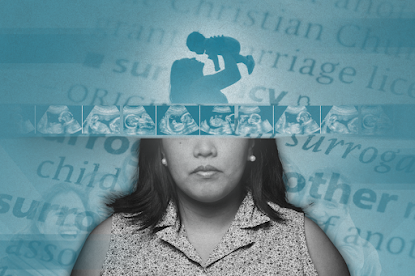
Surrogate mothers are more likely to face mental health struggles after birth than women with natural pregnancies, as they cope with emotional separation, social judgment, or the weight of carrying a child for someone else, a Canadian study finds.
With gestational carriers, also called surrogates, having increased vulnerability to mental illness, mental health screening and ongoing support becomes crucial for their holistic care and welfare.
“Our findings underscore the importance of adequate screening and counselling of potential gestational carriers before pregnancy about the possibility of a new-onset mental illness, or exacerbation of a prior mental illness during or after pregnancy,” Dr Maria Velez said, one of the authors from McGill University in Canada.
The study was conducted in Ontario wherein over 760,000 pregnancies were analyzed from 2012 to 2021 among women with no prior history of mental illness. Of these, a vast majority were unassisted conceptions, a small percentage were through in vitro fertilization (IVF), and only a fraction involved gestational carriers.
Unassisted conceptions refer to women who gave birth to babies naturally, while in most cases of IVF, women also gave birth to their own offspring but they needed medical help to aid fertility.
The IVF procedure is complex: eggs are fertilized with sperm outside the body, and the fertilized egg is then transferred into the woman’s uterus, leading to pregnancy.
Despite being a small group, gestational carriers, or surrogates, had the highest rate of new-onset mental illness: 6.9 per 100 person-years for gestational carriers, 5.2 for unassisted conception, and 5.0 for IVF
This translates that surrogates were more likely to struggle with mental health than women who got pregnant naturally or through IVF.
These numbers carry weight, especially in an economy of a developing country, like the Philippines.
If surrogates in a high-resource facility face mental health illness, what about those in countries where surrogacy is culturally sensitive and illegal?
In the Philippines, surrogacy remains legally unregulated and socially taboo, especially in a country that comprises mainly catholics.
Even still, an underground surrogacy industry exists where women are willing to carry pregnancies for intended parents in exchange for money.
Surrogates are usually compensated up to ₱1 million or more in the country according to Rappler, with intended parents covering their basic needs and improving their living conditions during pregnancy.
While countries like Australia and Canada only allow altruistic surrogacy, some countries like Ukraine and some U.S. states permit commercial arrangements legally.
As international interest in surrogacy grows, the findings highlight the need to consider also the mental and psychological well-being of surrogate mothers, and not only the legal grounds.
“The finding might suggest that some gestational carriers may experience grief from relinquishing their newborn, like that described after adoption or removal of the child into foster care – something that needs further studies,” Velez said.
This undermines the need to support surrogates mentally during and after giving birth.
Velez relates the current study to their previous research where surrogates are also at higher risk for physical complications like severe postpartum hemorrhage and pre-eclampsia.
Whether in Ontario or Manila, women carry more than just a child. It is a story of survival, sacrifice, and even silence.
If surrogacy gives hope to parents, such hope comes at an invisible cost. And with the current state of the Philippines, it is these surrogate mothers who pay the price.