


Now Reading: Mukhang pera? Here are some of the heroes’ faces that are no longer in our money.
-
01
Mukhang pera? Here are some of the heroes’ faces that are no longer in our money.
Mukhang pera? Here are some of the heroes’ faces that are no longer in our money.


The numismatic history of the Philippines, if described in one word, can never be simply “rich.” In reality, the peso has seen many iterations that have defined the very money we use today.
In its earliest forms, banknotes issued by the Spanish colonial government under the Banco Español Filipina de Isabel II had colonial vestiges which disallowed it to feature its well-deserving heroes of praise.
However, the first instance where a Filipino was featured in a banknote was in 1903, where a two-peso banknote issued by the American colonial government featured Jose Rizal, widely attributed to be our national hero.
Rizal, however, retains his position and continues to this day as the face of a different denomination–the piso coin.
Here are five other heroes who have long been off the faces of the piso:
Marcelo H Del Pilar
Marcelo Hilario Del Pilar, a propagandist and Illustrado, was featured on the five peso bill which was issued during the English Series of 1951 to 1974. After the demonetization of the English Series, Del Pilar was moved to the 50-centavo coin, where his portrait stayed until 1995.
In 1995, when the coins moved from the Flora and Fauna Series to the New Design Series, heroes on the 25-centavo to 1-centavo coin were removed, and the 2-peso and 50-centavo coins were scrapped from circulation entirely.
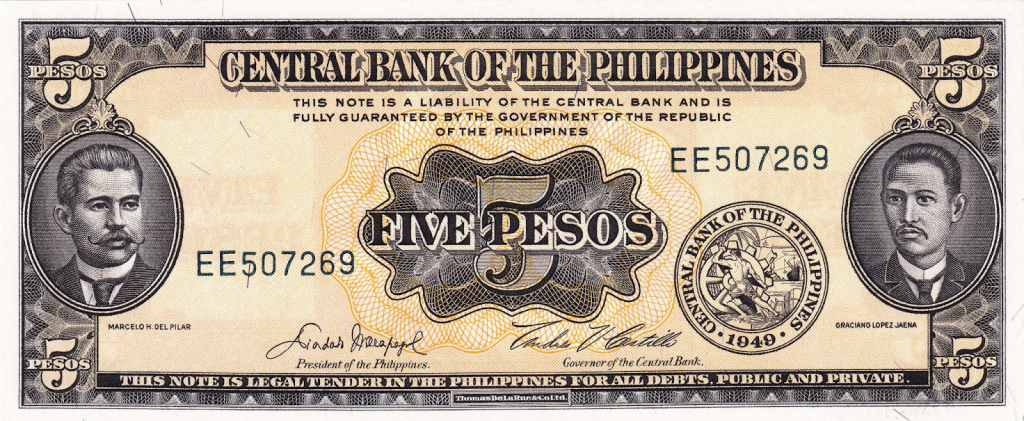
Graciano Lopez Jaena
Also a propagandist and an Ilonggo, Graciano Lopez Jaena was also featured on the five peso bill along with Marcelo H Del Pilar. However, Lopez Jaena was not among the heroes whose portrait was relocated into an apt denomination of coinage once the English Series was demonetized.
Lopez Jaena, however, continued to be printed in stamps issued by the Philippine Postal Corporation, with the latest unfortunately being in 2006.
Father Mariano Gomez, Jose Burgos, and Jacinto Zamora
Fathers Gomez, Burgos, and Zamora, known better for their collective name GomBurZa (not Majoha!) were formerly on the ten-peso bill during the same era, the English Series.
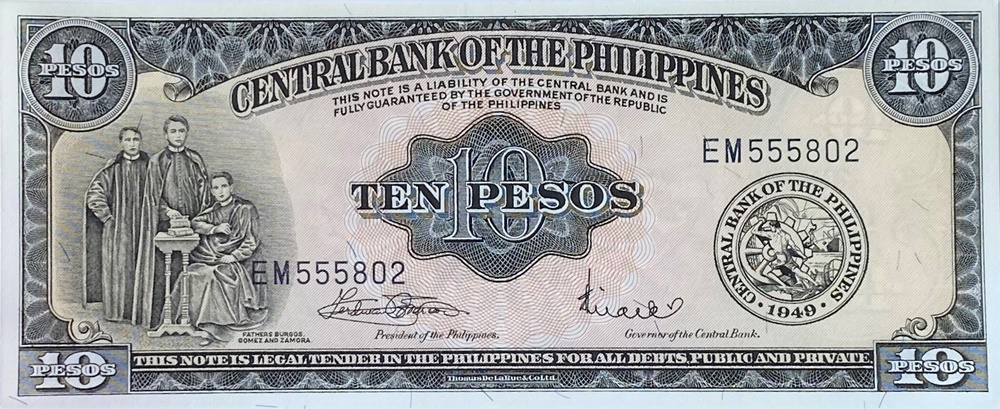
The martyr priests, who advocated for secularism in the church, and to whom Rizal’s novel El Filibusterismo was dedicated to, also had the same fate as Graciano Lopez Jaena, with their portraits falling out of use after the demonetization of the old series.
Emilio Jacinto
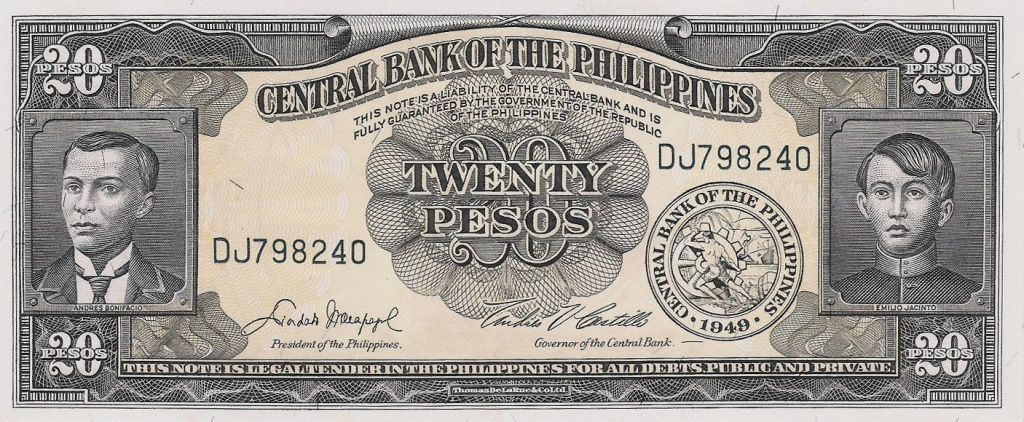
Jacinto, who was called the Brain of the Revolution, was placed alongside Katipunan founder Andres Bonifacio in the 20-peso bill.
Andres Bonifacio, the lucky one, was moved to the five-peso note issued from 1969 to 1985. He was also moved to the two-peso coin issued from 1983 to 1994. His portrait was briefly removed from circulation during 1995 to 1997, but with the release of the ten-peso banknote and coin, with the coin known back then as the “Millenium Coin,” Andres Bonifacio returned with his fellow revolutionary, Apolinario Mabini.
Jacinto was not to have the same fate as his Supremo, however, as he was slated off of money in 1974 with the demonetization of the English Series.
The Luna Brothers
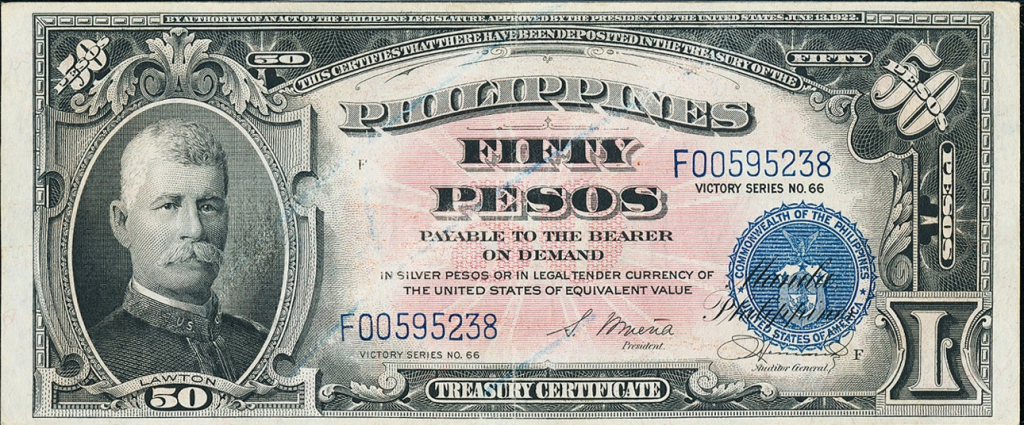
Antonio Luna, a trained pharmacist and General of the Revolutionary Army, was featured in the 50-peso banknote. Luna replaced the portrait of army officer Henry Ware Lawton, who was killed in action in 1899 during the Philippine-American War.

Luna was also removed from the slate of heroes shown in banknotes as soon as the English Series was demonetized. He, however, was given a special commemorative coin issued in 2016, his 150th Birth Anniversary.
Juan Luna, Antonio’s younger brother, was also featured in the 25-centimo coin, which was issued from 1965 to 1994, and under different series.
To this date, the Luna brothers are the only siblings to have been both immortalized in Philippine numismatics.
Tandang Sora
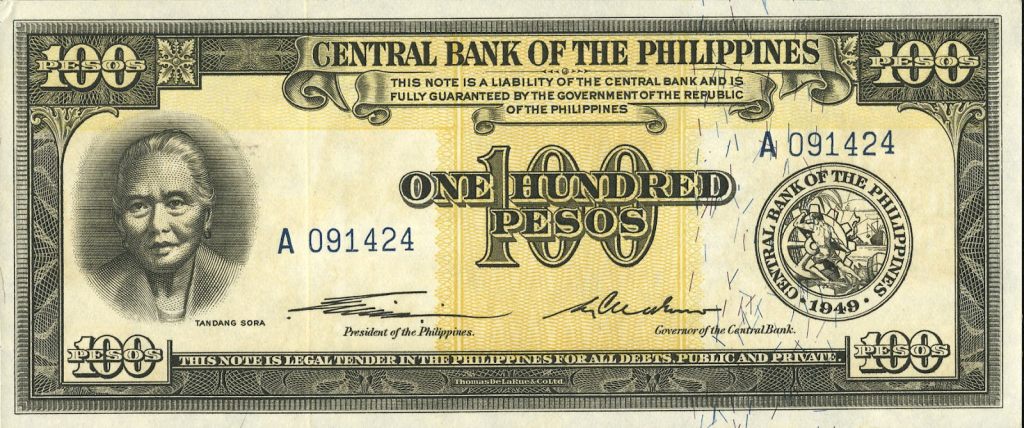
The Grand Woman of the Revolution, Melchora Aquino was in her late 80s when the revolution sparked in her quaint Balintawak. In honor of her heroism, her portrait was found in the 1100-peso banknote of the English Series. After the demonetization of these notes, her likeness was found in the 5-centimo coin issued from 1965 to 1994, also in different series.
The common story of pesos, centavos, and cencillos:
In 2025, many civil society organizations rallied against the removal of heroes from the 50 to 500-peso banknotes, following suit with the 1,000-peso banknote of the First Philippine Polymer Banknote Series.
However, it can be seen that even in the past, when the scars of history still sting worse than today, heroes are removed from the spotlights they so deserve. This is not to say that they are worth less of the heroes they are, but considerations of their weight and relevance in Philippine history and society is more of a question that is subjective and up to the Bangko Sentral to decide.
How does the BSP choose the “faces” of our currency?
While the Bangko Sentral remains privy on how the selection process happens, a 2021 column from Ateneo historian Ambeth Ocampo suggests that the Philippine peso was supposed to have a different style since 2010.
Featuring not the heroes of the revolution but contemporary giants–Fernando Amorsolo for Painting, Guillermo Tolentino for Sculpture, Jose Garcia Villa for Literature, Teodoro A. Agoncillo for History, the banknotes may have been a fresh start to the face of the Philippine peso.
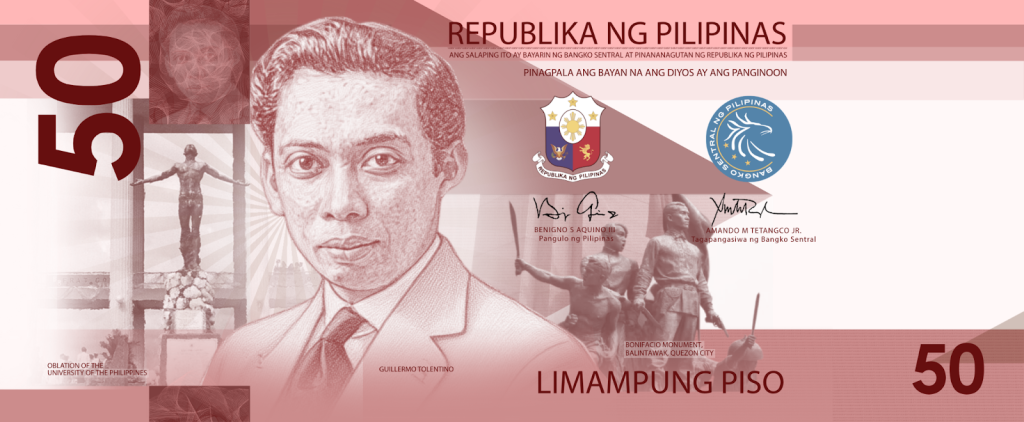
The Bangko Sentral also has a numismatic committee where, along with policymakers, historians, and designers, decides who makes the cut to fill the blanks of Philippine currency.
To be on a note, however, is not the pinnacle of heroic nor nationalistic pride. Sometimes, it is in the mere living of the values of those who have appeared in the long-gone banknotes that we as Filipinos become more Filipinos worthy of emulation, much like the pesos, centavos, and cencillos that run this economy.