











Now Reading: NASA’s $4 billion observatory set to join space legends Hubble and Webb
-
01
NASA’s $4 billion observatory set to join space legends Hubble and Webb
NASA’s $4 billion observatory set to join space legends Hubble and Webb

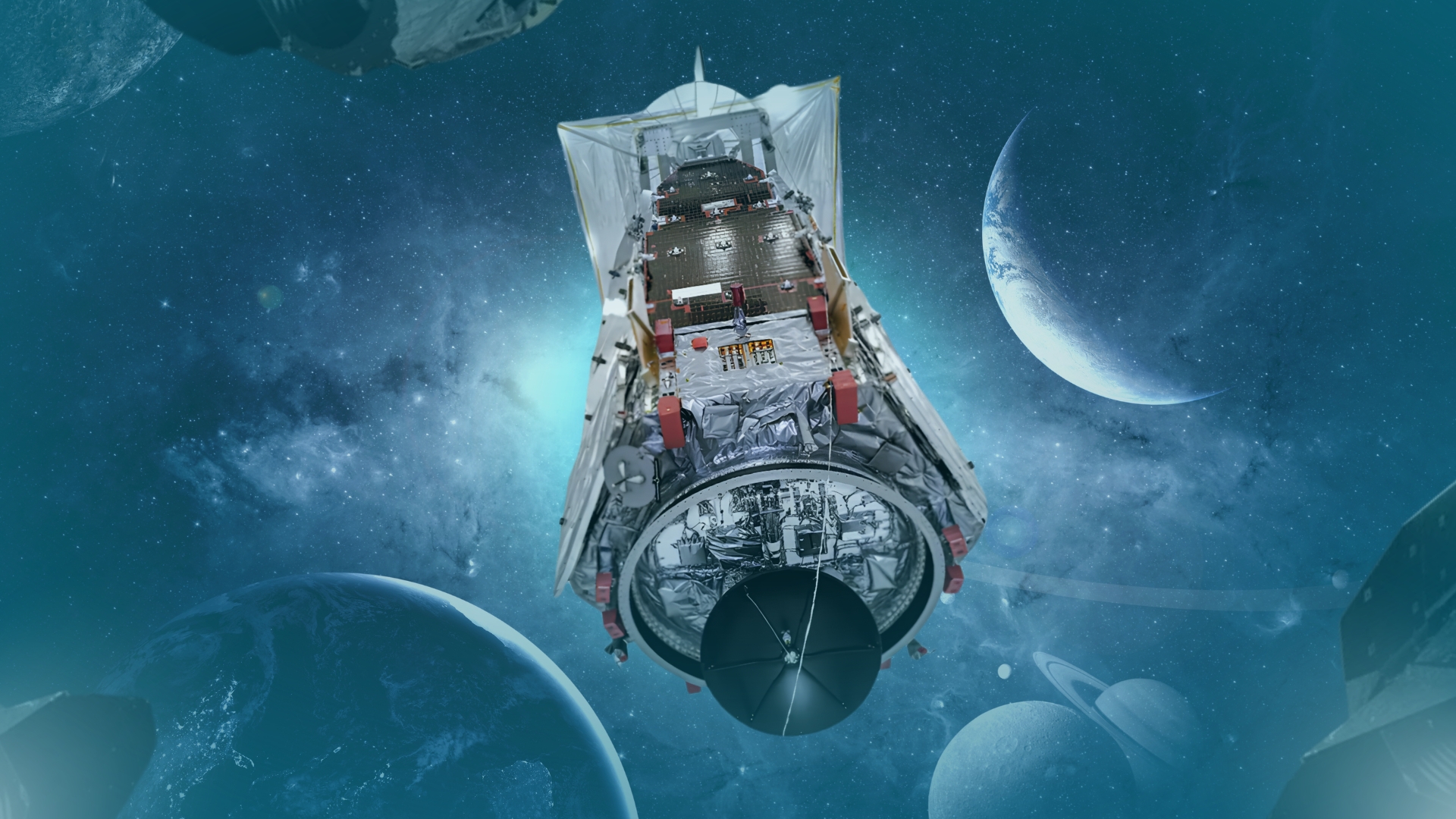
There’s no place like home, they say, yet the search of finding something similar is bound to happen soon. Although humanity isn’t just looking for a planet that resembles their own; they have set their eyes on an even greater mission—getting a clearer picture of what exists beyond Earth, the universe rather.
On August 30, 2026, the National Aeronautics and Space Administration (NASA) is set to launch another stellar observatory that captures the widest view of the universe ever achieved: the Nancy Grace Roman Space Telescope.
Named after NASA’s first chief astronomer—the ‘mother of the Hubble Space Telescope’—Roman is bound to leave the planet on a SpaceX rocket. NASA has placed a budget of 4 billion USD and huge expectations on this new observatory, making it join the ranks of space legends like Hubble Space Telescope and James Webb Space Telescope.
According to Julie McEnery, senior project scientist, Roman can produce data of 500 terabytes per year, surpassing the total data captured by Hubble in its 35 years of service. Also, with a field of view at least 100 times larger than Hubble’s, it can measure light from a billion galaxies in its lifetime.
“Roman has broadly the same sensitivity and sharpness of vision as Hubble, but we survey the sky much faster, so that one month of observations to survey our Milky Way galaxy would take about a century with Hubble,” McEnery explained.
On the other hand, Roman and Webb work in tandem rather than to compete. Roman zoom out and capture images 50 times larger than Webb’s field of view. Then, Webb will zoom in and take a closer look at the intricacies of the universe with higher resolution.
Roman is set on a mission to investigate three cosmic mysteries: dark energy, dark matter, and exoplanets.
Dark matter and energy are some of the anomalies in the universe that defies mankind’s common logic. No one knows how they came to existence but scientists found that dark matter is like an invisible glue that holds the universe together while dark energy is an unknown force that somehow expands the universe at an accelerating rate.
Roman also captures more than the unknown; it’s on a mission to discover exoplanets, which are planets outside the solar system. Hubble has helped identify more than 5,000 exoplanets and investigate planetary systems like TRAPPIST-1, which host Earth-like planets that are likely habitable. As such, Roman is expected to expand the search of distant worlds, far more than what Hubble has reached.
Meanwhile, when Roman is launched, it’s headed to Lagrange Point 2, a gravitational stable region a million miles away from Earth. It is basically an ideal home for space observatories because it can keep them safe from heat while still generating power from sunlight. In fact, it is also where Webb currently operates.
To fuel Roman’s decade-long journey in space, about 1,100 liters of hydrazine propellant is loaded to keep it on course. Hydrazine is a highly efficient fuel NASA frequently uses for numerous spacecraft.
Once completed, Roman is officially nearing its launching stage. Jackie Townsend, Roman’s project manager, highlights that the next major step is encapsulation of Roman inside its payload fairing to protect the telescope during its ascent to space, which happens around the third week of August.
With the countdown nearing zero, Roman is just days away from joining the ranks of space legends like Hubble and Webb as NASA’s newest eye on the universe. NASA hopes that this ascent is not just bringing a telescope to space but rather a one step forward to get a clearer picture of the mysteries of the universe.
“The Roman dream team continues to do mighty things, and I am delighted to say yet again, Roman is ready for launch,” Townsend emphasized.