











Now Reading: ‘Nuclear traces’ detected in WPS shouldn’t scare you, here’s why
-
01
‘Nuclear traces’ detected in WPS shouldn’t scare you, here’s why
‘Nuclear traces’ detected in WPS shouldn’t scare you, here’s why

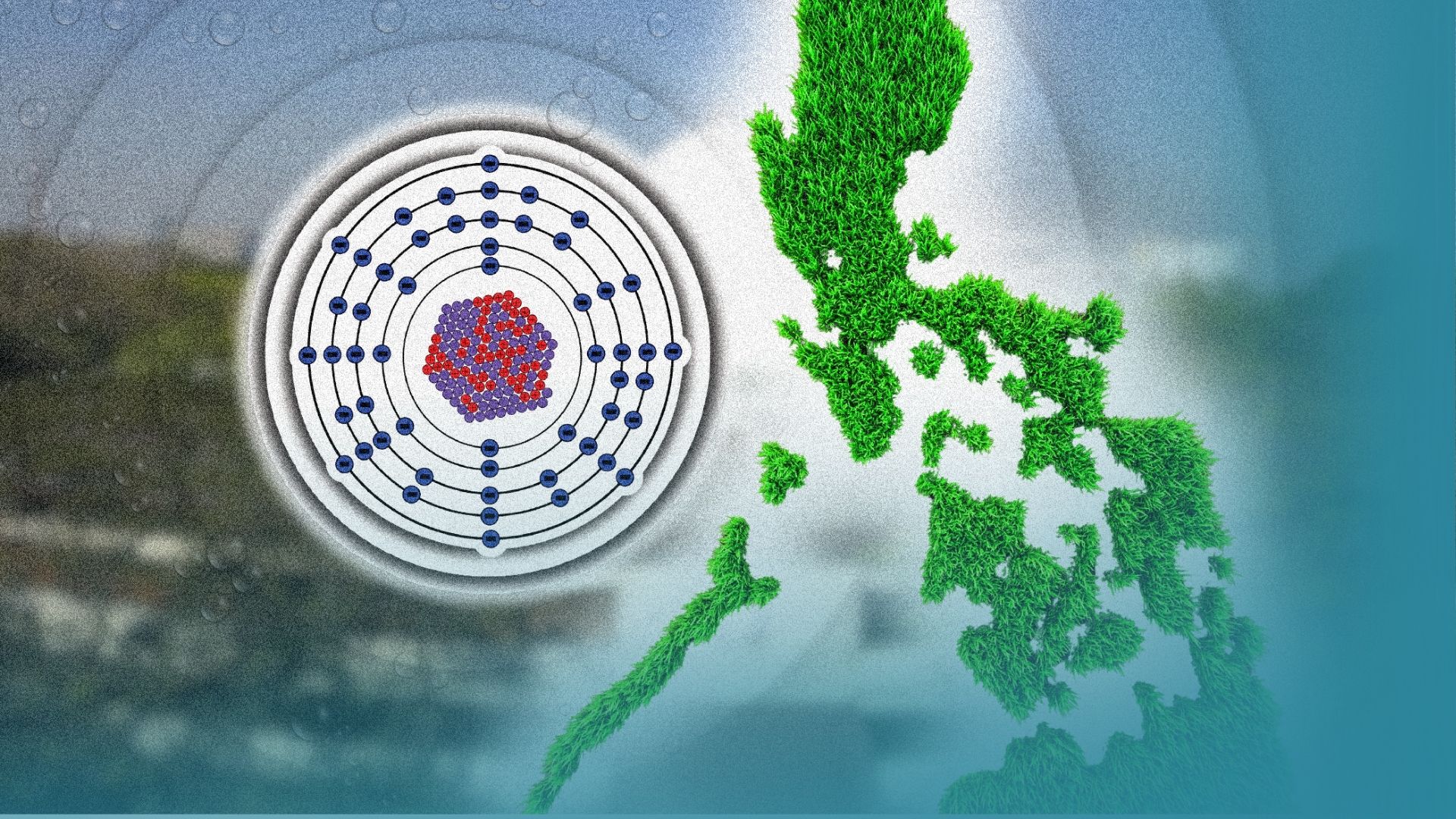
Despite having inactive nuclear power plants and weapon programs, it may come as a surprise that elevated levels of nuclear-linked Iodine-129 were found in the West Philippine Sea—yet, scientists may want you to “hear them out” before you jump to conclusions.
In a study conducted by experts from the Department of Science and Technology-Philippine Nuclear Research Institute (DOST-PNRI), University of the Philippines Marine Science Institute’s Geological Oceanography Laboratory (UP-MSI), and the University of Tokyo, concentrations of the radioactive substance Iodine-129 were found to be 1.5–1.7 times higher than those in the other 119 seawater samples from different parts of the country.
While Iodine-129, a radioactive isotope with a half-life of 15.7 million years, exists naturally at small or trace levels, it’s primarily a product of nuclear weapons testing, nuclear fuel reprocessing, and reactor operations, hence the concern over its elevated levels.
“Further investigation suggests that, though Iodine-129 is elevated, no nuclear activities are likely operating and releasing it directly into the seas, even with more than 50 operating nuclear power plants around the region,” the study noted. “Detected 129Iodine-129 levels are safe and pose no threat to human health or the environment.”
Instead, experts propose it has more to do with cross-border, historic nuclear test sites and how long-lived radionuclides can travel long distances through ocean circulation across WPS.
Tracing back the nuclear trace
Experts suspect the element accumulated in Bohai Sea and Yellow Sea in China and is likely of human origin, notably from nuclear fuel reprocessing activities, past nuclear weapons tests at Lop Nor and Semipalatinsk, and the Chernobyl accident.
These were delivered to coastal seas through atmospheric deposition and riverine input, and later transported by ocean currents.
Historically, Lop Nor in China and Semipalatinsk in Kazakhstan were major test sites for nuclear weapon programs that caused radioactive contamination, with fallout dispersing beyond national borders and into transboundary regions.
Though researchers lack oceanographic modelling to confirm transport pathways, Yellow Sea Coastal Current and the Chinese Coastal Current were among the ocean circulation systems that may have carried Iodine-129.
Beyond the scare
In terms of its effect on the ocean ecology, its current extremely low concentration poses no biological threat to any marine organisms that would cause immediate human health or environmental harm, rather it serves as a tracer to map ocean currents.
As highlighted in the research, the detection of the nuclear element also stresses how researchers can strengthen international monitoring and regulation of radioactive materials, aside from understanding how it travels from one place to another.
This is especially relevant given the fact that Iodine-129 has become a marker for nuclear contamination and an excellent signifier of how chemicals interact with the Earth’s system once it has been introduced to the environment.
With all of that, it is one thing to be aware and concerned about high concentrations of nuclear elements, and quite another to panic and spread misinformation—after all, this effort opens more possibilities for exploring the ecology and interconnected pathways in WPS.