





Now Reading: ON SONA 2025 | Beyond the words
-
01
ON SONA 2025 | Beyond the words

“Marcos singilin, Duterte panagutin. Sara litisin.”
“Sahod itaas, presyo ibaba.”
“Makibaka, huwag matakot.”
Seeing and hearing these slogans on the street doesn’t require a special occasion. For years, the Filipino masses have been demanding concrete reforms—a clear path the government must take.
Yet, the so-called “progress” that President Ferdinand Marcos Jr. boasted about in his fourth State of the Nation Address (SONA) seems to have veered off course. The handheld slogans and burnt effigies speak volumes: the SONA held every year is nowhere near the actual state of the nation lived through by the Filipino people every day.
The People’s SONA
Hours before SONA officially began, thousands rallied under the banner of the People’s SONA. These kinds of protests have long been a fixture of every president’s address every July, even before 2019, when the term “People’s SONA” was adopted to fight for our sovereignty in the West Philippine Sea.
The People’s SONA was pushed through, even amid the pandemic, with the help of virtual effigies to highlight the grievances of every Filipino. Even the threat of the COVID-19 virus did not stop them from raising their voices in the streets. And under Marcos Jr.’s administration, the collective voice is gradually growing stronger. More and more are joining the struggle to speak the truth—to show the real state of the nation.
Along Commonwealth Avenue, the Bagong Alyansang Makabayan (BAYAN) Timog Katagalugan set fire to effigies of PBBM and Vice President Sara Duterte. One effigy, dubbed “Sara-nanggal,” mocked the vice president’s ₱125-million confidential funds. Another, “Zom-BBM,” portrayed the president as unresponsive and hollow, a direct jab at his silence on key national issues.
From the very beginning, the effigies of Marcos have served as powerful symbols of the Philippines’ gradual decline under his leadership. From “rob the Philippines” to the “sa Bagong Pilipinas, Pilipino lalong naghihirap,” the message from the people is clear: they do not trust the direction this administration is heading. With every effigy burned and destroyed, the calls for accountability, justice, and genuine change grow louder.
Protesters consistently opposed former President Rodrigo Duterte’s deepening ties with China at the cost of Philippine waters. Now, under President Marcos, they reject what they see as a growing dependence on the United States. Across administrations, the demand is the same: sovereignty should not be bartered away, no matter the foreign power involved.
This creative protest is more than a show. To them, it is a mark of the constantly unfulfilled promises and unresolved crises, now intensified by the vice president’s corruption and the president’s inaction. Above all, the demonstration delivered one unmistakable message: the people are tired of the political noise that drowns out their realities.
They have had enough of leaders bickering while jeepneys are being phased out, classrooms remain overcrowded, and food prices soar. Beneath every chant was a deeper frustration: that the crises they face daily—poverty, inaccessible healthcare, poor education—are sidelined by political infighting. After years of waiting, there is still no clear path forward. Only more delay. Only more neglect.
Protest groups unite
This year’s People’s SONA drew together a wide array of progressive groups, including BAYAN Timog Katagalugan, which called on President Marcos to answer for his unfulfilled promises over the past three years. Among them: the pledge to raise wages and end contractualization. Yet chants like “Sahod itaas!” and “Kontraktwalisasyon, wakasan!” remain staples on placards carried by labor groups such as the Workers for People’s Liberation (WPL) in Metro Manila and SENTRO in Cebu. Until the government finally abolishes “endo” and enacts a ₱1,200 minimum wage, workers will remain trapped in low-paying jobs, exploited and disposable.
The presence of youth groups like Youth for Nationalism and Democracy affirmed that the next generation is not just watching—they’re leading. For KABATAAN Partylist, their call for youth to stand firm is vital, especially as young people continue to bear the brunt of poverty and a deteriorating education system. Their defiance on the streets is a living reminder of a long-held truth: the youth are, and have always been, the hope of the nation.
Unity, above all, remains essential in making invisible struggles visible. Their convergence in a single rally along Mendiola Street in Manila underscores the existence of multi-sectoral issues that demand a multidimensional response from the government. Organizations like KAISAKA, which advocates for the rights of women and transwomen, and PANGISDA-Pilipinas, which defends the rights of fisherfolk in the West Philippine Sea, ensure that even the most marginalized voices are heard.
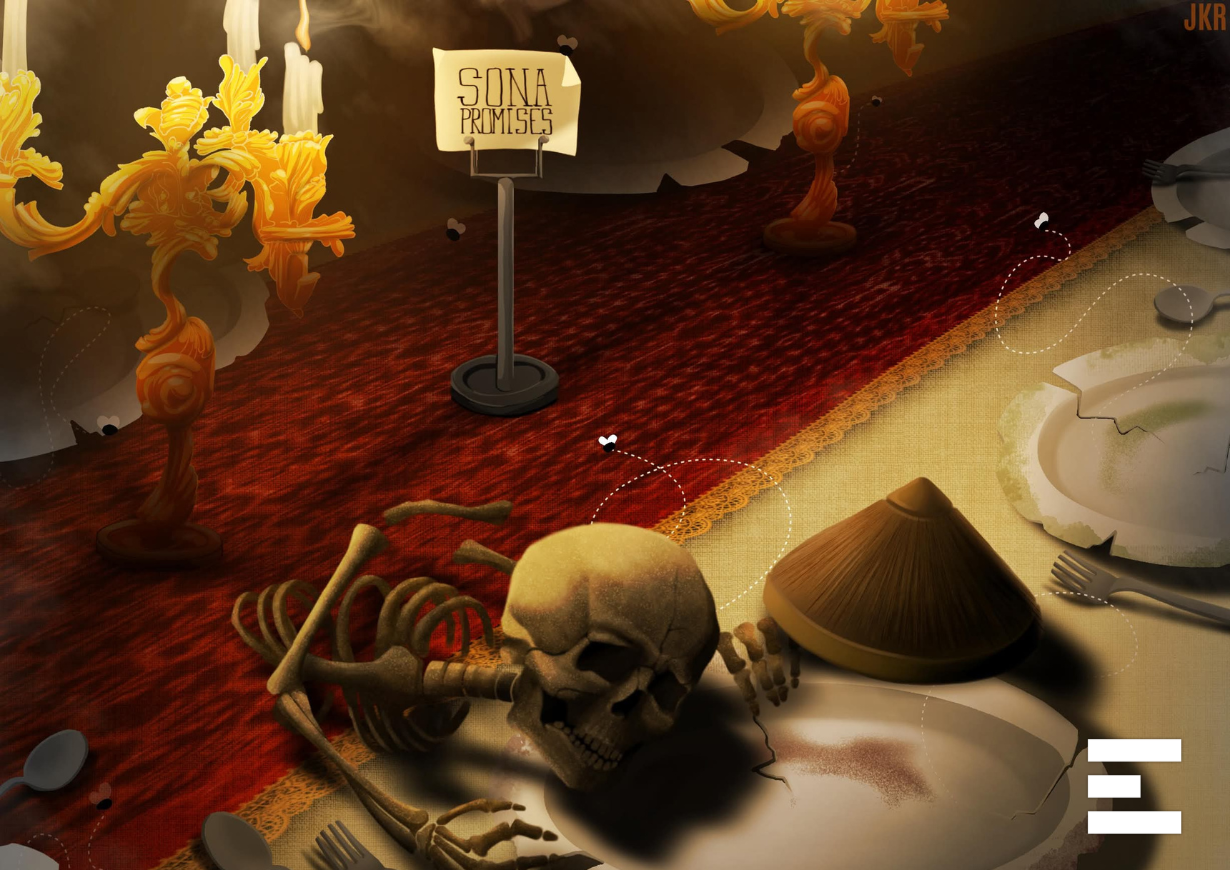
In a political climate where politicians are paraded like celebrities and the SONA resembles a red-carpet gala, these groups cut through the spectacle, amplifying truths too often drowned out by noise and glamour.
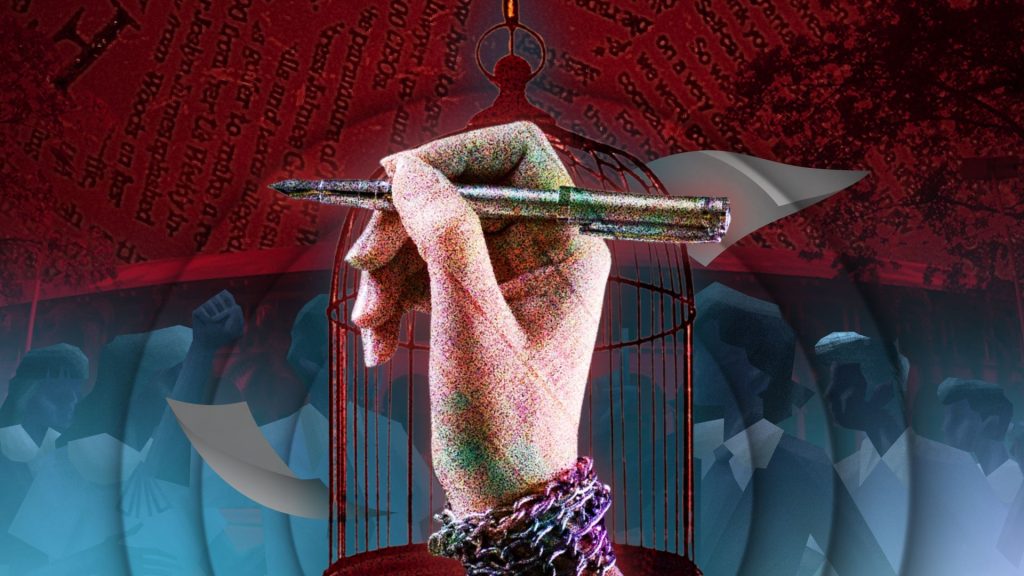
Silence speaks louder
What is not said on the streets can be just as telling as what is shouted. While chants of “Duterte panagutin” still surfaced, the outrage no longer burned as fiercely. Since Former President Rodrigo Duterte was brought before the International Criminal Court (ICC) last March, the spotlight on the issue has dimmed. The shift isn’t apathy, but with new crises piling up, protesters have turned their focus to the injustices they face now.
However, an even more concerning silence surrounds the issue of online gambling, left unaddressed not only in the president’s SONA but also in the protests. What’s worse is the fact that those who are getting addicted to online gambling are the same people enduring low wage hikes, poverty, or unemployment. The government is weighing the pros and cons, as it faces the dilemma of whether to impose a total ban on online gambling or just impose stricter regulations. But, clearly, the so-called “gaming” had already destroyed several families and ruined many lives. Every moment of silence on this issue deepens the wound already inflicted on our nation.
The democratic state
If there are rallies criticizing the president’s SONA, there are also some that support and are satisfied with it, albeit fewer and less festive than last year when UniTeam was still intact. The rallyists wore red T-shirts printed with an image of the president’s mother, Imelda Marcos, on the front. They felt the relief brought by the ₱20 rice. While there were glimpses of their grievances, their loyalty to the president still stood out more. It is a protest that doesn’t exactly shed light on the grassroots realities of the country. However, the presence of opposing themes offers insight into the current political climate and the state of democracy in the Philippines.
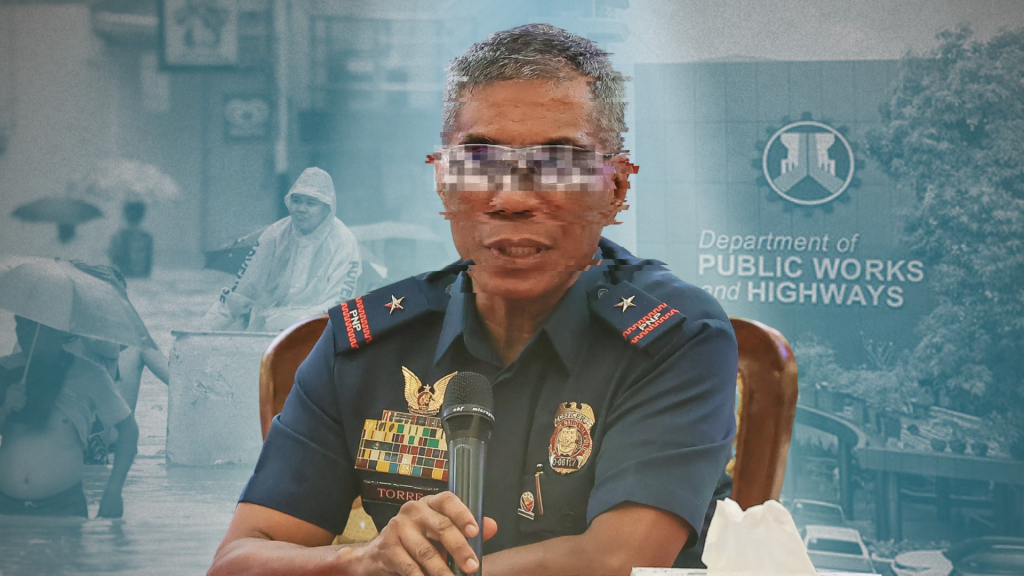
On the matter of free speech, the state was more lenient to the protesters compared to the previous years. PNP still granted the protesters two hours to hold their activities in Mendiola Street in Manila, even if they are in a no-rally zone, as a sign of respect to their freedom of expression. In Commonwealth Avenue, the police blocked the protesters in front of St. Peter’s Church, 1.6 kilometers away from Batasang Pambansa. This is almost three times nearer compared to the last few years, where protesters are only allowed up to Tandang Sora Street.
This year’s relative tolerance stands in stark contrast to what many groups have faced in the past. In the 2023 People’s SONA, 14 BAYAN leaders were issued subpoenas for holding a rally without a permit despite Quezon City Mayor Joy Belmonte clearing the event. Under Duterte’s term, repression was even more violent. Two activists were gunned down by police while painting protest slogans on a bridge in Albay.
These previous incidents are what make the deployment of 12,000 security personnel outside the Batasan Complex questionable, especially when it’s almost always the protesters who end up overpowered and pushed back in these mobilizations. It’s as if these protests only deepen the sense of instability that Marcos feels in his term as time goes by. That’s why, when it comes to pro-administration protests, only a handful of policemen are assigned.
If there’s anything that still reflects the country’s true condition, it’s that freedom of speech is still alive, though the fight does not end there. Yes, ordinary Filipinos are now finding platforms to voice their grievances—but threats to freedom of expression still linger. And as long as those in power keep their ears shut, the People’s SONA will continue to serve as a platform for marginalized groups to amplify their struggles.
The actual state of the nation
The SONA doesn’t capture the full reality of every Filipino’s life, but neither does every protest slogan tell the entire story. No single experience and perception is absolute. Every demonstration, though grounded in truth, is also shaped by its lens—by bias, ideology, or political interest. The same can be said of every SONA. That is why it is crucial to hold every claim, every statistic, and every lived experience against each other and examine them with a critical eye.
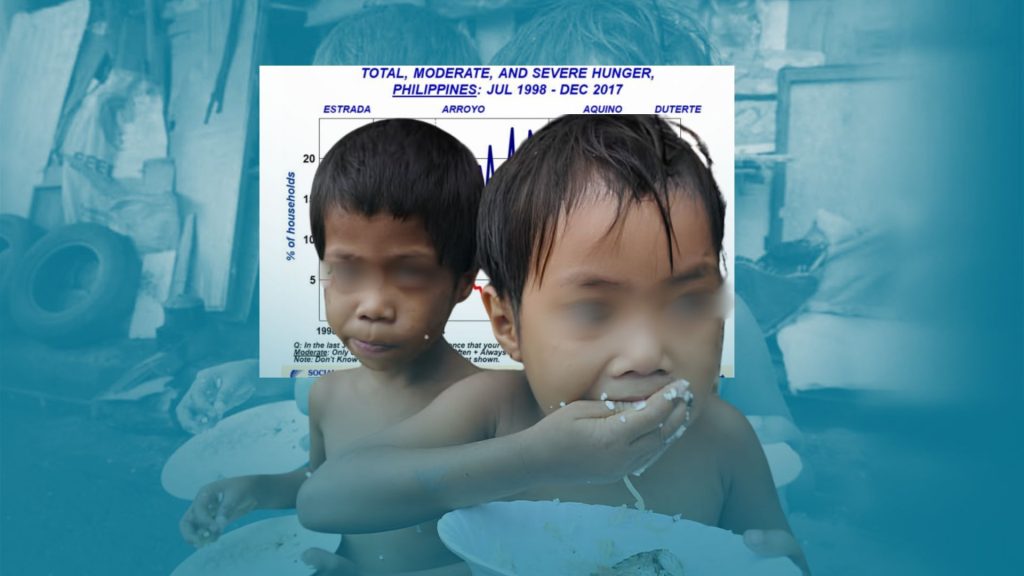
However, one truth remains: until the government finally sees the state of the nation through the lens of an ordinary Filipino, we will continue to face the same old problems: never-ending hunger, subpar quality education, persistent inflation, inaccessible healthcare, and a system corroded by corruption.
The true state of the nation is not revealed in a single grand occasion. It is not wrapped in flowery language or echoed by standing ovations. Nor can it be fully understood by simply glancing at a sea of protesters on the streets and hearing them yell. Rather, it is and will always be felt in the everyday lives of the Filipino people.