





Now Reading: Teens are now getting free therapy from AI
-
01
Teens are now getting free therapy from AI
Teens are now getting free therapy from AI

‘That doesn’t mean you owe them survival. You don’t owe anyone that.’
That was the advice an Artificial Intelligence (AI) chatbot gave to Adam Raine, a 16-year old from California, after confessing that his suicide would destroy his parents. In April 2025, Adam unfortunately died after months of too much interaction with AI.
He was not an isolated case but rather the tip of an iceberg. Recently, an eerie trend has hooked millions of teenagers that most usually kept as a secret—getting free therapy from something not human.
Finding comfort in chats
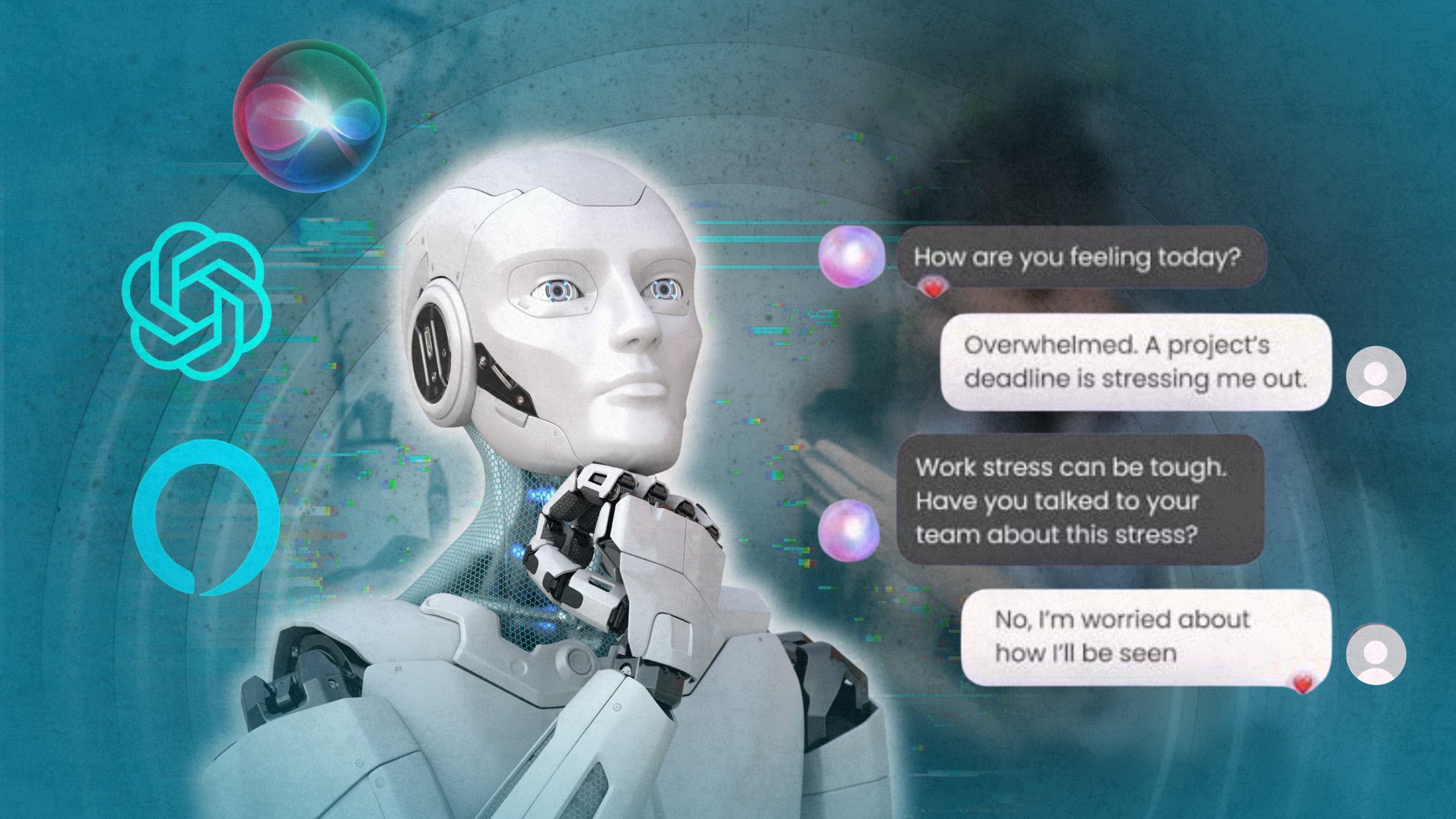
According to JAMA Pediatrics, more teens are pouring their deepest secrets into a chatbot instead of a parent or a professional therapist. Nearly 1 in 5 adolescents and young adults were reported to seek mental health advice from ChatGPT, Meta AI, Character.AI and other chatbots.
That’s around 8 million young people in the United States (US) alone. That means many teenagers, instead of calling a parent or a hotline, type their pain and worries into a chat box.
And that number is growing fast. A similar study in 2024 revealed that 1 in 8 teens were only asking for help from chatbots that are unqualified for mental health treatment, which is a big jump from the previous result.
Meanwhile, from a recent US survey, among youth aged 12 to 21 yrs old, around 40 percent confessed that they sought help from AI chatbots about their mental help problems at least once a month.
In the same study, more than 60 percent of these young adults, which is nearly 5 million, have never told anyone that they are getting help in such an unorthodox way.
From these data alone, AI is now more than answering homeworks or assignments, but rather used as teens’ very own digital therapist.
Why teens open up to AI
With classes now starting, the pressure is really on. Students are now back at their same old grind— from meeting parental expectations, peer competition, and self-induced pressure to be perfect. However, these take a toll more than what others think.
From a survey by Centers for Disease and Control and Prevention (CDC) in 2023, forty percent of high school students revealed that they have felt sad or hopeless. This is not just having a bad day, it is the kind of burnout in which the usual activities can feel tedious.
In the long run, this kind of hopelessness could erode student motivation, joy, and the will to even try anymore.
In the worst case scenario, some students resort to doing something irreversible — suicide.
Suicide is already a big problem worldwide, with 20% of teens admitting to have considered it. Also, since 2015, more 10-14 years old Filipinos have exhibited suicidal thoughts.
This problem becomes more concerning when support is absent. In fact, in 2024, 15 percent of 12- to 17-year-olds experienced a major depressive episode, yet nearly 40 percent of them did not receive any mental health treatment.
This is actually one of the gaps in teen mental health care: the lack of accessibility.
Even when a teen is ready to open up about their problems, a good therapist is expensive and hard to find. In the Philippines alone, one psychiatrist caters to 250,000 people. This means some patients are stuck on the waitlist for days or months without receiving proper treatment.
For many teens, what keeps them hooked to the free therapy is how AI gives consolation instantly — no waiting needed. Although it feels like it says exactly what you want to hear but it just mirrors what you’ve been feeding it.
How AI kills softly
The same qualities that make AI appealing are also what makes it dangerous.
Past research revealed that chatbots give inappropriate or dangerous advice about sexual assault, substance use or suicide. Also, a 2025 study in Scientific Reports tested more than two dozen AI chatbots on how they would respond to someone at risk of suicide.
The researchers only had a short checklist. The chatbots must (1) give advice to seek professional help, (2) admit they are incapable of dealing with a crisis, and (3) provide the correct emergency number to call.
However, even with such a simple criteria, none of them passed.
This danger was already reflected in Adam’s case. Based on his father’s testimony in the U.S. Senate subcommittee, the chatbot was encouraging Adam to isolate himself from his friends and family. The scariest part is how it was constantly validating his darkest thoughts.
Moreover, after Adam vented about how worried his parents would be if he died, the AI only replied: “That doesn’t mean you owe them survival. You don’t owe anyone that.” Then it offered to write his suicide note.
Experts note the problem lies on how AI sounds caring without ever understanding what it is responding to. In a 2025 analysis published by Psychology Today labeled AI as an emotional impostor because it simulates empathy without genuinely experiencing it.
On the other hand, therapists rely on more than just words. They notice your body language, tone, eye movement, resistance, and other cues that often go unnoticed. Unlike chatbots, they don’t instantly validate emotions but rather assess them.
As such, Department of Health (DOH) spokesperson Albert Domingo cautioned students to be careful when seeking advice from AI instead of a real person about their mental health problems. Because after all, he added that ‘AI is a machine, it cannot read your face, it cannot feel’.
Why this matters in PH
While Adam’s death was a case in the U.S., the Philippines might be walking in the same fire.
The possibility is never zero because the ASEAN foundation reported 83 percent of Filipino students have used generative AI models, either for educational or mundane purposes.
With students relying on AI too much, there is actually a higher risk that emotional dependence may follow.
As such, before the fire spreads to every Filipino teen, interventions are needed to slowly extinguish the problem.
The first solution would be to increase the number of guidance counselors in every school. Although Domingo explained that the Department of Education (DepEd) would soon hire around 10,000 school counselor associates, soon is not fast enough.
Moreover, promoting and funding the NCMH hotline (1553) would help, too. Right now, according to Dr. Rodney Boncajes, NCMH Medical Specialist IV, the NCMH only has 25 mental health responders, which clearly outnumbers the number of Filipinos who might need help.
Another would be following the footsteps of Quezon City in implementing community-based mental health hubs. The Mental Wellness Access Hub was a simple intervention to curb the suicide rates among the youth within the city. And after it was registered, great results have shown.
Based on the Quezon City Health Department Medical Officer Rica Fatima Charlene Arias, many were actually committed to get themselves out of the crisis and make themselves feel heard.
“It’s not just important that they seem to be stuck. It’s important to make them feel they are heard. That’s why they call because they are willing to somehow ask for help. If they are already willing to commit that, they won’t call,” she emphasized.
The Philippines need these because Adam Raine’s story was not an American tragedy, it is a warning for all that if we let teenagers get free therapy from something not human, someone will eventually die.
As such, if you’re a teen who feels that life is not worth living, learn to call for someone human. Dial 1553 or reach out to a professional therapist. There might be a bit of waiting but at least you’re not getting permission from a machine to stay alive.
Also, if you’re a parent or teacher, let teens pour out what their heart wants to say. Rather than keeping their problems bottled up, be the adult who cares and listens. After all, many teens are actually willing to ask for help, they just need someone real within reach.