









Now Reading: There is no such thing as a natural disaster
-
01
There is no such thing as a natural disaster

Ralph Ian Espelita
We must refuse to call this tragedy an act of God when it bears the distinct fingerprints of bureaucratic corruption.
On June 8, 2026, the state signed a death warrant masked as a school calendar. When millions of students stood at attention for morning assemblies across Mindanao, they were not occupying strongholds of learning, they were occupying weaponized infrastructure. The opening day of classes is the state’s ultimate exam in structural accountability, a non-negotiable proof of life for the social contract. By forcing school gates open over unassessed, fractured foundations, the government converted public classrooms into ticking concrete tombs, gambling the lives of children against a fault line.
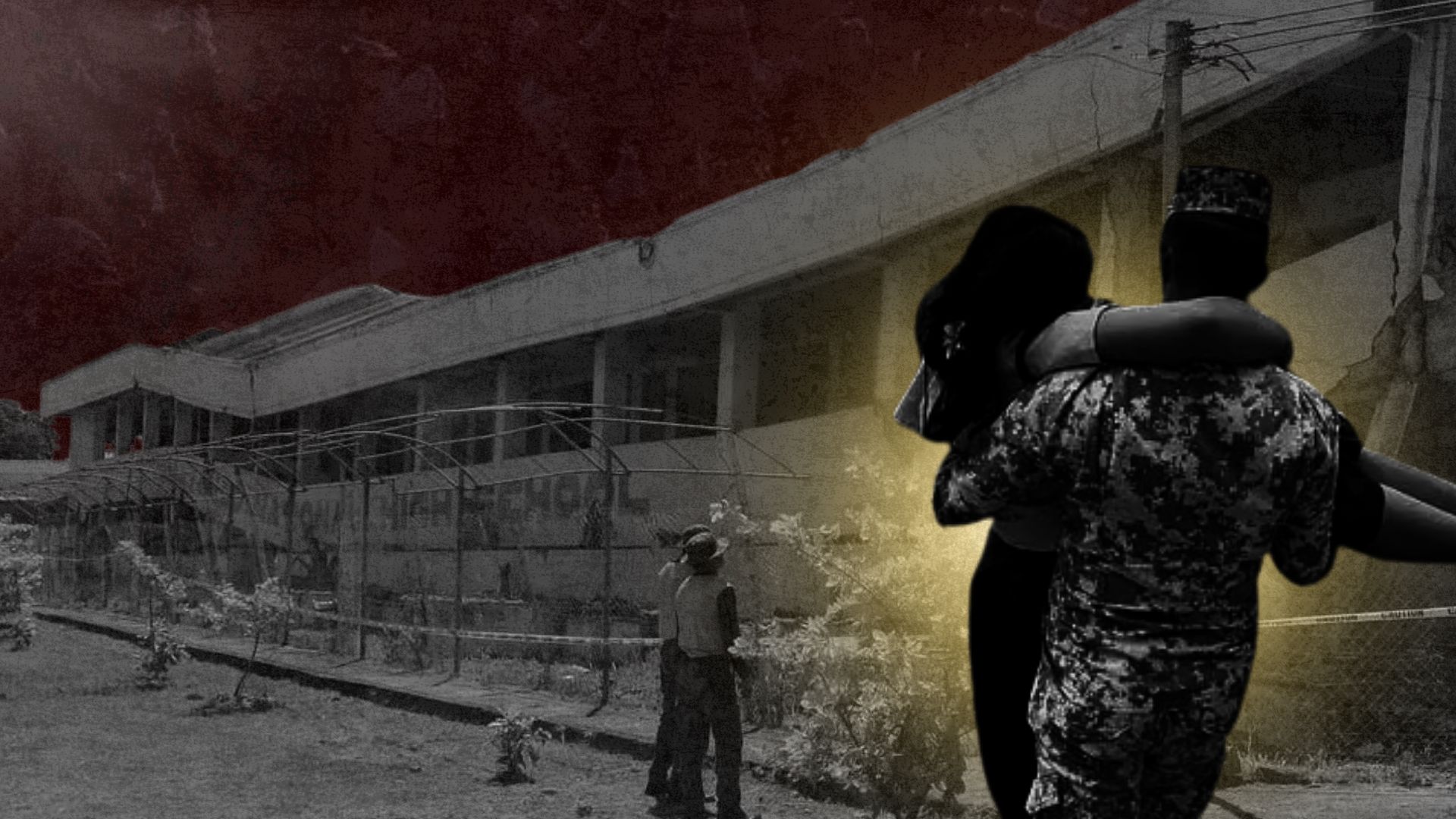
At Notre Dame of Dadiangas University and various public schools across the city, corridors turned into choked bottlenecks of panic; structural walls buckled, ceilings collapsed inward, and stampedes crushed the very youth the education system promised to uplift. The initial casualty counts and scenes of structural devastation paint a bloody portrait of a region caught entirely with its guard down. We see a landscape where the excitement of a new academic year was instantly crushed under the weight of falling debris.
The catalyst for this horror arrived at exactly 7:37 AM, when a monstrous 7.8 magnitude earthquake tore through Sarangani. This was not a routine geological event; it was a lethal synchronization. The fault line ruptured at the precise hour hundreds of students settled into their first classes, forcing a violent collision between a natural phenomenon and defective state infrastructure. The Department of Education did not open the academic year with milestones, it inaugurated it with mass trauma, marking day one not with roll calls, but with casualty counts.
Let us be blunt: the tectonic shift off Sarangani was an act of nature, but the tragedy that unfolded across Mindanao’s schools was an act of societal neglect. By allowing millions of children back into unsafe, unassessed, or structurally compromised buildings on the opening day of classes, the government proved that disasters are not natural, they are engineered by human unreadiness. The earthquake did not cause the disaster; it merely graded the structural exam that the state had already failed.
But geography is not destiny. Our primary failure lies in the macro-level refusal to distinguish between a physical hazard and a human disaster.
The movement of a fault line is an inevitable geological reality of living within the volatile geography of the Pacific Ring of Fire, but the collapse of a school building is a direct product of human choice, poor building code enforcement, and compromised urban planning. Nature did not decide to schedule a mandatory assembly at 7:30 AM, nor did it mix substandard concrete or slash the maintenance budgets of public school facilities. When a building pancakes over a classroom, it is a failure of structural engineering and regulatory oversight, meaning the disaster was signed into law long before the fault line ruptured.
The data behind this neglect is clear. Year after year, the national government underfunds the enforcement of the National Building Code, allowing aging structures to bypass modern seismic retrofitting mandates. Currently, the Department of Education faces an overwhelming ₱28 billion backlog in pending school repair requests, leaving thousands of provincial classrooms to operate on luck rather than technical readiness. By treating safety certificates as bureaucratic formalities rather than life-or-death mandates, the state legally permits substandard infrastructure to house our nation’s future.
On the micro-level, this structural failure creates a stark vulnerability gap that punishes the most marginalized sectors of our society. This vulnerability is not accidental; it is budgeted. Disasters are highly unequal, and when an earthquake hits Mindanao, it is the underfunded public schools, overcrowded classrooms, and historically neglected provincial institutions that suffer the most. While modern, corporate high-rises in affluent urban centers weather a 7.8 magnitude tremor with minor cosmetic cracks, the classrooms of the poor crumble into rubble. This uneven distribution of suffering proves that vulnerability is a socioeconomic condition manufactured by political choices that relegate provincial safety to the margins.
Strip away the bureaucratic jargon, and the reality is that public schools face an acute classroom shortage, forcing up to 50 to 60 students into spaces designed for 30. This overcrowding turns a standard evacuation protocol into a physical impossibility, transforming school walls from tools of elevation into instruments of blunt-force trauma. The human cost of this neglect is borne entirely by ordinary families who traded their children’s safety for the promise of an education.
As the state cannot plead ignorance, the Ring of Fire is a permanent reality, not a surprise. Nations like Japan routinely weather equivalent tremors without burying their children in rubble during school hours. While the exact minute of an earthquake is unpredictable, its arrival is an absolute certainty. To treat this catastrophe as an unexpected anomaly is criminal negligence, proving the state chose to invest in political optics rather than structural survival.
The blood on the floor of our classrooms demands that we transcend the toxic, hollow rhetoric of “Mindanaoan Resilience” and reactive disaster management. Beneath the rubble of this rhetoric lies an institutional defense mechanism designed to hide the systemic failures that broke our community in the first place. We do not need official statements of grief, nor do we need praise for our capacity to endure suffering; we need an immediate transition from reactive mourning to proactive, structural justice.
The conclusion is as brutal as it is undeniable: Congress must mandate an immediate, independent third-party structural audit of all educational buildings, legally prohibiting any school from opening without a certified “Seismic Safety Clearance.” The Department of Budget and Management must execute an emergency reallocation of funds to establish a permanent, multi-billion-peso “Educational Infrastructure Retrofitting Fund” dedicated strictly to reinforcing public schools in high-risk fault zones.
We must refuse the comfort of calling this tragedy an act of God when it bears the distinct fingerprints of bureaucratic corruption. Let this day permanently shatter the myth of natural devastation, forcing us to recognize that there is no such thing as a natural disaster, only natural hazards met by unnatural state neglect.