







Now Reading: What Martial Law tried to erase, the Philippine cinema remembered
-
01
What Martial Law tried to erase, the Philippine cinema remembered
What Martial Law tried to erase, the Philippine cinema remembered

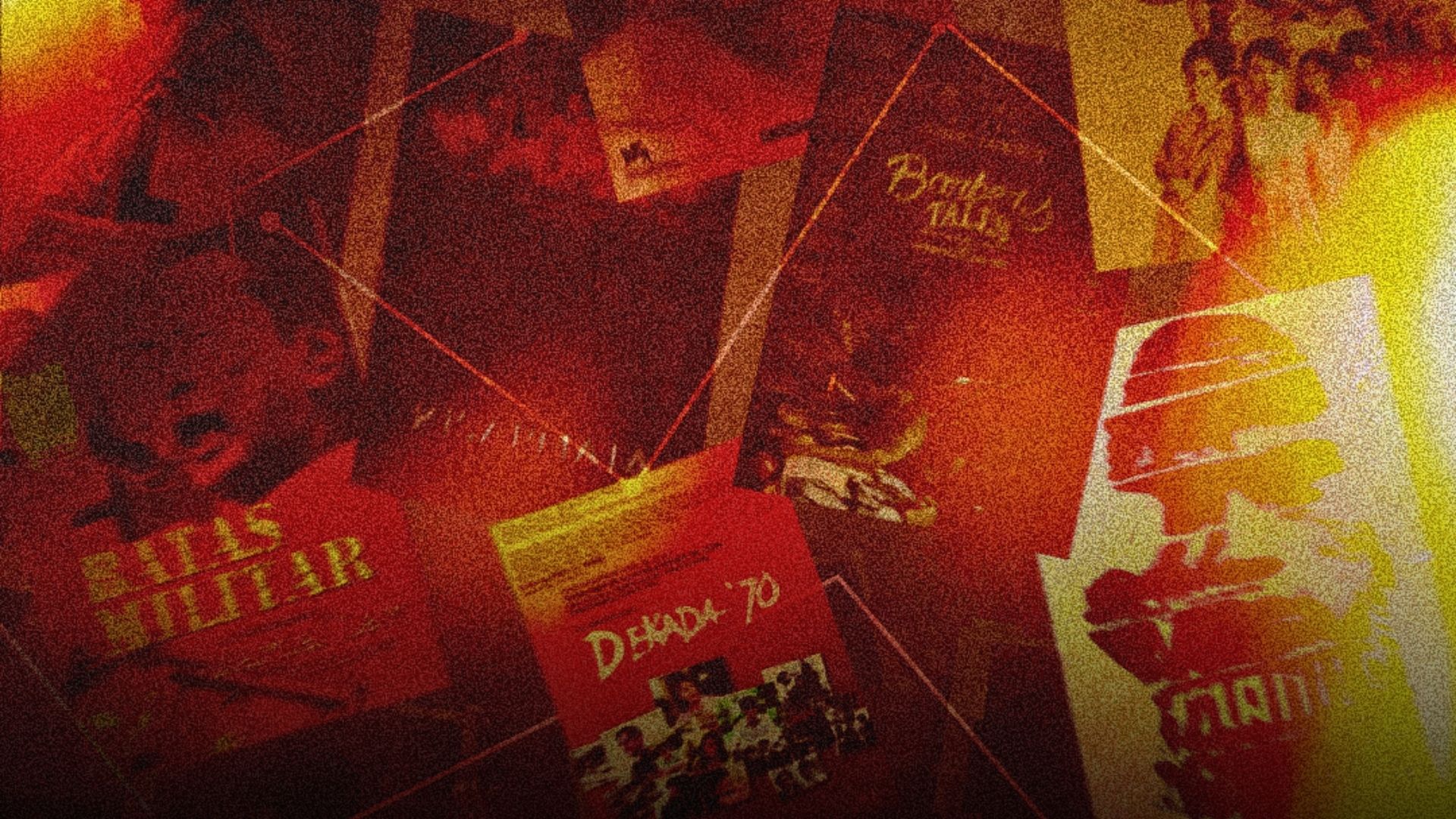
If there is anything that Filipinos love doing, it is to watch shows for entertainment.
From box-type televisions powered by an antenna that has to be constantly moved from left to right, to flat viewing screens powered by cables, and even in cinemas and theaters—Filipinos always find ways to check out a teleserye, documentary, or movie. It has become part of our culture and tradition, one that has evolved alongside the way we consume stories.
And how couldn’t we? Movies serve as a looking glass into what we experience, how we live our lives, and everything in between, including what we have long endured, especially one of the darkest pages of our history.
The proclamation that silenced the media
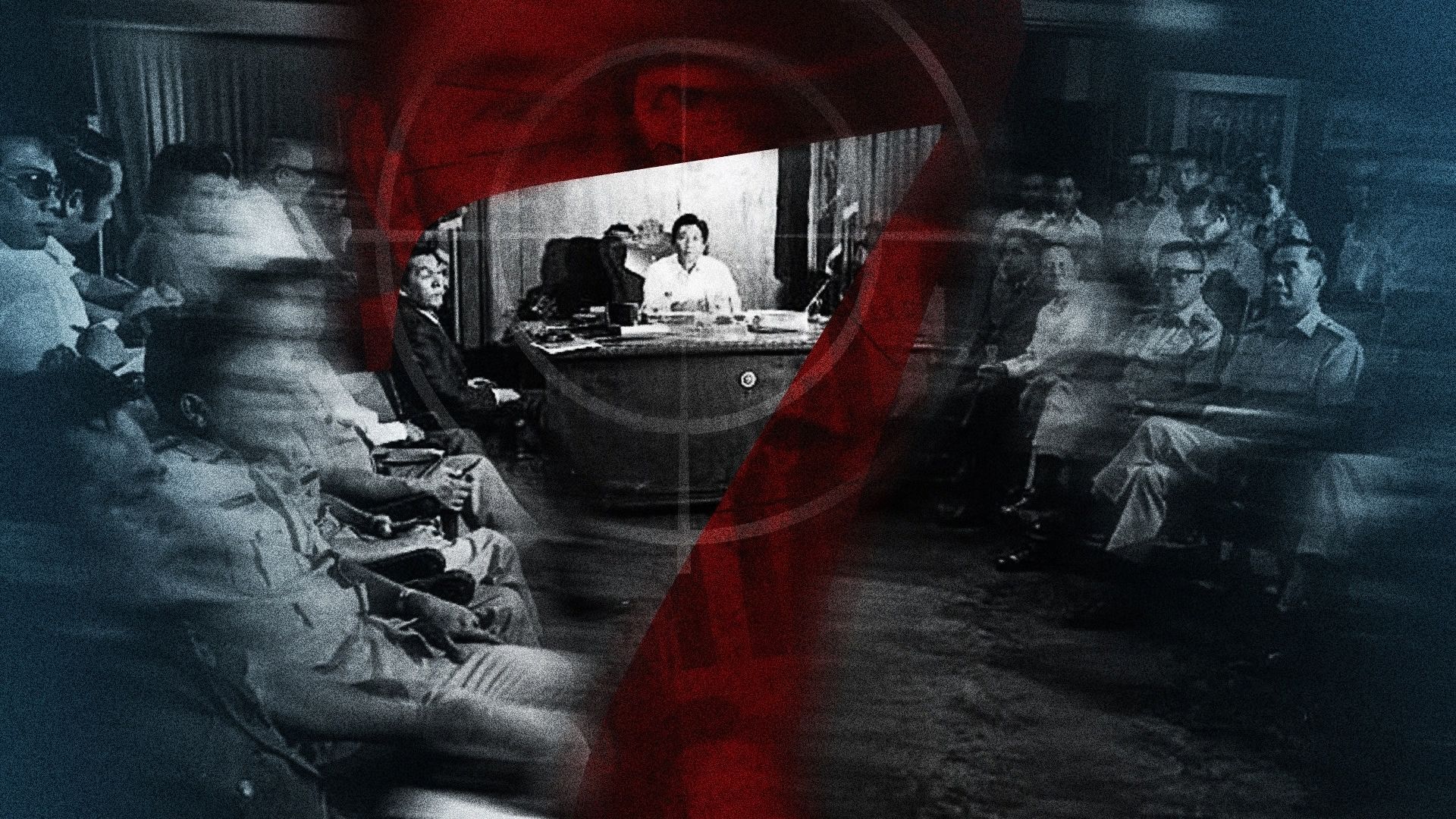
When Ferdinand Marcos Sr. signed Proclamation No. 1081 on September 21, 1972, he placed the Philippines under Martial Law, which grabbed a hold of media outlets in the country. Marcos also controlled the public exhibition of particular films, banning forthwith those intended to undermine the faith and confidence of the people in their government, among others.
For 14 years, Marcos Sr. actively restrained what was being shown on televisions and cinemas and twisted the purpose of films to use them as his own tool instead.
Media operations were rigid at that time as only Marcos-controlled media were allowed. According to screenwriter Ricky Lee in ‘Ganito Kami Noon, Ganito Pa Rin Ba Ngayon?: Pelikula, Paniniil, Pagpalag’ online forum, film producers needed permits to shoot. After shooting, the finished product would have to be reviewed again, and unsatisfactory portrayals of the current political climate at that time were cut or removed.
Despite the atrocities of the Martial Law regime, the government wanted an almost picture perfect depiction of what was currently underway. As public historian Michael Charleston “Xiao” Chua said, revisionisms and distortions were nothing new, even before Martial Law was declared.
Regardless of the constant erasure, filmmakers were adamant to tell their stories and the stories of the masses—what was being censored eventually found its way into cinemas nonetheless.
The oppression and suppression may be strong, but the urge to speak out and narrate was stronger. Here are the films that rejected the iron claws that Marcos Sr.’s dictatorship had imposed on censoring freedom of expression during his reign.
Maynila, sa mga Kuko ng Liwanag (1975)
Maynila, sa mga Kuko ng Liwanag (Manila in the Claws of Light) was one of the films that were released without cuts during the height of the Martial Law.
It delves into the life of a young provincial boy named Julio Madiaga who ventured into the city to look for his lost love, Ligaya Paraiso. Soon, he had to navigate the underneath filth of Manila despite its dreamy facade.
The main plot of the movie may not have been explicitly about the Martial Law during that time, but the background and depiction of Manila was reminiscent of the current political climate when the movie first came out. Posters and placards bearing the messages, “Long Live the Workers!” and “Down with Imperialism and Fascism,” can be seen throughout the movie.
Moreover, Brocka’s depiction of crippling poverty and political resistance which were typically subjected to censorship reflects Marcos’ broken promise of uplifting the working people, when in reality, the underclass only became poorer.
Kisapmata (1981)
Before it was screened, Kisapmata’s (In Just the Wink of an Eye) director, Mike de Leon, was forced to cut a scene as Ferdinand Marcos was personally distraught over the film’s depictions of incest.
Regardless of the censorship, de Leon made a second version that was submitted to the Cannes Film Festival and was eventually used for the film’s restoration in 2020.
Aside from being an adaptation of Nick Joaquin’s literary journalism piece, “The House in Zapote Street” (1977), Kisapmata also serves as an allegory for Marcos Sr.’s dictatorship. Vic Silayan played Dadong Carandang, the patriarch of the household in the literary piece. He served as a portrayal of Marcos who ruled over his subjects, who were rendered undiscerning yet fearful.
Batch ‘81 (1982)
Batch ‘81 served as Mike de Leon’s second entry for the Cannes Film Festival in the same year alongside Kisapmata (In Just a Wink of an Eye), making him one of the rare directors to have two competing films in the said film festival.
Dubbed as de Leon’s angriest and most direct film, Batch ‘81 follows Sid Lucero, played by Mike Gil, who desperately wants to join a fraternity called Alpha Kappa Omega. This serves as a reaction towards the Martial Law rule at that time, as the protagonist endured what came his way despite the treatment slowly venturing towards fascistic behavior. These experiences then turned into a micro version of the authoritarian regime of Marcos.
The film won Best Picture and Best Original Screenplay at the Film Academy of the Philippines Awards and Best Screenplay and Best Editing from the Manunuri ng Pelikulang Pilipino.
Batas Militar (1997)
Directed by Jon Red and Jeannette Ifurung, Batas Militar (Martial Law) is a documentary that features interviews with key figures who provided firsthand information on the abuses leading to the People Power Revolution.
Introduced in this documentary were those who committed the oppression and their opponents, including former president Corazon Aquino, Imelda Marcos, and the left-wing leader, Bernabe Buscayno. It includes photographs and video recordings that were never seen before.
This reconstruction of the 14-year long period in the Philippines won Best Television Special for Gawad CCP Para sa Telebisyon in 1998 and Golden Dove Awards in the same year.
Dekada ‘70 (2002)
Adapted from a novel of Lualhati Bautista bearing the same title, Dekada ‘70 (The Seventies) follows a middle-class family as they try to survive the era of Martial Law.
Apart from witnessing a family who experiences the tumultuous decade subjected of bombings and random arrests, along with political prisoners, it also follows Amanda Bartolome, played by Vilma Santos, as she grows from a clueless individual into someone who is courageous and political. It shows the role played by women during this dark regime and acknowledges their capability to think, their struggles, potential, and aspirations.
Dekada ‘70 was the official Philippine submission to the 76th Academy for Best Foreign Language Film (now known as Best International Feature Film). It also won numerous domestic awards including Best Screenplay, Best Sound, and Best Film of the Year at the Young Critics Circle.
Mga Kwentong Barbero (2013)
The Martial Law served as the backdrop for the film Mga Kwentong Barbero (Barber’s Tales) starring Eugune Domingo as Marilou. The film made Domingo earn her Best Actress Award for the same film during the 2013 Tokyo International Film Festival.
Mga Kwentong Barbero centered on corruption and insurgency–especially in the context of Martial Law. It displayed rebels fighting against the military and the corruption of the mayor, who was played by Nonie Buencamino.
It also sheds light on gender roles during the Martial Law. Much like how Dekada ‘70 brings forth unseen struggles and aspirations of women during those times, Mga Kwentong Barbero also shows women finding common ground in their silent rebellion against the limitations forced upon them.
ML (2018)
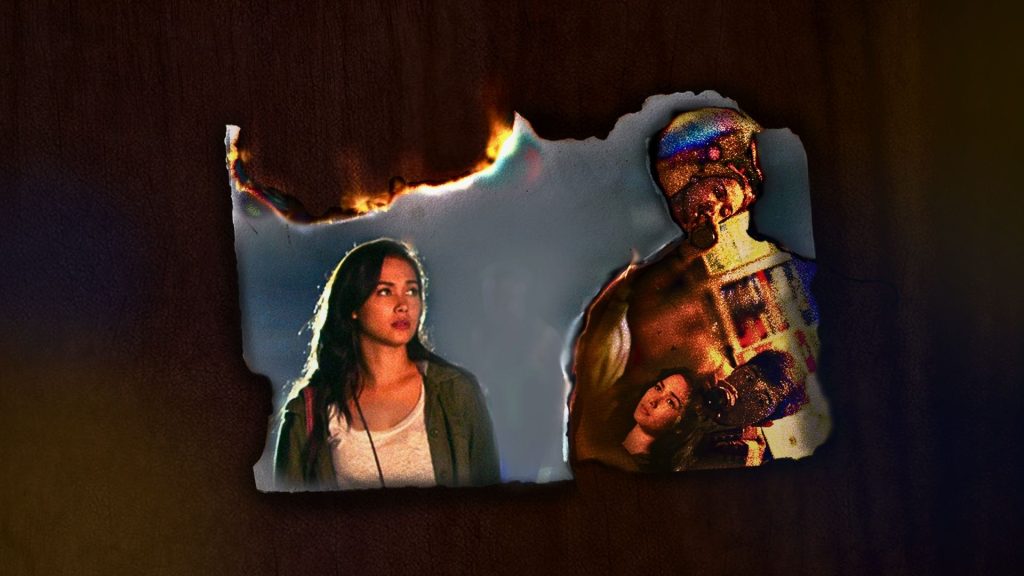
ML follows the premise of a psychological horror drama centered on a retired Metrocom colonel suffering from Alzheimer’s disease who still thinks that it is the Martial Law. The character played by Eddie Garcia then meets Carlo, a student activist played by Tony Labrusca, and proceeds to torture him under the simple reason that “It is Martial Law.”
What is particularly eerie about this movie is its depiction of the realities of the country in the past as well as in the present. We can see how the film mirrored what was then an ongoing Drug War when Jace—Carlo’s friend—was invited into the Colonel’s house after ringing Carlo’s phone, questioned, and eventually believed to be lying, resulting to the Colonel dumping Jace’s body at a roadside with a cardboard saying, “Drug-pusher Ako: Huwag Tularan.”
It tells us that the past we once thought were no longer among us has come back to haunt and grip us.
Manila Finest (2025)
Contrary to the previous films, Manila’s Finest is set three years before the declaration of the Martial Law.
Directed by Raymond Red, this official entry for the Metro Manila Film Festival (MMFF) 2025 is a fictional retelling of the decline of the Manila Police District. As the crimes escalate, the policemen sense that there must be something far more sinister underway.
This movie shows how dictatorship unfolds gradually as the system slowly crumbles down under the weight of accumulated conflicts. And no matter the tight grip in hopes of saving an environment increasingly turning hostile, there is no stopping it.
Manila Finest proceeded to win Best Cinematography and Best Production Design during the 2025 MMFF awards night.
What remains after Martial Law
Fifty-four years have passed, the cinema still remains a vital tool to convey stories and highlight messages that were once buried underneath the constant pressure of censorship. It serves as a living diary of creatives who once had to limit and hush themselves, an enduring piece of evidence that what happened simply cannot be erased.
Ultimately, these films are not merely time capsules for us to witness the atrocities of Martial Law; they also serve as a reminder of how we have come so far in terms of what we continue to fight for, and a visual warning against repeating the same mistakes as we have already seen their consequences.
Beyond the stories they tell, these films preserve perspectives that might otherwise be forgotten or overshadowed by the passage of time. Because while censorship may have once limited what could appear on the screen, it could not completely silence the stories that filmmakers sought to tell.
Today, those stories remain for us to watch, question, and remember—hoping these wouldn’t repeat again.