






Now Reading: Another feeding program won’t save us
-
01
Another feeding program won’t save us

TJ Dañas
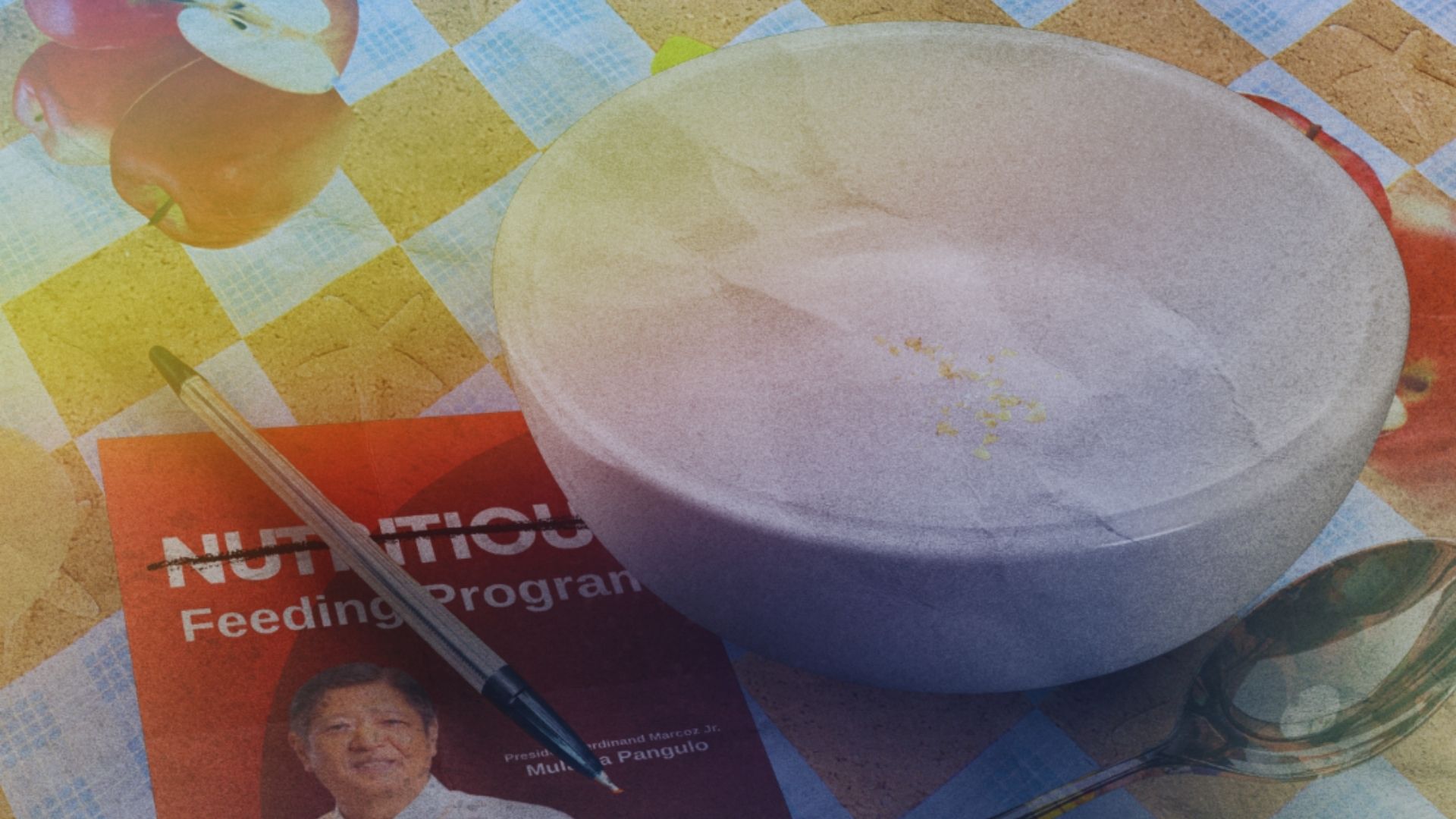
To commemorate the National Nutrition Month, last July 8, 2026, President Ferdinand Marcos Jr. and the Department of Education rolled out a revamped School-Based Feeding Program in Bulacan that would benefit over 700 schoolchildren in kindergarten and elementary by providing them with meals. The program was launched simultaneously across the nation to combat malnutrition among students, allowing them to focus on their studies to satisfy educational objectives and become productive workers of the Philippines. According to the President, they are preparing the young for their future.
While admirable, isolated feeding programs, even as large-scale as the School-Based Feeding Program, do little to solve malnutrition in the long-term. Without decisive and actionable solutions that attack the causes and factors of malnutrition in the Philippines, we will only leave our nation hungrier than ever.
Many Filipinos, especially those living below the poverty line, suffer from malnutrition, affecting their way of life. While it is not always the ultimate cause of death, malnutrition often settles in unannounced, slowly becoming an irreversible disorder that strips away a person’s life, regardless of whether they have too little on their plate to sustain themselves or too many dishes to boast a status of wealth.
According to the Department of Science and Technology’s Food and Nutrition Research Institute (DOST-FNRI), many households are heavily affected by the triple burden of malnutrition: undernutrition, micronutrient deficiencies, and overnutrition—three different extremes that sometimes coexist under the same roof.
Based on the latest National Nutrition Survey conducted by DOST-FNRI in 2023, nearly one in four young children is stunted (short for their age). The same is true for around one in five schoolchildren and teenagers in the survey. Wasting (irregular thinness for their age) affects 5.6% of infants, 8.4% of schoolchildren, and 11.5% of adolescents. On the other hand, the same survey shows that obesity impacts 40% of adults aged 20 years and above and 32.6% of older persons aged 60 years and older.
Micronutrient deficiencies remain a public health concern, especially among women caring for children. Anemia affects one in five pregnant Filipino women and one in ten lactating mothers. Vitamin A and iodine deficiencies also continue to grapple the nation, afflicting the population across all ages and social strata.
These findings emphasize that malnutrition is different for every person affected by it. In fact, the term itself is an umbrella for all kinds of disorders that result from the lack of access to a continuous and affordable flow of nutritious food for all individuals in the household, rooted in systemic issues such as the economy’s inflation, poverty, food insecurity, inadequate access to healthcare, and poor water and sanitation.
While another feeding program addresses the immediate needs of children with undernutrition, it merely scratches the surface of this perennial problem. Based on the survey, malnutrition includes those who are overweight and obese and affects a good majority of Filipinos from all walks of life—factors that a one-sided feeding program would not be able to solve immediately. Instead, because of how multisectoral malnutrition is, it also demands solutions that cross disciplinary fields. Research and development, public policy, food technology, and industry are just some of the relevant areas that can help better the malnourished across the country.
In fact, in this year’s Nutrition Month, the National Nutrition Council (NNC) places environmental stewardship at the heart of nutrition. With the theme, “Nutrisyon at Kalikasan, Ating Pangalagaan!”, preserving a sustainable environment becomes an imperative national nutritional objective to alleviate the malnourished. Especially now that Filipinos live in a world plagued by genocides, geopolitical tensions, and global warming, it has become increasingly clear that environmental damage will exacerbate these existing challenges and inequalities in providing nutrition for Filipinos. As such, “this year’s sub-theme is straightforward and resonant: caring for nature is caring for ourselves.”
It is not that existing feeding programs like School-Based Feeding Programs are useless. We should not aim to discredit the relief these programs allow in terms of food and nutrition, especially for Filipinos who cannot afford them. However, these are only band-aid solutions against malnutrition; implementing feeding programs year after year while refusing to make headway in addressing the causes of malnutrition is a futile effort, as it will only create more hungry people. As such, the government, public and private sectors, and institutions must do so much more to address it.
For instance, we must prioritize policies and actions that supply nutrition to Filipinos, especially at a national scale. The government must subsidize and protect farmers who power the agricultural sector amidst poverty and extreme weather events. Public and private sectors must strengthen existing food systems through long-lasting architecture and production, and fund research and development towards innovation. Government agencies and non-governmental organizations must uplift all Filipinos regardless of their wealth and status by implementing direct nutrition interventions that not only feed them but also improve the dietary quality of food and access to basic necessities. And in line with this year’s Nutrition Month theme, we must also dutifully protect the environment by advocating against projects that destroy natural resources and implementing measures that prevent the waste and contamination of our lands and waters.
Although malnutrition affects people differently, it is something bigger than any one person. It is a problem that underpins the current systemic issues of the Philippines today. The malnourished are not simply mouths to feed; they are battered hearts hoping for a future where their source of nutrition isn’t just another feeding program.