



Now Reading: REEL TALK: Liway as the light beneath Martial Law’s darkness
-
01
REEL TALK: Liway as the light beneath Martial Law’s darkness
REEL TALK: Liway as the light beneath Martial Law’s darkness

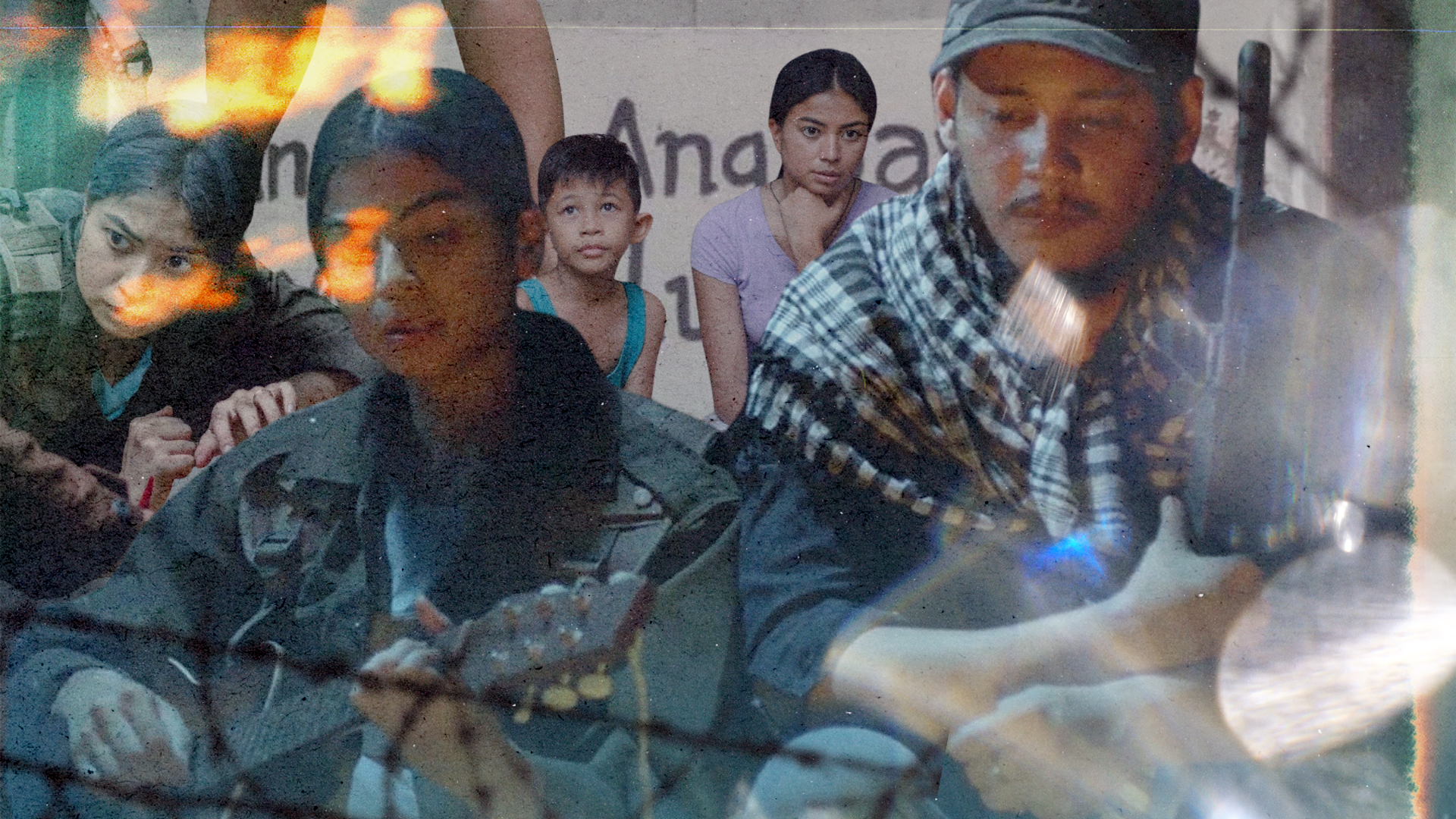
History’s most unforgiving moments often birth the tenderest stories. When life has been stripped to its rawest edge—when freedom is traded for confinement, when childhood unfolds within fences of barbed wire—what remains luminous is the insistence to imagine, to narrate, to hold on to myth as if it were oxygen. Kip Oebanda’s Liway (2018) captures exactly this: a child’s fragile coming-of-age shadowed by Martial Law’s cruelty, yet softened by a mother’s storytelling.
It is tempting to compare Liway to films like The Boy in the Stripped Pajamas (2008) or The Kite Runner (2007), stories that also frame childhood innocence against the backdrop of cruelty and upheaval, where imagination and bonds of family become fragile shields against violence. Yet Oebanda’s film resists being reduced to allegory. Unlike these works, which translate suffering into fable-like tragedy or redemptive arcs, Liway refuses to fictionalize pain or romanticize resilience. It stages memory itself—Oebanda’s own childhood lived within the walls of Camp Delgado—so that storytelling emerges not as flourish but as necessity, a survival tactic passed from mother to child.
A child’s innocence, a mother’s resistance
The film unfolds through Dakip (Kenken Nuyad), Oebanda’s younger self, who knows only the world inside prison. His laughter, curiosity, and playfulness contrast against the despair-ridden faces of his father and fellow detainees. Central to his shelter from despair is his mother, Day (portrayed by Glaiza De Castro), who cloaks reality in the myth of “Liway,” a mountain enchantress guarding people from harm. Here, myth is not escape but mirror: the enchantress is Day herself, a freedom fighter who protects with both tenderness and ferocity.
What lingers is the delicacy with which Oebanda frames maternal strength. De Castro’s performance captures contradictions: Day as nurturer, Day as rebel, Day as both life-giver and risk-bearer. This duality is not framed as extraordinary but necessary: in a world where the state has weaponized fear, survival itself is an act of quiet defiance.
The weight of memory
One of the most striking features of Liway lies in its structure. Nonlinear, shifting between recollection and lived moment, it mimics the way memory itself works: fragmented, resistant to order, shaped by both dread and yearning. The film’s shadow play sequences, which retell the legend of Liway, achieve an authenticity that words alone could not. Through Dakip’s eyes, myth and reality are not separate; they collapse into one another, revealing the way children process trauma through symbols.
The narrative oscillates between two temporalities: the suffocating immediacy of life within the camp and the inexorable progression of history beyond its barbed perimeters. Though the decline of the Marcos regime is repeatedly implied, the prison itself suspends time, rendering each day an interminable cycle of waiting. This temporal dissonance culminates in a resolution that is at once exhilarating and devastating… amnesty arrives not as unalloyed liberation but as a freedom irrevocably marked by the scars of captivity.
Imperfections that speak volumes
The film is not without its lapses. Some sequences in the pre-climax rush through narrative beats that deserved lingering, particularly the inner fissures of the family under pressure. Likewise, audiences unfamiliar with the historical nuances of Martial Law may struggle to grasp the rebellion’s larger context. And yet, if this narrative incompleteness is itself a testament to lived trauma: there are always gaps in memory, silences history leaves, and struggles that cannot be neatly explained within two hours of screen time.
Another is the film’s tendency to lean on sentimentality, with the score at times pressing emotions the scenes could carry on their own. Secondary characters, too, remain sketched in broad strokes: guards, inmates, even Dakip’s father are more symbolic than fully realized. By narrowing its focus too tightly on the family, Liway misses chances to amplify the collective dimension of resistance that history bore.
Liway as mirror of the present
What makes Liway difficult to watch—but also necessary—is the way it reflects our present moment. The film was released in 2018, at a time when disinformation and historical revisionism had begun to reframe the Martial Law narrative. Watching it now, in an age where propaganda thrives again, feels like déjà vu. The macho-fascist structures, the silencing of dissent, the orchestration of lies; they remain embedded in our political bloodstream.
This is where Liway transcends being just a personal memoir. It becomes cultural resistance. Oebanda does not only tell his story; he insists we remember. And in remembering, we are implicated—compelled to ask how much of that darkness has really left us, or whether we have merely repackaged it in more palatable forms.
Final notes
What makes the full-length flick unforgettable is not just its political urgency but its intimacy. We grew up hearing Martial Law spoken of in numbers: statistics of arrests, deaths, disappearances. But numbers rarely move us the way a child’s voice does, narrating how he thought mannequins were alive because he had never seen people beyond fences. Dakip’s innocence punctures abstraction, transforming history into something human, tender, and unbearably real.
Films like Liway remind us why art matters. It does not erase pain but bears witness to it. It does not simply entertain but interrupts forgetfulness. And as the cycles of disinformation tighten their grip, such interruptions become ever more urgent. Oebanda’s film is both elegy and testament: an elegy for a stolen childhood, and a testament to the power of storytelling to preserve truths against erasure.
In the end, Liway is less about a mythical enchantress than about the enchantment of survival. The ability to hold on to stories when everything else is taken away.
And perhaps that is the lesson it leaves us with: even in the darkest prisons, light can still be conjured, if only through the fragile, stubborn act of telling.