










Now Reading: Nueva Ecija’s new forest find
-
01
Nueva Ecija’s new forest find

Hidden in the forested slopes of Nueva Ecija, a modest flowering shrub long known by indigenous locals has finally stepped into the scientific limelight.
Blooming within the Pantabangan–Carranglan Watershed Forest Reserve (PCWFR), Clerodendrum kelli is a rare species of flowering that was once scientifically undocumented.
Meet kelli
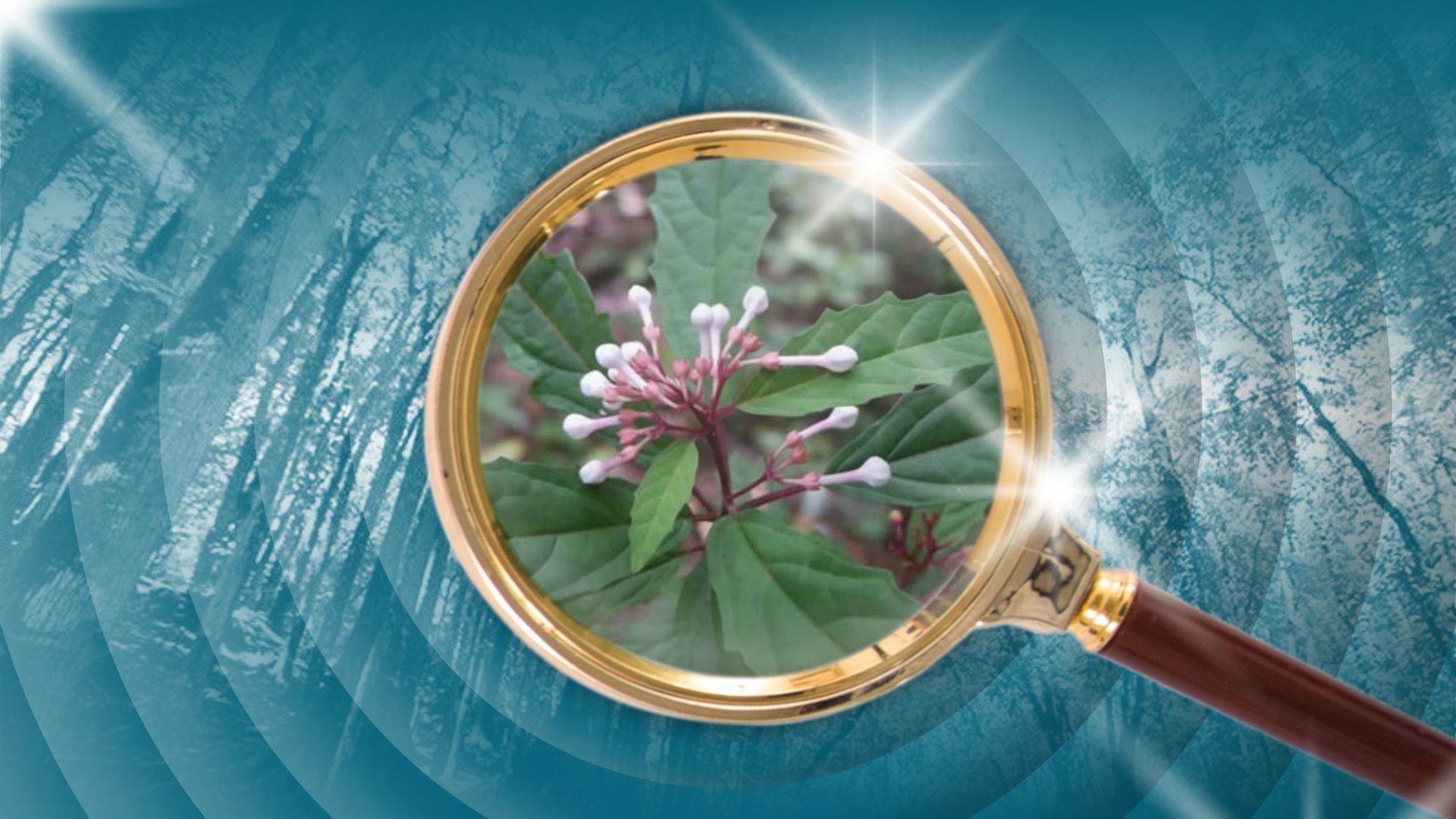
C. kelli can grow to around one meter tall. It has toothed leaves that are green above and purple underneath as well as white flowers with five petals.
Usually, Clerodendrum plants have sepals, or leaf-like parts beneath the petals, that are fused together to form a structure called calyx. This calyx often grows larger and changes color as the fruit develops.
But, according to the article, what makes C. kelli unique is that the pointed “fingers” of its calyx shrink as the fruit matures, leaving behind a reddish-pink cup with a smooth rim.
While it closely resembles its well-known relative—“bagawak morado” (Clerodendrum quadriloculare)—it differs in having shorter, less-clustered petals and smaller, more rounded sepals.
Century-delayed discovery
Members of the Philippine Taxonomic Initiative (PTI) found C. kelli during a botanical expedition to the PCWFR in 2020.
Afterwards, they confirmed that this species had not been previously described by comparing it with existing taxonomic accounts of live plants, dried herbarium specimens, and published images.
As such, the PTI marked the plant as the first new member of Clerodendrum species recorded in the Philippines since 1930, increasing the national total up to 19.
Indigenous link
While scientists call it a “new species”, indigenous communities have known all along that C. kelli has bloomed within the forest.
Specifically, the indigenous group—Bugkalot within the PCWFR—were already familiar with the plant. They pinpointed that the plant typically grows in colder regions of the mountain, as it is native in countries of East Asia like Japan, Korea, and China.
Also, C. kelli is a prized ethnomedicinal plant of the Bugkalot. It is usually used for veterinary uses, like treating sick dogs, due to its antimicrobial and anti-inflammatory properties.
Despite its recent scientific spotlight, the species’ newfound attention comes too late, as it is already critically endangered in its natural habitat. Threatened by habitat loss and human-induced forest conversion, the species stands as a quiet call for urgent protection.
In the face of these challenges, indigenous intervention is needed—essential even. For generations, the Bugkalot group has served as devoted forest stewards, holding deep knowledge of its flora and their restoration.
By giving the species the Bugkalot name kelli, the researchers acknowledged that environmental protection is not entirely dependent on science.
Indeed, the solution may not just be found in books or laboratories, but in the wisdom and care of the communities who have long protected the forest.