








Now Reading: PH eyes to ascend its first-ever liquid-fueled rocket at Cagayan in 2027
-
01
PH eyes to ascend its first-ever liquid-fueled rocket at Cagayan in 2027
PH eyes to ascend its first-ever liquid-fueled rocket at Cagayan in 2027

Jeo Angelo Ampis
As children, rockets are often seen only in movies. But with an initiative to bridge the country’s gap in space technology, could that childhood curiosity finally become reality?
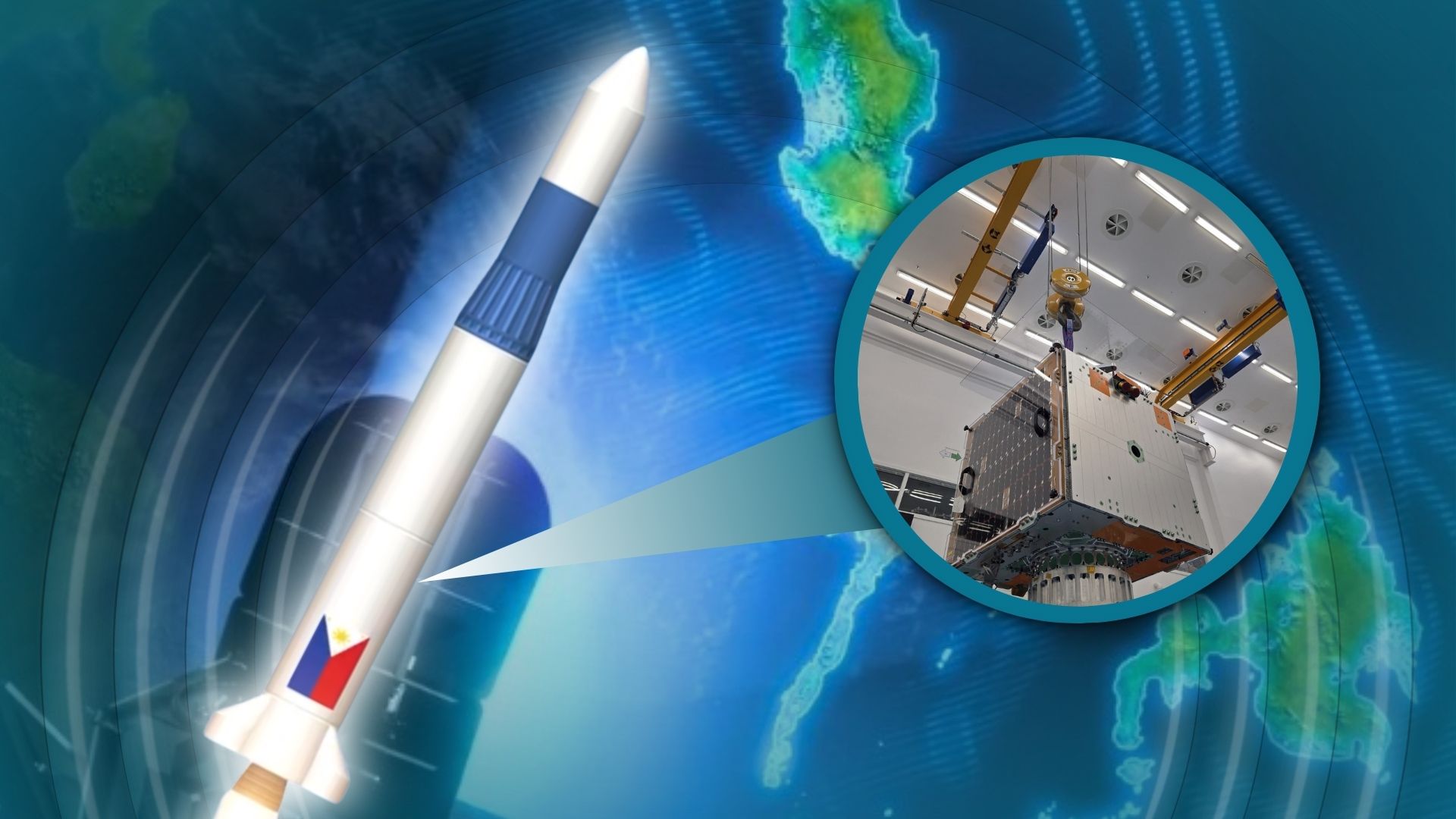
The Philippine Space Council (PSC) approved plans for the country’s first liquid-fueled rocket launch targeted in early 2027 at Lal-lo Airport in Cagayan, among the programs presented by the Philippine Space Agency (PhilSA) during the 9th PSC meeting chaired by President Ferdinand R. Marcos Jr. on June 2, 2026, at Malacañang Palace.
During the meeting, PhilSA stated that the launch will assess the country’s capacity to locally supply rocket fuel and check existing safety procedures and the launching authorization system.
What lifts it off
According to the National Aeronautics and Space Administration (NASA), a liquid-fueled rocket uses two liquid components—fuel and oxidizer—instead of the usual solid propellant to generate thrust and lift off.
These liquid components include kerosene, a type of fuel sometimes used in stoves and jet engines; or liquid hydrogen, a very light and flammable gas that is cooled to an extremely low temperature until it becomes a liquid; and an oxidizer called liquid oxygen, an oxygen gas found in the air that is also cooled into a liquid form. When combined in a combustion chamber, they ignite and produce high-pressure gas that rushes downward through the nozzle, creating thrust that lifts the rocket upward.
Moreover, NASA added that liquid propellants provide more control, as they allow precise thrust adjustment and safe engine shutdown and restart, while solid propellants burn continuously until all fuel is depleted.
Space in the space
To open the gates of opportunities and have a space in the space industry, the initiative is being carefully curated. From building the foundation of this rocket-related project to using the Philippines’ map location, PhilSA aspires for the nation to have its own spaceport—like an airport for rockets—to become a location where companies, governments, and organizations could use to launch rockets, access space, and reduce reliance on foreign countries. Positioning the country as an emerging beacon for space exploration in the region.
Furthermore, PhilSA stated that with international and private sector cooperation, the country continues to improve in space research, engineering, and rocket and satellite development to lay the groundwork and position the Philippines as a safe and viable hub for space activities.
“With the Pacific Ocean to its east and its proximity to the equator, the Philippines is well positioned to ensure safe and secure rocket launch and recovery operations over open waters, helping to reduce costs, improve launch efficiency, and create opportunities for research and commercial space activities,” the agency added.
Pre-launch red light
A rocket’s journey begins long before it leaves the ground. While the planned launch signals a giant leap for the country’s space ambitions, the path ahead is filled with hurdles that cannot be overcome by thrust alone. For a nation attempting its first liquid-fueled rocket launch, every stage, from developing fuel systems to preparing launch facilities, represents unfamiliar territory, where success will depend as much on preparation as it does on technology.
PhiSA noted that the initiative forms part of early steps toward establishing and operating a Philippine spaceport, with launch infrastructure and supporting systems remaining under phased development as the country continues to build its space capabilities.
What makes the path particularly demanding is that the systems meant to carry the rocket skyward are still being written in real time—fuel lines, ground operations, and safety protocols are assembled and tested while the structure that supports them is still taking shape. In this unfolding process, each attempt becomes a break from certainty and a step into the unknown, where limited experience and evolving infrastructure turn every launch into a careful act of building something that has never fully existed before.
However, the challenge of today may echo an early milestone in history tomorrow.
Meanwhile, the world’s first liquid-fueled rocket was launched on March 16, 1926, by scientist-engineer Robert H. Goddard in the United States, using liquid oxygen and gasoline as propellants.
What once existed only on screen can become possible when curiosity is matched with knowledge, planning, and innovation—and with strong support, the Philippines’ first liquid-fueled rocket launch may not only be the first, but the beginning of many more, marking a step toward a future where space is no longer distant, but part of its scientific and technological development.