









Now Reading: Sawaga-Dalwangan’s rescue uncovers the true value of wildlife rehabilitation
-
01
Sawaga-Dalwangan’s rescue uncovers the true value of wildlife rehabilitation
Sawaga-Dalwangan’s rescue uncovers the true value of wildlife rehabilitation

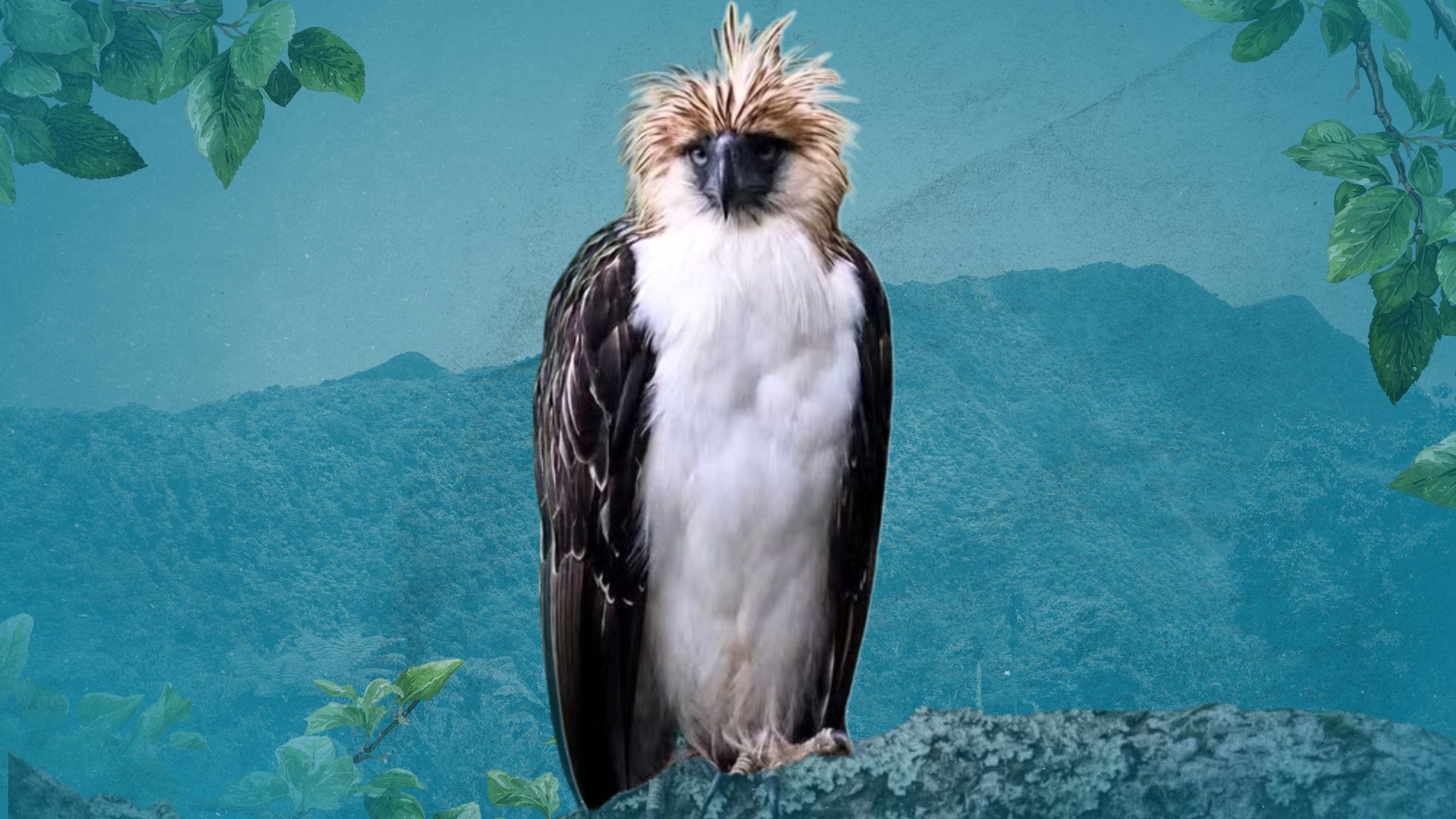
Once a helpless rescued eagle, Sawaga-Dalwangan captured public attention as its rehabilitation journey made headlines. However, the Philippine eagle, found injured along Sawaga River in Malaybalay City, died a few days later despite conservation efforts.
According to Community Environment and Natural Resources Office (CENRO), the bird was found being mobbed to the ground by monkeys, which were driven away by a local farmer, Marven Linoy, together with his relatives before reporting it to the authorities.
The retrieval operation was carried out by personnel from various authorities and organizations, including the Provincial Zoo of Bukidnon, the Inhandig Tribal Multipurpose Cooperative, and Kitanglad Guard Volunteers. Emergency treatment was administered before the eagle was transported to the provincial zoo in Malaybalay City.
During the primary examination, it was found that the eagle was weak, dehydrated, and had multiple maggot-infested wounds, implying that it had been sustained for quite some time.
As reported by the Philippine Eagle Foundation (PEF), Sawaga-Dalwangan continued to receive intensive veterinary care and was given fluids, wound treatment, antibiotics, pain medicine, vitamins, and assisted feeding.
She started to show signs of alertness and responsiveness as her maggot infestation disappeared. She also underwent disease testing for three avian viral diseases to further assess her condition.
Despite testing negative on two of the three diseases, it was reported on July 18 that Sawaga-Dalwangan had died while undergoing rehabilitation. The PEF reported that a necropsy revealed complications in her heart, liver, and stomach, although the exact cause of death remains unknown.
Yet Sawaga-Dalwangan’s rescue uncovers the important reality of wildlife conservation: not every rescued animal survives, but every rescue operation offers a chance for treatment, recovery, and survival—even for a short period of time.
Beyond treating visible wounds, one of the primary goals of rehabilitation is stabilizing the animal’s condition. Gradually restoring its strength while minimizing stress is a crucial part of the process as every stage is sensitive for the animal’s health.
While it may often be a long and uncertain process, the purpose is to witness nature and its inhabitants experience and regain life once more after the history of captivity, abuse, and trauma it endured.
For critically endangered species like the Philippine eagle, such initiatives or immediate interventions can relieve suffering, provide recuperation, and basically offer more life to their dissipating population.
Although Sawaga-Dalwangan did not survive, her story demonstrates that wildlife rescue is not measured solely by survival. It remains a success as long as there is an improvement in survival, intention to care, and reaffirmation of the commitment to protect one of the country’s most endangered species.