









Now Reading: The Ayta Magbukun are 46% more ancient than we thought
-
01
The Ayta Magbukun are 46% more ancient than we thought

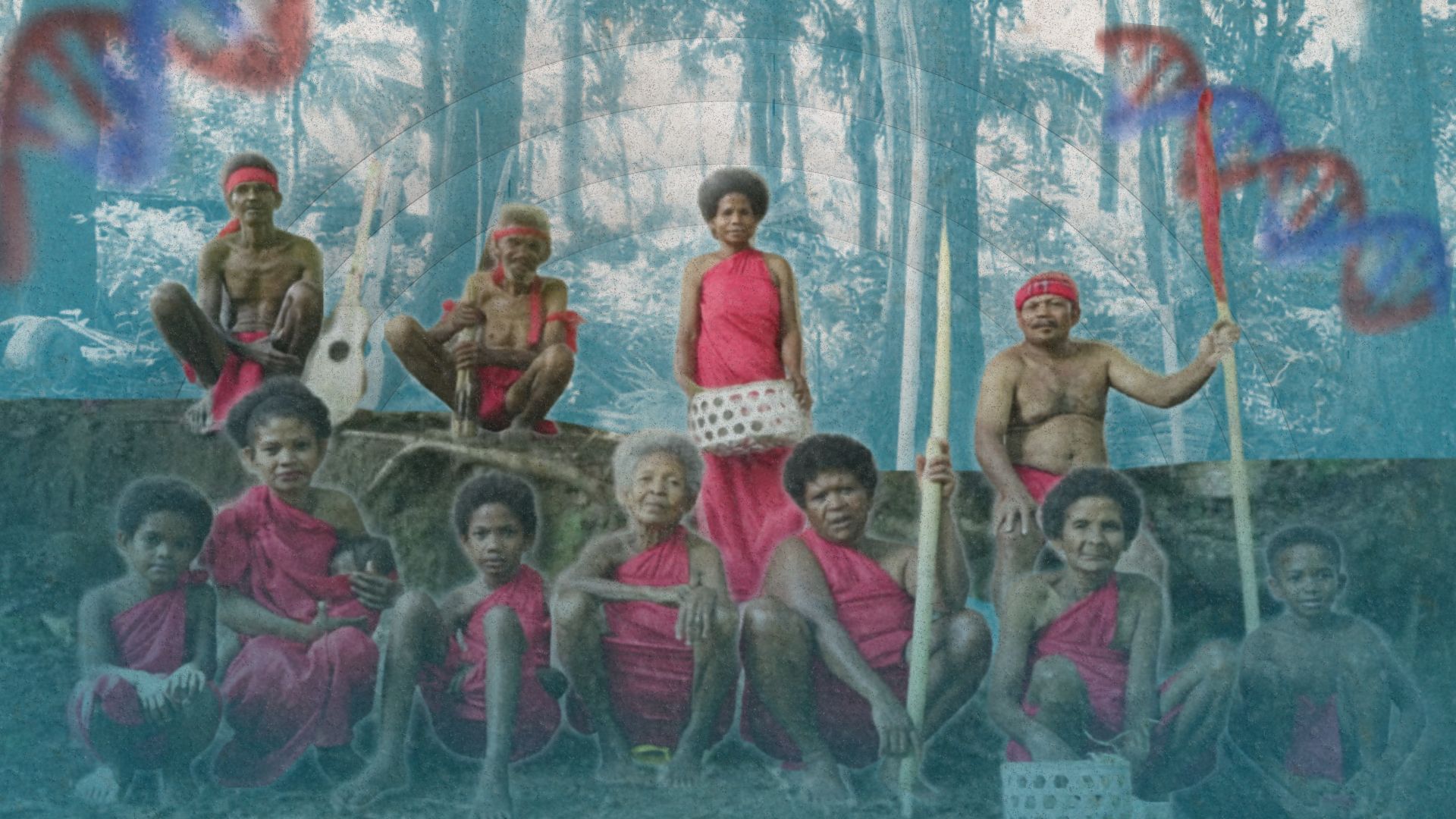
Before the urban forests grew, the Philippine land had already known the stories of one community: the Aytas. They were the first to step on the country before it even had a name, carrying on a tradition that survived thousands of years of migration, colonization, and change. But unbeknownst to many, they had held a secret for generations—one that has recently been discovered by science.
According to researchers from Uppsala University, a genetic connection was found between the Ayta Magbukun and an ancient human group once thought to have vanished from Earth. They possessed the highest level of Denisovan ancestry in the world, around 46% higher than Australians and Papuans.
“We found that the Negritos had a proportion markedly higher than those of other ethnic groups. Compared with Australians and Papuans, the Negritos’ Denisovan ancestry was up to 46 percent higher,” highlighted Maximilian Larena of Uppsala University, the study’s first author.
Tracing the footstep
The history of mankind is written not only in books but also in the human remains underneath the Earth. Through fossils, bone, teeth, and genetic analysis, scientists were able to uncover the existence of other ancient human groups that once roamed the planet.
These archaic humans, or hominins, include Homo luzonensis, Homo erectus, Homo habilis, and Neanderthals. Although these groups have vanished physically, part of them remains alive today through genetics.
Among them were the Denisovans, an extinct group of archaic humans who lived in Eurasia, roughly around 370,000-30,000 years ago. They are related to Neanderthals and modern humans (homo sapiens).
Unlike most ancient human species, Denisovans were not first identified through complete skeletons or skulls. In fact, they are the first ancient hominin group to be revealed through genetic evidence alone rather than traditional fossil classification.
The story began in 2008, when Russian scientists uncovered Denisovan remains, such as finger bone and tooth fragments, in Siberia’s Denisova Cave. Then in 2019, more of the Denisovan fossils were found in Baishiya Karst Cave of Tibetan Plateau, expanding the researcher’s understanding of the Denisovans.
As research continued, scientists unearthed that Denisovans interbred with modern humans after they had voyaged out of Africa to other parts of the world like Asia and Europe.
Today, Denisovan ancestry can be detected among East Asian, South Asian, Siberian, and Native American populations, although in small amounts.
For years, scientists believed that the Papuans and Indigenous Australians carried the highest level of Denisovan ancestry. However, the strongest trace is now linked to an Ayta community in the Philippines.
Ancient genes in modern blood
The study conducted a genome analysis of the deoxyribonucleic acid (DNA), or the genetic marker, from 1,107 individuals across 118 ethnic groups in the Philippines using a tool called masking.
This is basically a software that helped scientists filter out less informative parts of the DNA so they could detect how much Denisovan ancestry each group carried.
With this, researchers discovered Ayta Magbukun of Bataan possessed significantly higher Denisovan ancestry than previously recorded populations.
As such, the study suggests that the ancestor of the Ayta may have interbred with Denisovans through a separate admixture event, different from the one experienced by Australians and Papuans. An admixture simply means mixing of genetic material from different ancestral populations.
Meet the Aytas
The Aytas are indigenous people who landed in the archipelago 30,000 years ago, and are thought to be the first dwellers of the Philippines. They are typically found in the forested areas of Northern Luzon, though related Negrito groups also reside in Visayas and Mindanao.
Their usual characteristics include: dark to dark-brown skin, curly hair, and are usually below five-feet tall. Also, many of them are hunter-gatherers and skilled foragers, relying mainly on the gifts of nature.
The Aeta people in the Philippines are classified as Australo-Melanesians, which is an ancestral lineage indigenous to Oceania and Maritime Southeast Asia. Scholars generally believe that they travelled here by crossing Borneo via land bridges or short sea routes. But the exact route still boggles scientists today because those paths have since changed or submerged.
The research highlighted that after the Ayta settled here in the country, they came into contact with the Denisovans. However, Mattias Jakobsson, one of the researchers, noted that they interbred with East Asian groups who arrived in a later wave. This mixing introduced new genetic material into the Ayta gene pool, thereby diluting their Denisovan ancestry.
Nevertheless, he added that some did not engage in the admixing, which is evident with the Ayta Magbukun having the highest Denisovan ancestry.
“But some groups, such as Ayta Magbukun, interbred only a little with the people who later migrated to the islands. That’s the reason why the Ayta Magbukon retained most of their Denisovan genes and therefore have the highest levels of those genes in the world,” he emphasized.
A link to another
This study becomes more intriguing when connected to another archaeological discovery in the Philippines: Homo luzonensis.
This ancient human species was first found in the Callao Cave in Luzon and is believed to have lived at least 130,000 years ago.
The authors of the study proposed that multiple archaic human groups were inhabiting the country before the arrival of modern humans. In fact, they noted that these groups may have been genetically identical to one another.
More than a genetic discovery
Despite the discovery attracting global attention, many Ayta communities still face social and economic struggles. And it is not just them.
Many indigenous groups across the Philippines have long struggled for their voices to be heard. For years, they have fought for ancestral land rights, access to education, healthcare, and protection from displacement.
Their land has been ravaged by rapid urbanization. Greens no longer grow in the soil but grey concrete that pushes the Aytas farther away from their home.
As such, while the Aytas are now recognized as the carriers of humanity’s oldest genetic legacy, it is important to keep the spotlight beyond a scientific discovery. Their story, after all, is not just written in their genes, but in their daily fight of reclaiming the land that represents their identity.