









Now Reading: There’s a new ‘Bad Genius’ in the exam hall and it’s not a group of students—its a pair of glasses
-
01
There’s a new ‘Bad Genius’ in the exam hall and it’s not a group of students—its a pair of glasses
There’s a new ‘Bad Genius’ in the exam hall and it’s not a group of students—its a pair of glasses

Natalie Andrea Ayo
From the classic ‘cheat-sheets’ to the risky sending of answers through hand signals—academic cheating has always been something done with methods out of the box.
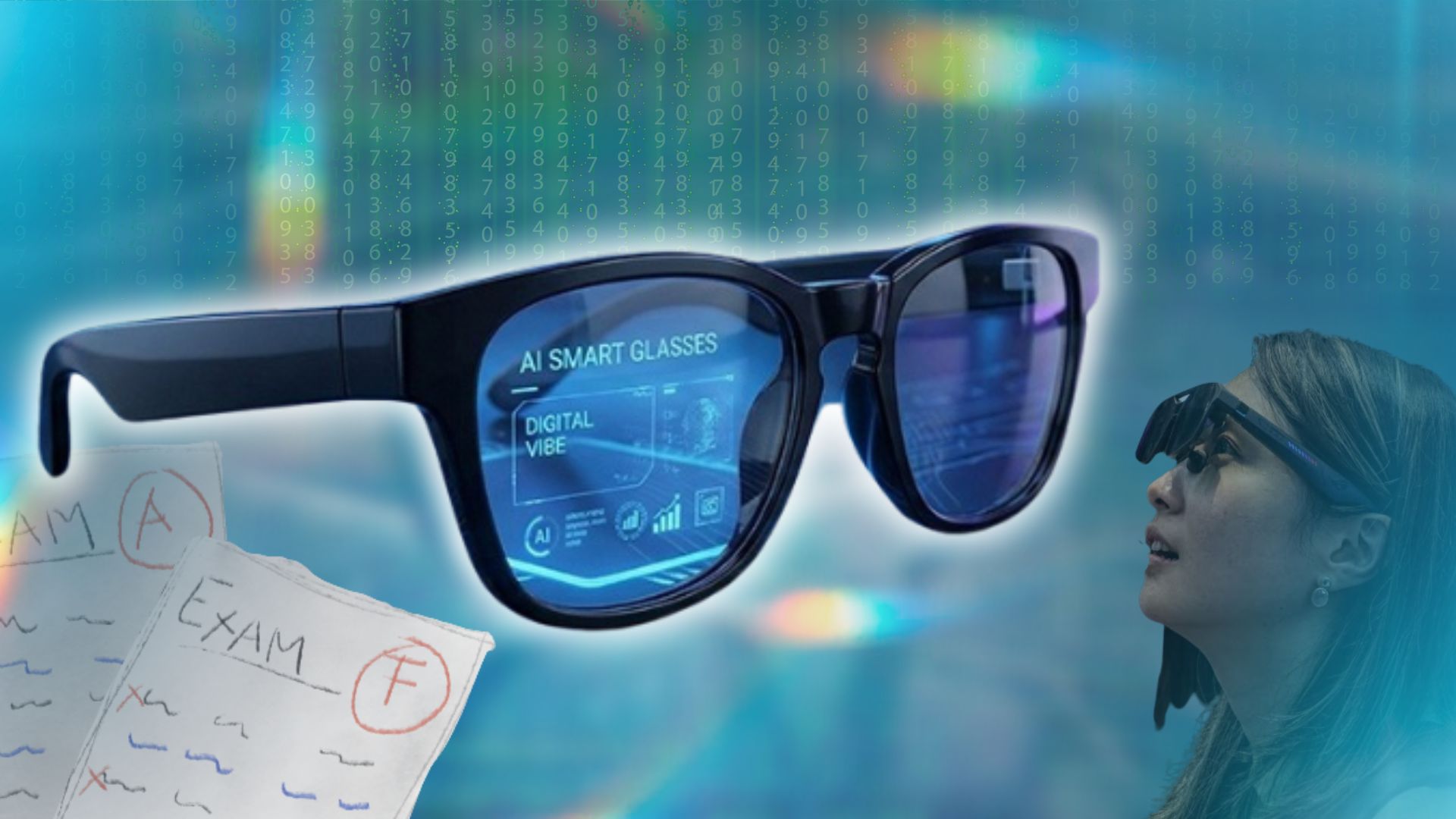
Artificial Intelligence (AI) further solidifies its place in everyday life. Now, it is not just a handy essay writer with just a drop of a prompt, it can now also answer tests in real time through the use of devices—in these cases glasses.
Multiple incidents of cheating during tests have been reported throughout East Asia in countries such as South Korea and Taiwan with the emergence of AI-powered smart glasses.
This with the cases being two students in South Korea, both instances using the AI glasses during an English language skills assessment test, and a case in Taiwan used by a student taking an entrance exam for a top medical school.
With a reputation for rigorous examination processes and high academic performance to define the trajectory of student’s careers, college admissions, and even social status, the use of these new methods of cheating has further raised the conversation on just how quickly educators and the education system can catch up with technology.
To explore this new cheating device, Assistant Professor Meng Zili of Hong Kong University of Science and Technology (HKUST) tested AI glasses by taking an undergraduate level electrical engineering exam using them as aid.
Upon wearing the glasses, the professor was able to get a score well above the average of 72, ranking top five among the class of over 100 students. This led him to say that AI glasses are a ‘viable technology’ when it comes to exam taking.
“After conducting the experiment, it really raises the question of how much knowledge students actually need to memorize for exams, versus whether we should allow them to use AI during assessment, given what AI is now capable of,” Meng said.
Countries such as China and the United Kingdom, both of which have a high stakes and high participation exam culture, have raised further vigilance for AI glasses and other smart devices that could intensify academic dishonesty during exams.
“Wearable AI is as much of a challenge to exams as ChatGPT was to essays in 2022 and I just don’t think there is any real way that we can reliably have exam practices moving forward,” Thomas Corbin of Deakin University in Australia said.
Corbin has conducted research regarding AI-glasses and other smart devices in the context of academic assessments and has stressed the need to further look into AI integration other than academic contexts.
As AI technology quickly grows and adapts, devices integrating AI further become more discrete and less noticeable which could not only pose a threat in the exam hall but also further risk people’s privacy.
Despite the interference AI is making to the education sector, many still take its presence with a grain of salt and propose further ways to turn its integration into something proactive.
Kong Siu Cheung, a professor and director of the AI and Digital Competence Education Center at the Education University of Hong Kong urges that instead of viewing AI as a disruption, educational systems should redirect the narrative and focus on developing the thinking capabilities and metacognition of students in order to prevent over-reliance on AI.
Though AI further pushes the limit with how creative students can get just to get a quick way out of an exam, the rise of cases both reported and unreported related to these devices raises an even bigger question. Does AI in education challenge creativity or exacerbate dishonesty?