










Now Reading: How astronauts’ space prep may help relieve back pain
-
01
How astronauts’ space prep may help relieve back pain
How astronauts’ space prep may help relieve back pain

Francis Xavier Villamor
To reach outer space is a major feat. But before one can achieve such, they must face rigorous training first. The unforgiving environment in outer space requires months of physical preparation, and even after reaching it and coming back to Earth, training goes on. It is a mandatory measure for astronauts to stay strong in space–and it somehow applies to ordinary people living on Earth too.
A 2024 study shows that back pain is a common problem of more than half of astronauts during space flight. In microgravity, muscles become weak, particularly back-supporting muscles such as multifidus and transversus abdominis. These muscles are responsible for keeping the posture upright, and reports reveal that they are shrinking up to 10% and 35%, respectively.
And so astronauts are put to meticulous training before, during, and after space flights. But these aren’t normal preparations, usual exercises don’t apply to these posture-supporting muscles, and in the presence of zero gravity either. Researchers in the field of space medicine have to develop exercises that target these muscles, and current developments are found to also accommodate rehabilitation of people with chronic back pain too.
Not for the weak
Before their momentous lift off, one must undergo a series of steps. Becoming an astronaut is no easy feat. In 2020, out of more than 12,000 applicants, only 10 were accepted.
After going through the needle, they will face years of training to master all aspects of space flight. Astronauts are exposed to procedures of launching, docking with the International Space Station, conducting repairs, providing medical care, and also in times of emergencies.
Before their maiden flight, astronauts undergo intensified training. These include familiarization with their space craft, instructions on spacewalks and the scientific experiments they will conduct.
Space: Making them weak
After lift off, the real adventure begins. Long hours in training readied the astronauts–but not quite totally. The effects of microgravity will show regardless of prior preparations.
Once the body enters the state of weightlessness, weight-bearing demands on the musculoskeletal system declines. Just like any muscles in the body, if not used, bone structures weaken. Bones can lose up to 2% of their mass per month, and muscles up to 10% in just a few weeks.
But these effects don’t show instantly. During their stay at the space station, astronauts won’t feel any complications at all. Symptoms start when they land back to Earth, when gravity takes effect again.
This is why astronauts are often seen riding stretchers after landing, it is because of their frailed bones and weakened muscles. What happened to them is a simulation of fast aging, and to combat this problem holds a promising solution to slow how people age.
Back with back pain solved
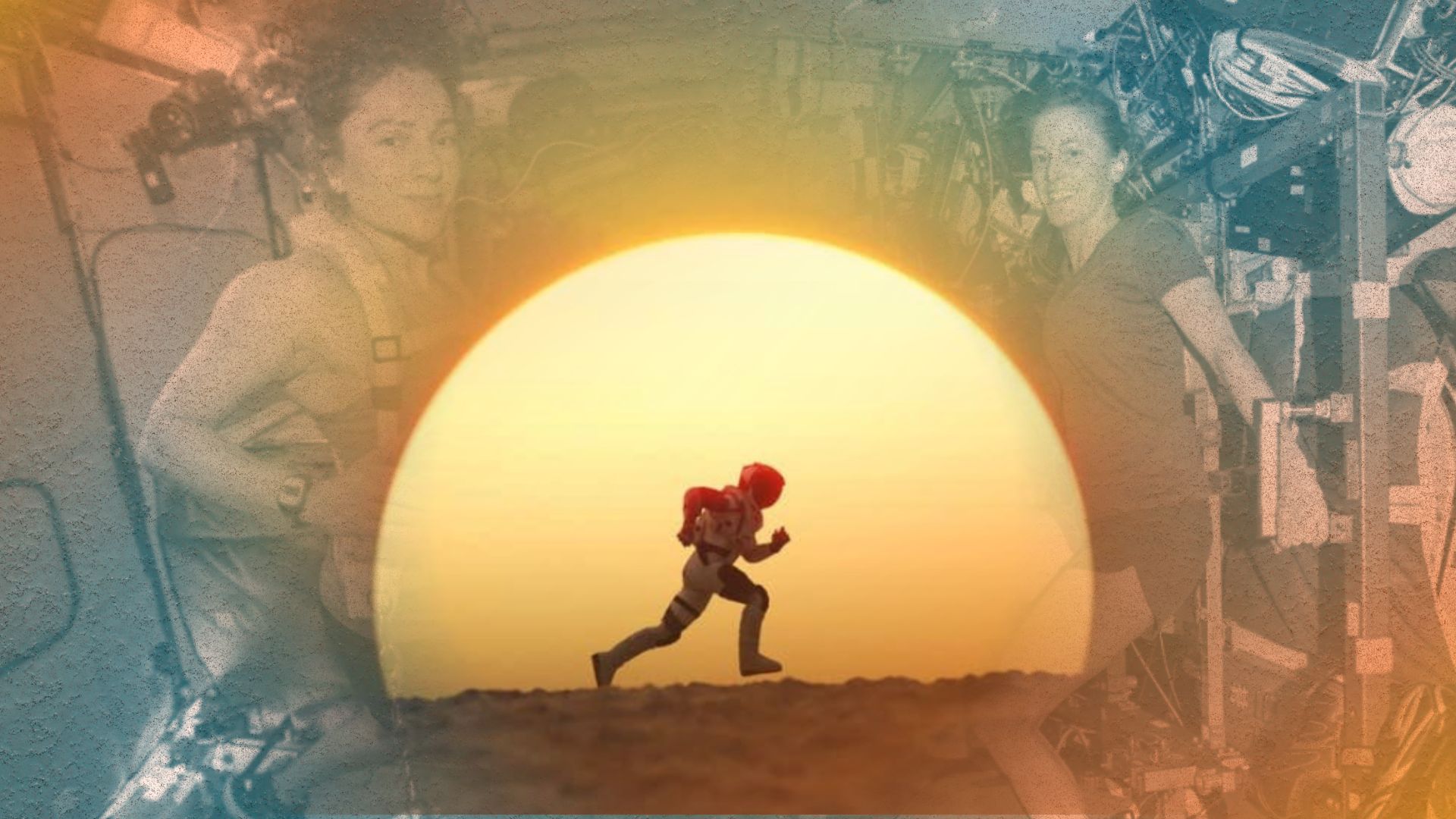
Treating back pain and all other bone and muscle related ailments start during the space flight itself. Every day, astronauts allocate time for physical exercises. They simulate gravity inside the International Space Station.
But unlike what you can see in the movies, where they use centrifugal force to mimic gravity and do exercises, astronauts use machines and specialized suits. This way, they are able to do isometrics, squats, lunges and bench pressing, putting stress to their bones and muscles.
After landing back to Earth, astronauts are put on a 45-day post mission recovery program. Every day, they spend two hours with trainers and undergo a personalized recovery plan to get back to their fitness levels. After a month and a half, most astronauts recover their original physical strength–and this applies to people with the same conditions.
What the research for space medicine developed can be used on ordinary people too. With the help of other medicine fields, back, bone, and muscle-related issues will be much easier to treat.
There’s a splashdown and with it are not only astronauts back in their home, but also knowledge on how to treat people’s backs.