









Now Reading: These science-backed horizons could transform the Philippine economy
-
01
These science-backed horizons could transform the Philippine economy
These science-backed horizons could transform the Philippine economy

Deryn Theone L. Hipe
For years, we’ve been told to “expand our horizons” — and now, science is showing us how to do it on a national scale.
Seeking to address the “real needs” of the Filipino people, the Department of Science and Technology (DOST) formally announced its implementation of its Three-Horizon Approach during the opening of the 2026 Regional Science and Technology Week (RSTW) for Region 1 on Monday, February 16.
Known as Horizons, the initiative aims to strengthen micro, small, and medium enterprises (MSMEs), turn research and development (R&D) breakthroughs into market-ready solutions, and develop high-impact industries such as agriculture and national defense.
Behind the frame
The Three-Horizon Approach is not new — rather, it comes from a framework of the same name that was introduced by consultants at McKinsey & Company in 1999.
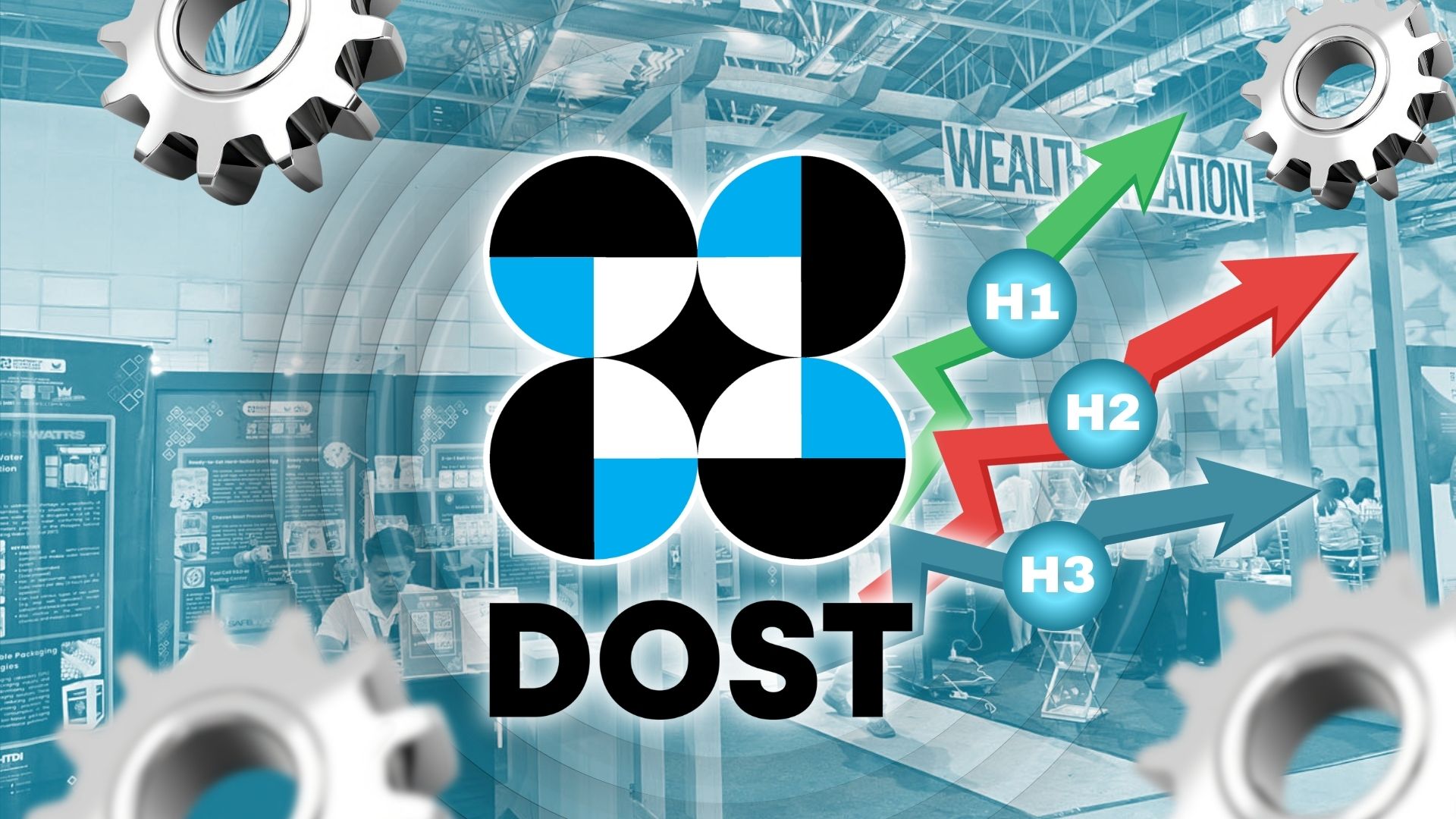
This method was designed to help businesses plan for long-term growth by grouping strategies into three distinct horizons: Horizon 1 (H1) focuses on optimizing and enhancing the current operations and products, Horizon 2 (H2) finds new opportunities that can build on existing strengths, and Horizon 3 (H3) explores transformative ideas that could reshape the business’ future.
In using this approach, companies are able to maintain current operational needs while seizing opportunities for positive transformation, allowing room for genuine growth rather than surface-level change. Its success in the corporate world eventually led various organizations — including the Philippines’ DOST — to adopt the model.
Science meets economics
“What we want to do in Horizons is really more engagement with the business side, while disaster resilience and R&D would continue,” said DOST Secretary Renato Solidum Jr. in an interview with The Philippine Star.
On the opening day of Region 1’s RSTW, Solidum described the project as being in its “harvest stage.” The programs under Horizons, he noted, are already funded, with some awaiting implementation through partnerships with other organizations.
To achieve H1, DOST has set its sights on transforming 10,000 MSMEs into tech-enabled businesses through initiatives such as AI tools and e-commerce partnerships, hoping to boost productivity by 30 percent and create 200,000 job opportunities. Support will also come through programs such as the Small Enterprises Technology Upgrading Program and platforms like the Decentralized Intelligent Machine Exchange Repository (DIMER), a kind of app store that can help businesses choose large language models (LLMs) or AI chatbots that align with their operational needs.
“We want to engage enterprises with upscaling programs, using artificial intelligence and robotics automation in their operations,” Solidum explained.
For the second Horizon, DOST is pushing for the commercialization of R&D outputs — or the translation of research findings into accessible products and services — to convince stakeholders that such investments are “worth the risk.”
Projects like the Philippine Higher Education Validation and Innovation Testbed (PHI-TEST) allow innovators to test their products against global standards, while proposed laws such as the National Measurement Infrastructure System Act aim to ensure that Philippine products can compete internationally. Additional efforts include the expansion of knowledge, innovation, science, and technology (KIST) ecozones, where startups can grow with academic support and tax incentives.
At the farthest end, H3 is all about empowering industries through technological support. Here, DOST aims to integrate AI, robotics, and smart technologies across various sectors, with the goal of bringing in 100,000 high-skilled jobs and up to P300 billion in private investment.
To make this possible, the DOST is focused on using AI and advanced mapping tools to improve decision-making, developing faster computers to boost cybersecurity, creating new medical treatments and drugs, and introducing robots to modernize factories. The department is also investing in eco-friendly industries such as recycling, sustainable mining, and renewable energy, while strengthening the country’s own capabilities in critical technologies for national security.
A smarter future
Beyond individual programs and technologies, DOST’s Horizons represents a broader vision for the Philippines: a future where innovation powers growth, sustainability, and resilience.
At the DOST Inno.Venta 2025 — a three-day innovation exhibit made to attract potential investors to science-based creations — Solidum emphasized the importance of supporting science and innovation.
“When we invest in science, we invest in our people. When we empower innovation, we empower the economy. And when we make innovation the backbone of our national agenda, we build a Philippines that competes, creates, and thrives — a Philippines that proudly stands on the strength of its genius,” he stated.
From small enterprises to high-tech industries, DOST’s Three-Horizon Approach is charting a path where every horizon brings new opportunities to grow, innovate, and thrive.