








Now Reading: Time travel is possible— but not in the way movies imagined
-
01
Time travel is possible— but not in the way movies imagined
Time travel is possible— but not in the way movies imagined

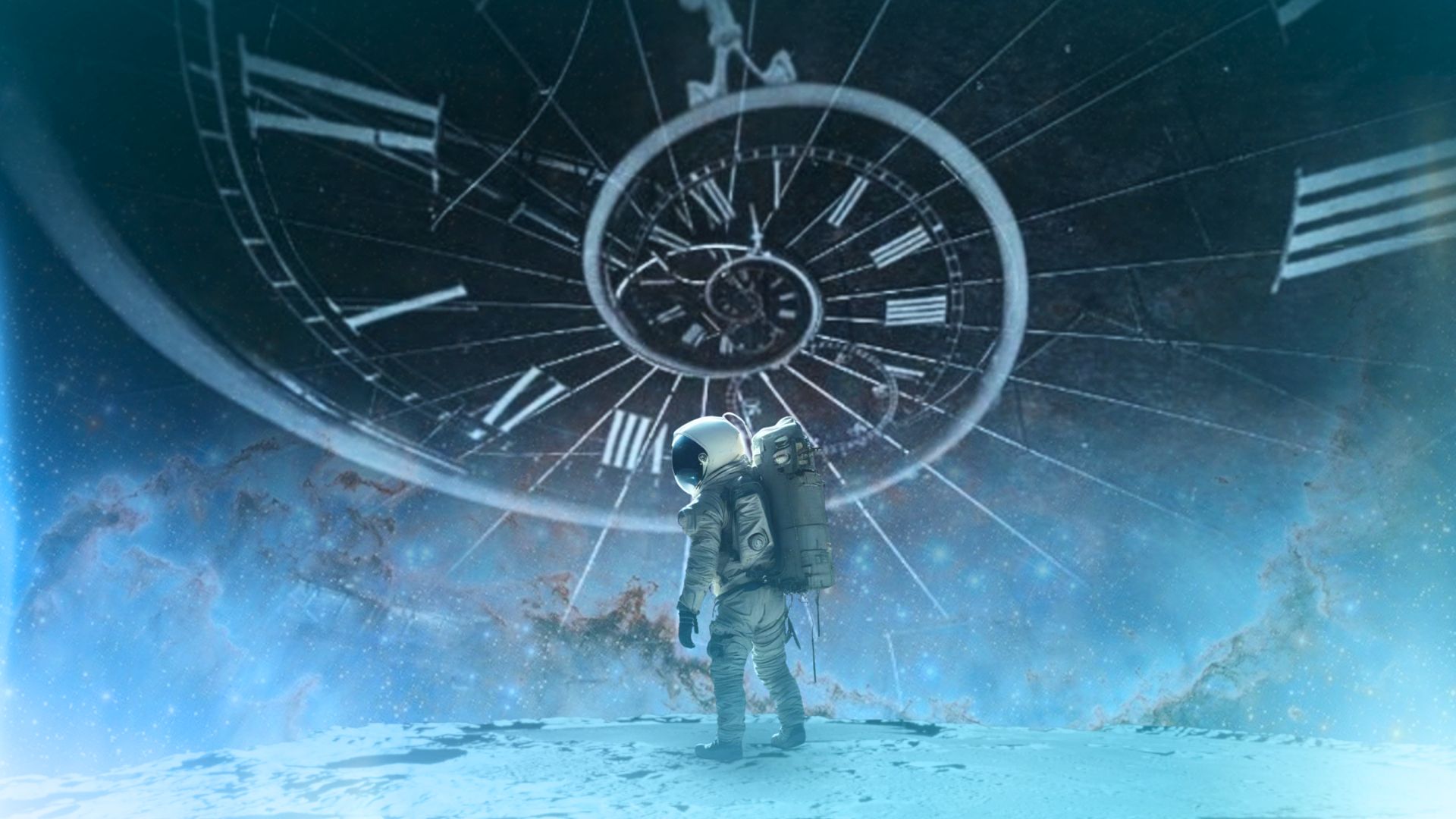
Hollywood has shaped the way we imagine traveling through time. But beyond the silver screen, modern physics suggests that time travel is a real phenomenon, but not in the way most people expect.
For decades, time travel has remained one of science fiction’s greatest fantasies. Films like Back to the Future, Avengers: Endgame, and Interstellar, have painted vivid images of speeding through centuries, changing history, or meeting different versions of themselves. But surprisingly, the closest thing to time travel does not involve futuristic gadgets and inventions. It happens naturally through the laws of physics.
Time travel into the future is now considered a real effect through Einstein’s theory of relativity, as scientists have found that astronauts who travel around Earth age slightly slower than people on the ground. This happens because time moves a little slower for objects traveling at very high speeds— a phenomenon known as time dilation.
While the effect is too small to notice in everyday life, it changes the way how we understand time. Rather than being fixed, time can move at different rates depending on speed and gravity, making future time travel a real consequence of modern physics rather than science fiction.
When science differs from cinema
Unlike in the movies, real time travel does not involve changing the past or jumping hundreds of years ahead with a machine. Instead, scientists explain that traveling into the future happens because time does not always pass at the same rate for everyone. NASA also explains that the passage of time depends on factors such as speed and gravity, meaning a person moving very fast or experiencing stronger gravity can age differently than someone on Earth.
A real-life case can be seen in NASA astronaut Scott Kelly, who spent 340 days aboard the International Space Station while his identical twin brother, Mark Kelly, remained on Earth. Because the station’s speed is about 28,000 kilometers per hour, Scott returned about five milliseconds younger than his brother due to time dilation, which shows how time can pass differently during space travel.
The same idea of time dilation is accurately shown in the movie Interstellar. On Miller’s Planet, which orbits very close to a massive black hole, time moves much more slowly than it does on Earth. As a result, every hour spent on the planet is equal to seven years on Earth, showing how gravity can greatly affect the passage of time. Physicist Kip Thorne, who served as the film’s scientific adviser, based this idea on Einstein’s theory of relativity.
Although the science behind Interstellar is based on real physics, the scenario is highly unlikely in the real universe. It would require a planet orbiting extremely close to a fast-spinning supermassive black hole, something scientists believe would be incredibly rare and beyond the reach of today’s technology.
The future of traveling into the future
Although movie-style time travel remains out of reach, scientists continue to study time dilation as it plays an important role in future space exploration. As missions travel farther from Earth, understanding how time changes in space will help astronauts and spacecraft stay accurately synchronized.
The same science is already helping people on Earth, as GPS satellites experience small changes in time because of their speed and distance from Earth, so their clocks must be adjusted to provide accurate locations. Without these corrections, navigation systems would become inaccurate over time.
While humans may never build the kind of time machines seen in movies, every new discovery about time brings scientists closer to understanding how the universe works. Rather than changing the past, the future of time travel may lie in improving space exploration, navigation, and the further understanding of our own universe.
Movies have made time travel look like something only possible through futuristic machines. But science tells a different story. It reveals that the universe is capable of far stranger things than our imagination first believed.
Perhaps the greatest twist is that Hollywood did not completely get time travel wrong— it simply imagined it differently. And while Hollywood continues to imagine where time travel could take us, science is helping us understand how it truly works.