





Now Reading: TRUTH UNDER THREAT: Attacks on journalists undermine access to scientific knowledge
-
01
TRUTH UNDER THREAT: Attacks on journalists undermine access to scientific knowledge
TRUTH UNDER THREAT: Attacks on journalists undermine access to scientific knowledge

Angelo James Dela Rama and Joey Marthyna Baldoza
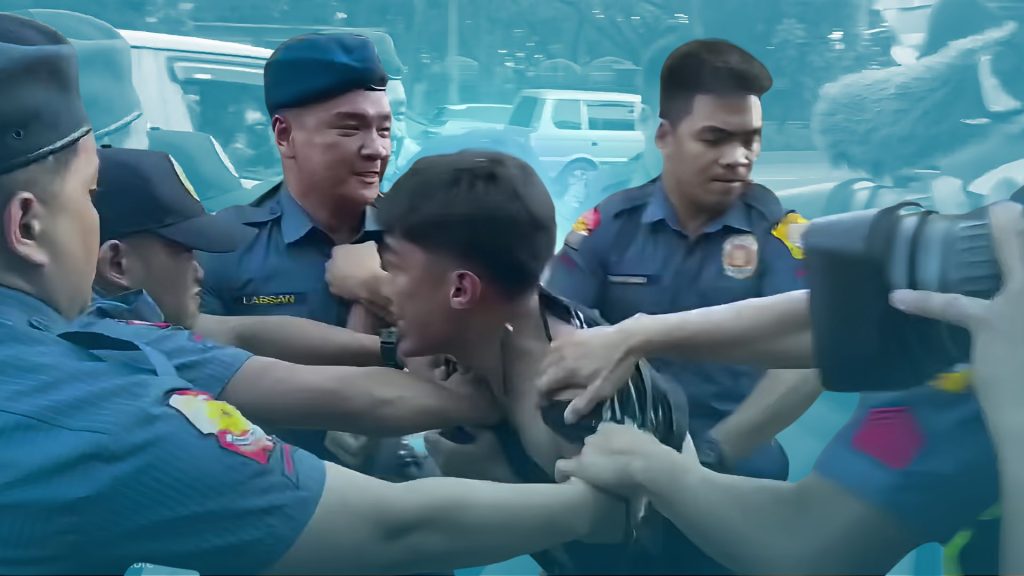
Behind the stories they publish, many science journalists in the Philippines risk being harassed, red-tagged, and even murdered—all for the pursuit of scientific truth.
In the Philippines alone, the Center for Media Freedom and Responsibility (CMFR) and the National Union of Journalists of the Philippines (NUJP) recorded 184 attacks against the press during the first half of the current administration.
This reflects the harsh reality for those who strive to uncover the truth, keeping vital scientific knowledge from communities who need it most.
Combatting the crisis
Despite the country’s worsening climate emergency, environmental journalists often find themselves susceptible to red-tagging and harmful attacks for simply reporting on ecological issues of public interest.
In fact, based on a survey conducted by Global Witness in 2025, nine out of 10 environmental and land defenders, including journalists, in the country have received online threats due to their political views.
Furthermore, numerous journalists worldwide covering serious environmental concerns such as illegal mining and logging have been murdered for exposing these environmentally damaging practices, as reported by United Nations (UN) Secretary-General António Guterres in 2024.
According to the International Federation of Journalists (IFJ), this usually occurs as profit-oriented companies and political authorities intervene with environmental reports.
As journalists play a crucial role in informing the public about the current situation of the environment, these forms of attack may ultimately disrupt their activities and censor scientific information relevant to ecological efforts.
“Without reliable scientific information about the ongoing environmental crisis, we can never hope to overcome it,” UN Educational, Scientific, and Cultural Organization (UNESCO) Director-General Audrey Azoulay stated.
With this, the UN continues to call for stronger protections for environmental journalists due to rising violence against them.
Health in hazard
Similarly, health journalists in the country have been increasingly under threat as they face growing restrictions, including vague laws, censorship, and institutional barriers, that hinder them from reporting freely.
In 2020, based on a report from the International Federation of Journalists (IFJ), the Department of Health (DOH) barred quarantined overseas Filipino workers (OFWs) from speaking to the media or posting on social media. This hindered real-time reporting from inside government quarantine facilities during the height of the COVID-19 pandemic.
Additionally, the National Telecommunications Commission (NTC) blocked independent media outlets Bulatlat and Pinoy Weekly without any proper evidence in 2022 after they covered health issues such as rural mental health, reproductive care, and lack of HIV services.
Due to this, Filipino health journalists often avoid discussing sensitive health topics, including abortion and contraception, out of fear of online threats and red-tagging, according to Freedom House’s 2023 country report.
With 51.5% of Filipinos having low health literacy, barriers like digital gatekeeping and content removal may worsen access to reliable information, as stated in a 2022 study in Health Literacy Research and Practice. Even indirect restrictions can deepen public knowledge gaps.
Moreover, the World Health Organization (WHO) stressed that restricting access to health information can ultimately weaken public confidence and prevent urgent medical response.
For the public, these limitations are not just abstract issues— they have real-world consequences. When credible sources are silenced or censored, people are left to navigate complex health systems and urgent health decisions without trustworthy guidance.
Misinformation, often more viral and sensational, fills the vacuum, making it harder for families to make informed choices about vaccination, sexual health, mental illness, and emergency care.
Communities in remote or underserved areas, who already face barriers to hospitals, clinics, and doctors, are hit the hardest.
Without access to timely and accurate reporting, illnesses may go undetected, public health programs may falter, and people may turn to unverified sources or harmful remedies out of desperation.
Overall, when journalism is restricted, health risks multiply—and the ones who suffer most are often those with the least access to proper care and reliable information.
Censorship in control
When science is censored, deliberately removed, distorted, or silenced, the damage doesn’t stop at laboratories or research institutions. It reaches into homes, hospitals, schools, and entire communities.
This is especially evident in the United States, where recent developments have sparked concern. Earlier this year, The New York Times reported that over 8,000 government web pages, many containing vital health and scientific content, were taken down or quietly edited.
A 2025 Nature report also revealed that the US National Institutes of Health (NIH) began cutting COVID-19 research grants that were essential for preparing against future outbreaks.
While these actions may appear distant, their impact goes deeper than what meets the eye, especially for countries like the Philippines that rely on international data to shape public health policies.
When global research is suppressed, people suffer the consequences: families may no longer receive timely warnings about disease risks, frontline workers may be left without updated safety protocols, and vulnerable groups—such as children, pregnant women, or the elderly—may face greater danger from misinformation or delayed response.
For the public, science censorship means uncertainty. It means parents making health decisions without facts. It means communities reacting too late to outbreaks. It means lives at risk not because of what they don’t know—but because what they needed to know was hidden.
When science-based facts are replaced with noise, fear, or ideology, it is the public who pays the price.
As science journalists in the country remain subjected to threats, the delivery of scientific information to communities in need also suffers. Defending press freedom not only allows journalists to speak out the truth but also makes scientific knowledge more accessible to the public.