


Now Reading: Under the scorching heat of capitalism
-
01
Under the scorching heat of capitalism

The Philippines sits near the equator: high humidity, high temperature, and dryness. Every summer, electric fans and cooling devices aren’t optional.
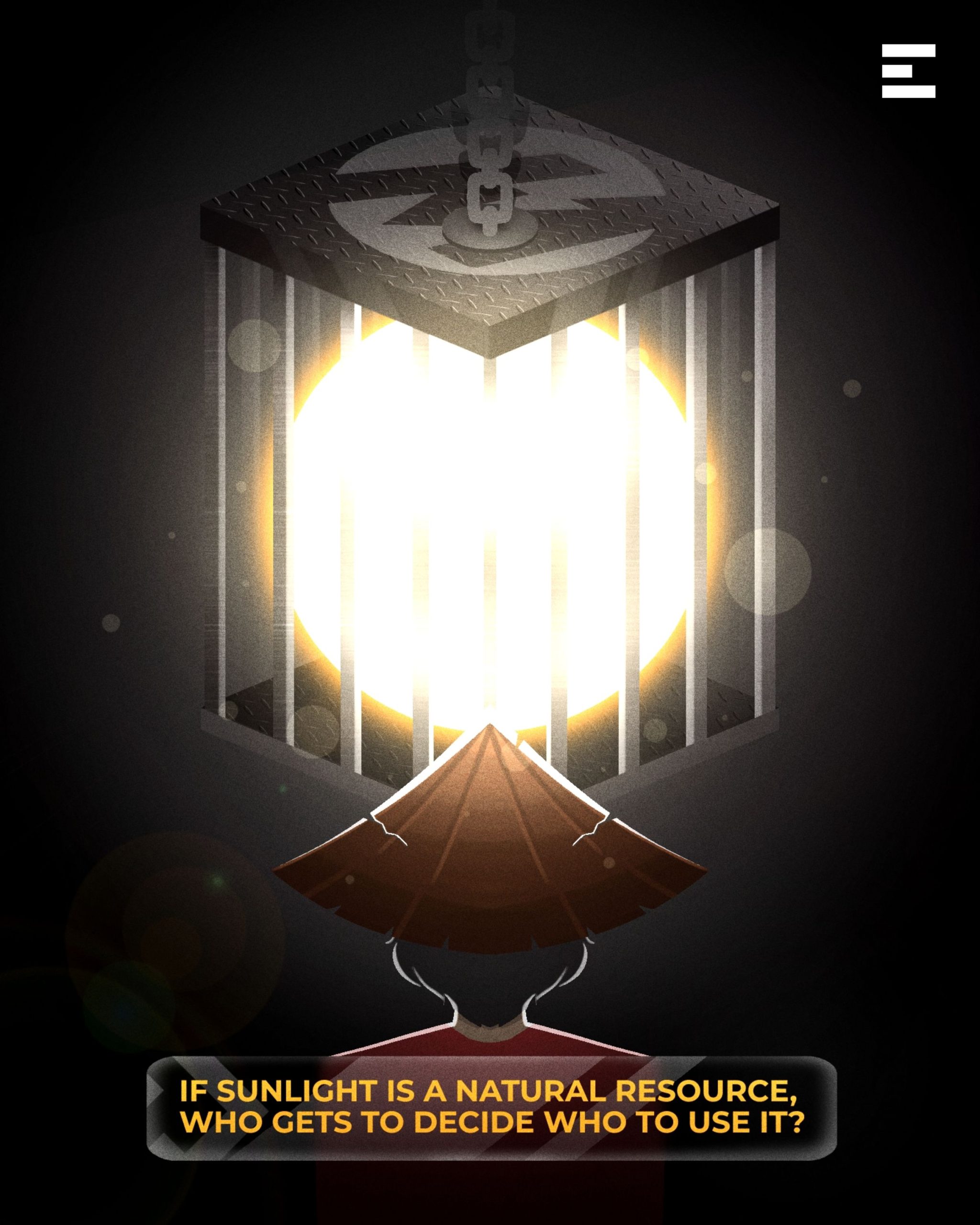
Ultimately, the rising humidity prompts higher demand to use electricity and appliances to manage heat. Despite our abundance of sunlight, why does the country’s solar industry still feel so far behind? Perhaps it is because the sun strikes at the wrong places, and the sun isn’t the only thing that burns, but greed and bureaucracy.
Recently, Manila Electric Co. (Meralco) has been lobbying an agenda that advocates for stricter rules and regulations on solar panel installation. Meralco Spokesperson Jose Zaldarriaga stressed that the issue is rooted in safety concerns, explaining that unprofessional and wrong installations may lead to accidental fire. He further described individual efforts as “guerilla installations” for solar panels with no applied permits.
At first glance, Meralco’s statement is promising. Who wouldn’t want to ensure safety in their households, especially if electrical fires are one of the leading causes of accidents? But the real issue here is beyond safety; it’s establishing monopoly over electricity. It is as if they already tagged efforts to shift to renewable energy as criminal rather than acknowledging the evidently rising monthly bills and stagnant paycheck that barely make ends meet.
While individual efforts are apparently tagged as guerrilla, government-sanctioned projects with solar panels are applauded. Why the selective acknowledgement to go green? Forums about renewable energy and energy-saving practices here and there, but when we actually attempt, there’s contempt. This only proves the point that control over basic necessities comes first before empowered households, but this isn’t surprising. Meralco is not a government agency, after all. It is a privately-owned business managed by conglomerates with bonds to “construct, operate, and maintain the electric distribution system in the cities and municipalities”.
If it’s just safety in the picture, solar installation companies are already implementing regulations such as building and electrical permits, barangay clearance, metering approval, and certifications. This means it isn’t something you just connect to your roof and viola, it’s done; likewise, such installations undergo processes. In fact, Power for People Coalition convenor Gerry Arances said the concern is also supervised by the Bureau of Fire Protection. “If that will be detrimental, we will definitely go to court to make sure electric consumers are protected,” he emphasized.
In this case, building more restrictions means piling requirements for families to avail solar energy, consequently burying them in bureaucracy and traditional energy practices. This move also detaches sustainable energy practices from the masses, and putting more restrictions might open doors for more unauthorized third-party installation companies just to cut costs. Deterring Filipinos from finding alternative routes for electricity won’t do anything good, because we’ll find a way to survive in the middle of energy and oil crises, coupled with skyrocketing inflation prices. Schools taught us that renewable energies are sustainable, even going a mile to raise awareness about it and making it accessible. Why raise an eyebrow now?
Moreover, Meralco isn’t in the place to talk about safety when they can’t even properly address spaghetti wires. Manila’s tourist attractions will always be accompanied by dangling wires, which also add to the hazard during typhoons. This has been going on for years, but little has been done. Campaigns to remove this eyesore were launched, but are the results visible? In a recent report by the Daily Tribune, tangled electric wires greet the streets in Mandaluyong City. Meanwhile, in Quiapo, Manila, an electric lamp post with spaghetti wires caught on fire, prompting residents to put it out while waiting for respondents.
In a separate case in 2024, Mariz Acebron, a Baseco resident, was forced to endure the heat as their power source was cut off due to failure to pay their bill amounting to hundreds of thousands. At first, Acebron notified Meralco of the discrepancy in the bill, alerting them of a possible reading error. However, she didn’t receive any follow-up response. When the issue gained traction online, only then did the company act and assist. If these power providers really care for the welfare of their consumers, systems must be fixed to avoid these anxiety-inducing electrical cut-offs.
What companies fail to see and understand is the underlying reason and motivation why this is happening. The growing interest in solar energy is rooted in expensive electrical rates. In a 2024 study by Ateneo de Manila University, 82% of Filipino households are considering shifting to solar panels. We are paying more than ASEAN countries; we’re just behind Singapore for electricity costs. With generation charges paid to independent power producers of 55% in our bills, it would obviously shoot up.
We must not complicate things when existing problems known to the crowd aren’t even properly resolved. Fix the risks, energy discrepancies, and wiring hazards, and after that, perhaps lobby about business regulations; otherwise, stay in line with ensuring accessible energy for all because it is simply policing efforts that hurt their business.
Indeed, greed and capitalism burn like hell. Business is sugarcoated in safety and concern, when their only concern is control and power. Regulations on household utilities don’t always equate to efficiency and safety; at times, it means fewer options and driving a wedge further from the people.