







Now Reading: Where the land ends is where the Philippines’ biggest gamble begins
-
01
Where the land ends is where the Philippines’ biggest gamble begins
Where the land ends is where the Philippines’ biggest gamble begins

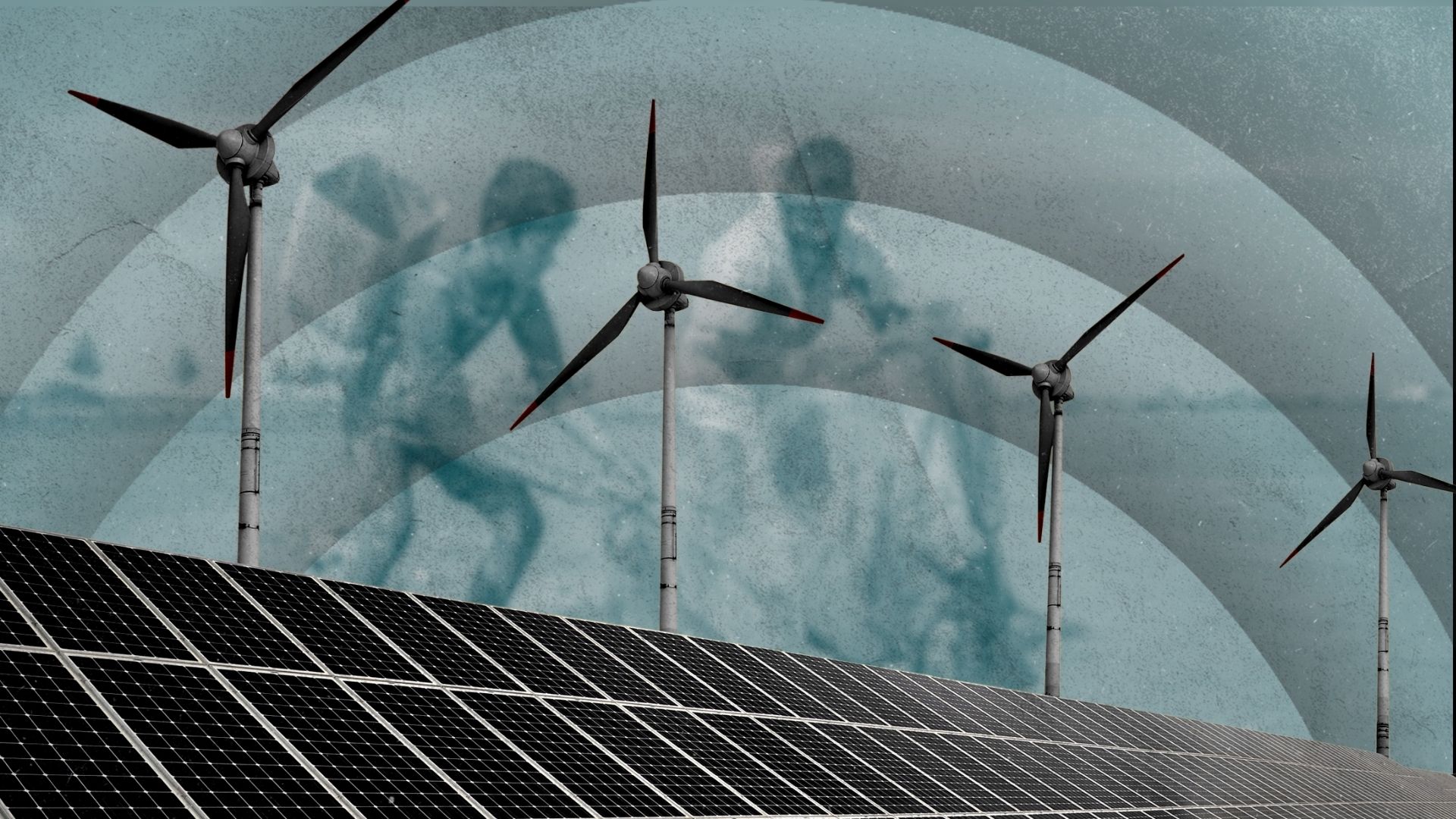
As wind energy remains an overlooked power source, the Philippine government is now placing their bets on harvesting offshore winds to power the future of the country.
Waves of high-capacity offshore wind service contracts have been pushed to utilize its massive 178-gigawatts (GW) potential, both from international and local energy firms. Where it currently stands—not quite sure, yet.
BEHIND THE BLADES
Offshore wind farm (OSW) is a power generation facility with wind turbines placed offshore, clustered in the open sea, and separated several kilometers from the coast.
Wind drives the rotation of turbine blades, which then generates electricity, especially as winds are generally stronger and more constant at sea, making energy generation more consistent and subjected to less mechanical stress.
This stronger and consistent electricity supply is then transmitted through thick, underwater cables buried deep beneath the seabeds, to electrical grids.
With the Philippines having an archipelagic geography and being exposed to strong coastal winds, offshore wind development becomes a favorable energy option, especially as the country aims to cut its heavy reliance on imported fossil fuels and stabilize rising power costs.
PROMISES IN THE WIND
Despite its geographic advantage and inherent potential, the country’s actual installed capacity of wind power has reflected no net growth since at least 2016, even with the aggressive push for renewable energy use.
Compared with other renewable energy sources that have seen steady expansion, the total installed wind energy capacity has remained flat at 427 megawatts (MW) from the end of the former President Rodrigo Duterte’s administration in 2022 through the first three years of President Ferdinand Marcos Jr.’s term in 2025—growing much more slowly despite the push for clean energy.
Stakeholders have repeatedly pointed to permitting requirements, site development challenges, and limited transmission access as persistent hurdles to renewable energy deployment, particularly for wind and offshore projects.
To bridge the gap, Marcos administration has aggressively signed new contracts and struck deals aimed at unlocking the country’s vast offshore wind potential—but this is also where the problem begins to surface.
TRACING THE CURRENTS
As one of only two Southeast Asian countries with a privatized and deregulated energy sector, Singapore being the other, allowing 100 percent foreign ownership of renewable energy (RE) projects under Department of Energy (DOE) policy is an unusually open energy regime that raises questions over who ultimately steers the country’s energy transition.
Currently, there are 91 offshore wind farm projects in the stages of pre-development and construction with targeted operations across regions:
- Region I – 6 projects
- Region II – 5 projects
- Region I and II – 1 project
- Region III – 4 projects
- Region III and Region IV-A – 2 projects
- Region IV-A – 16 projects
- Region IV-A and Region IV-B – 3 projects
- Region IV-B – 7 projects
- Region IV-B and Region VI – 4 projects
- Region V – 19 projects
- Region VI – 21 projects
- Region VII – 2 projects
- Region VIII – 1 project
Some wind farms are associated with multiple regions because they are assigned to the nearest coastal area, even if their electricity is transmitted to the grid of a different region.
Out of the 91 deals approved by DOE, 17 projects are controlled by big comprador bourgeoisies or local middleman elites in a developing economy, like the Ayala, Lopez, Yuchengco, and Saavedra clans, and 20 projects from foreign companies based in China, Singapore, Denmark, Germany, and Switzerland.
Due to the high capital required to construct wind farms, many foreign firms and local elites co-owned or fully own most projects—yet, because the country’s energy sector is privatized, electricity will likely remain expensive despite it being a clean source.
These firms will seek to recover the high costs of construction and investment from consumers through power prices, making the benefits more concentrated among investors rather than consumers.
WEIGHT OF THE TURBINES
Aside from the ambiguity of whether this will help residents more, the mere construction of the wind farms will disturb the marine ecosystem of surrounding coastal and offshore areas
The construction phase is a massive process that creates noise disturbances, causing habitat avoidance among marine species, auditory stress, and behavioral disruptions. Seabed excavation to lay the cables also affects the cloudiness of the water that decreases oxygen for aquatic animals.
The threat becomes complex in the turbines’ operational phase as the low-frequency noise of the turbine can interfere with echolocation, change the seawater structure that then affects the light and nutrient availability, and mostly displace migratory animals through disrupted navigation routes.
In pursuing a greener future, the project reveals a fundamental trade-off: reducing carbon emissions at the expense of imposing new ecological pressures on marine environments.
AT WHOSE EXPENSE?
When even the animals are expected to suffer, the impact on the people who depend on these waters may prove even harder to ignore.
On April 22, around 200 fisherfolk from the Tanggol San Miguel Bay Network marched from Sabang Fishport to People’s Park in Calabanga, Camarines Sur to condemn the planned construction of the San Miguel Bay Offshore Windmill Project.
Saluadan Network also held a protest against the proposed BuhaWind Wind Farm in Ilocos Norte, alongside fluvial demonstrations and an online petition opposing the project.
What emerges from these protests is a recurring conflict in which projects are resisted by coastal communities, not out of opposition to progress, but because companies often fail to provide safeguards against the immediate uncertainty these developments create for their livelihoods and survival.
WHERE THE GAMBLE LANDS
If the project is one thing for Filipinos, it is a gamble—a gamble that stretches across economic interests, environmental trade-offs, and social realities that remain unresolved as the country expands its ambitions.
Yet for progress to truly be called progress, no one should be left as the wager, because the measure of success lies, not in how much power is generated, but in who gets to benefit from it.