








Now Reading: Why the Philippines misses its true edge in sports
-
01
Why the Philippines misses its true edge in sports


Every Filipino child dreams of sinking a three-pointer. Fewer dreams of serving an ace or landing a perfect vault. And yet, medals have come not from the courts we worship, but from the arenas we barely watch.
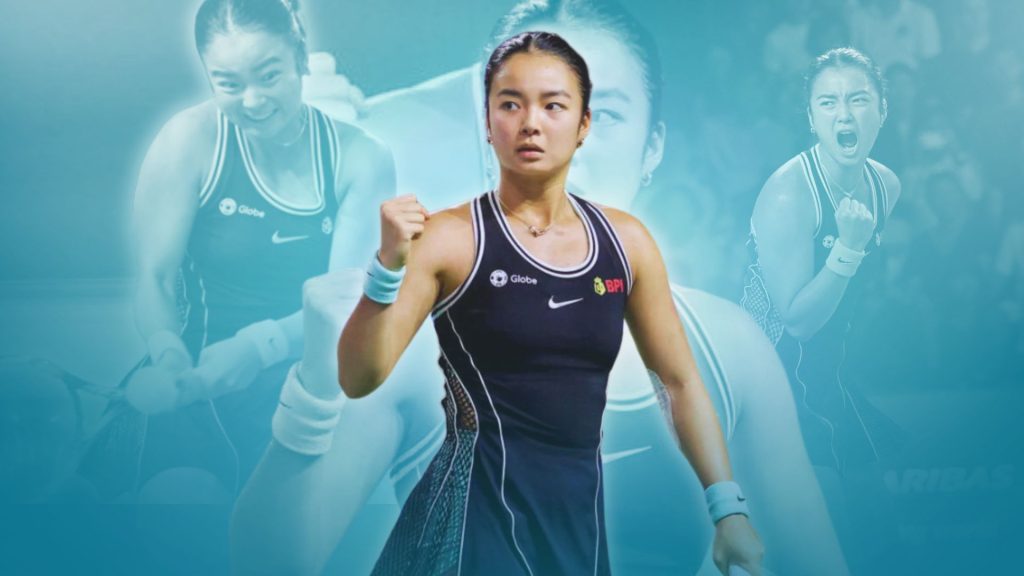
Sporadically, a Filipino athlete cuts through the global noise, commanding attention that rarely lasts. When Alex Eala claimed a Junior Grand Slam title, timelines thundered with applause, but as quickly as it came, it faded, leaving a silence that reveals a deeper pattern: we consistently overlook the sports where we have a natural competitive edge.
It is not merely a question of funding. Time and again, energy and resources flow into arenas stacked against us, while the disciplines in which Filipinos could genuinely excel remain neglected. The result is predictable: fleeting triumphs—Eala, Yulo, Diaz—celebrated as exceptions, never cultivated into the routine.
The psychology of collective obsession
Why do we rally around basketball, despite our glaring disadvantage in average height? Psychology provides one answer: identity attachment.
Introduced during the American colonial period, basketball quickly embedded itself into the Filipino psyche as a democratic, accessible sport. You didn’t need manicured fields or expensive gear. You needed only a cracked concrete court, a borrowed ball, and a hoop nailed onto a coconut tree. That simplicity allowed basketball to morph into more than just a pastime as it became a stage for pakikisama, barangay unity, and collective escape. To this day, local tournaments double as fiestas, and the Philippine Basketball Association remains Asia’s longest-running professional league.
But herein lies the paradox. Once a sport becomes entangled with identity, it resists rational scrutiny. Sports psychologists call this symbolic attachment: when losing a game feels like losing a piece of one’s self. For Filipinos, clinging to basketball is less about competitive strategy and more about psychological need—it offers belonging, ritual, and drama.
The consequence, however, is stark. Our affection blinds us to the reality that medals, prestige, and sustainable athletic development might lie elsewhere.
The science of natural advantage
What if we flipped the script and asked instead: in what sports do Filipinos have a natural edge?
Anthropologists and physiologists have long noted that certain populations excel where biology meets environment. East Africans dominate long-distance running thanks to high-altitude living and superior oxygen uptake. Eastern Europeans thrive in weightlifting and gymnastics, bolstered by musculature and state-run sports academies. Southeast Asians, generally lighter and shorter with lower centers of gravity, have found advantage in martial arts, badminton, diving, and gymnastics.
The Philippines is no exception. A 2015 study by the Department of Science and Technology’s Food and Nutrition Research Institute (FNRI) found the average Filipino male stands at 5’4” and the average female at 4’11”. By comparison, the average NBA player stands at 6’6”. The conclusion writes itself: no matter how many shooting drills we run, basketball will remain an uphill battle.
But those very traits: lean build, agility, endurance, balance make Filipinos ideal candidates for precision-based sports. Gymnastics, weightlifting, tennis, skateboarding, taekwondo, archery, and even e-sports all capitalize on coordination, reflexes, and technique over sheer height or brute force.
Alex Eala’s Grand Slam win was not a fluke, as it was an anthropological confirmation. Hidilyn Diaz’s Olympic gold in weightlifting, Carlos Yulo’s world medals in gymnastics, and Margielyn Didal’s skateboarding triumphs all point to the same pattern. These are not outliers but previews of what Filipinos could achieve with consistent investment.
The cultural barrier to investment
Why, then, do we sleep on these sports? The answer lies in cultural psychology.
Filipino society thrives on collectivism. We are wired to value pakikisama and instant gratification from shared experience. Basketball and volleyball are group sports that offer drama in real time. Boxing, though individual, is mediated as national catharsis—the whole country gathers around a Pacquiao fight, chanting in unison as if the punches were thrown on its behalf.
By contrast, tennis or gymnastics feel alien. They require long-term, individual training. They demand years of quiet, invisible work before any reward appears. They need costly infrastructure and coaching—resources our institutions rarely commit to without immediate payoff. For a society accustomed to short bursts of spectacle, patience for such invisible labor is thin.
And yet, the irony is glaring. When investment—however minimal—does arrive, Filipinos deliver results. Hidilyn Diaz trained with makeshift barbells before becoming the first Olympic gold medalist in Philippine history. Carlos Yulo relocated to Japan for proper training because the Philippines lacked adequate gymnastics infrastructure; his medals are proof of what systemic neglect almost cost us. Margielyn Didal practiced in improvised skate parks before shocking the world stage.
These are not stories of abundance—they are stories of survival against indifference. If crumbs can yield champions, what might a banquet produce?
Historical patterns we ignore
The medal data already paints the picture. At the 2019 Southeast Asian Games, hosted by the Philippines, our gold medals clustered not in basketball but in sports like arnis, gymnastics, skateboarding, and weightlifting. These victories aligned perfectly with our anthropological edge.
Yet what happened after the Games? Public discourse quickly re-centered on Gilas Pilipinas, even as they faltered against taller, faster teams. SEA Games heroes were given token airtime, then forgotten. The systemic potential revealed by the medal tally was filed away as trivia rather than a blueprint.
It is as if we refuse to believe our biology, geography, and talent unless they manifest in the narrow channels of our cultural obsessions.
Rethinking the Philippine sports psyche
This is not an argument to dismantle basketball or volleyball. Cultural fixtures deserve to remain. But identity and strategy can co-exist.
Japan still loves baseball but invested strategically in judo and gymnastics, reaping consistent Olympic medals. Jamaica continues to revere cricket, but became globally famous for sprinting. South Korea still celebrates baseball, yet dominates archery and taekwondo. Nations can love one sport while excelling in another.
The Philippines, however, has yet to make this leap. We mistake passion for policy, nostalgia for strategy. We continue to fund what entertains us rather than what positions us competitively. Psychology and politics intersect here: our leaders, bound by hiya and populist optics, hesitate to redirect resources away from cultural darlings, fearing backlash.
But greatness demands discomfort. To rethink sports is to ask whether we value fleeting applause more than enduring excellence.
Sleeping on the next breakthrough
Somewhere right now, the next Alex Eala may be practicing on a cracked tennis court, her potential dimmed by a lack of training. The next Carlos Yulo may be tumbling in an empty gym, his gold medal trajectory cut short by the absence of funding. The next Hidilyn Diaz may be lifting rusted weights, her dream of Olympic glory sustained only by personal grit.
The Philippines does not lack talent. It lacks recognition of where our true edge lies. Until we learn to invest in those edges—scientifically, strategically, and culturally—we will remain a nation of fleeting underdog stories, clapping for isolated triumphs while sleeping on victories that could have been ours all along.





