







Now Reading: Ateneo researchers reconstruct Martial Law in virtual reality, replaying history through experience
-
01
Ateneo researchers reconstruct Martial Law in virtual reality, replaying history through experience
Ateneo researchers reconstruct Martial Law in virtual reality, replaying history through experience

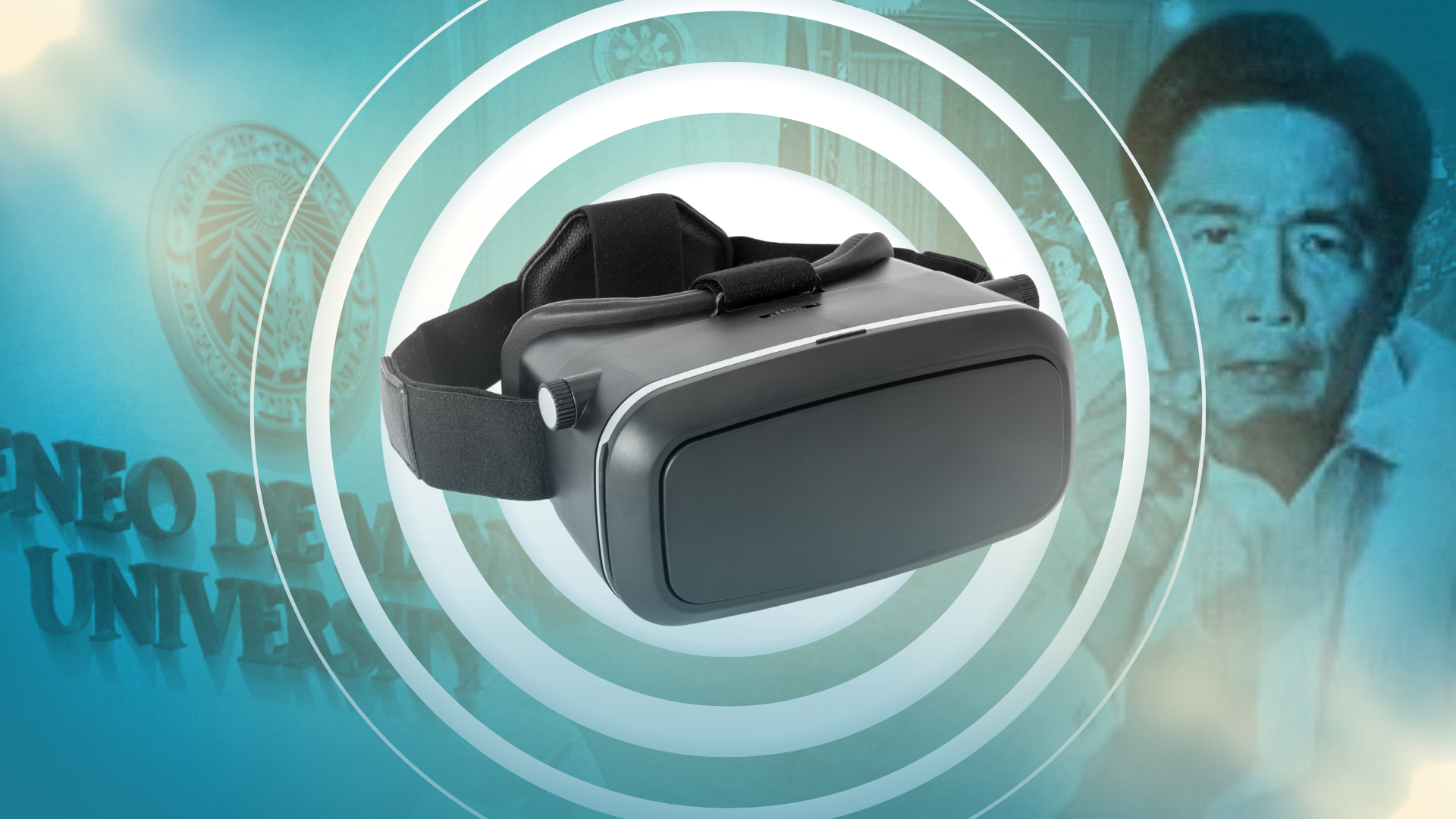
What does it take to understand a part of history you never lived through?
The moment the VR headset settles, the classroom disappears and what replaces it is a space that feels unfamiliar but grounded, like stepping into another time. Lessons take shape as environments that feel real enough to move through, but the gap between knowing and understanding remains. For many young Filipinos, Martial Law is taught in classrooms, reduced to timelines, or debated online, often distant and difficult to grasp. That gap is what developers are trying to close by placing history inside virtual reality, where it can be experienced instead of only studied.
Researchers from Ateneo de Manila University developed the Ateneo Virtual Reality Escape (AVRE), a system for building interactive learning environments in virtual reality. Using it, they created Heritage Hero: Secrets of the “Golden Era”, a single-player escape room game that situates Martial Law within a space that players can move through and interact with. Instead of following a linear lesson, users encounter historical elements as part of exploration and problem-solving.
The system was developed in response to a recurring difficulty in teaching Martial Law in traditional settings. The researchers note that while lectures and textbooks can present events clearly, they do not always translate into a sense of context or lived complexity. Virtual reality is used here as an alternative format that allows learners to engage with material in a more direct, structured way without changing the historical content itself.
“Immersive technologies can provide the scaffolding that helps a student begin learning complex historical topics,” said Dr. Eric Cesar E. Vidal Jr., Technical Head of the AVRE Laboratory. He described interaction as a way to support engagement with sensitive material while keeping the learning process manageable and guided.
Hands-On History
Inside the system, players enter a reconstructed mansion where each room corresponds to a different aspect of Martial Law history. There are no instructions delivered in advance once the game begins. Instead, users move through spaces that respond to interaction, gradually assembling context through exploration.
Each area presents a different historical layer. The study focuses on press freedom through materials linked to media control and censorship, while the kitchen introduces public health through references to programs such as Nutribun, presented as tasks that require assembly and observation. Another space presents economic-related materials through documents and structures associated with development projects. These elements are designed as separate nodes, but they connect as players progress.
According to the researchers, the system is built around “intentional game actions,” where learning is tied to physical interaction rather than observation alone. Players use VR controllers to perform actions such as pulling, pressing, and assembling, while in-game tools like a journal and a manual-crank radio provide structured hints. The system is designed to function without a live facilitator, allowing progression to remain self-paced.
Learning Rewired
The approach reflects a broader shift in how historical learning is being explored in digital environments. Rather than treating Martial Law as a fixed sequence of events to be memorized, the system frames it as material that can be interacted with in different forms.
A key concept behind this design is embodied cognition, which suggests that learning can be reinforced through physical interaction, not only through reading or listening. In this setup, movement is part of how users engage with historical context, rather than just a way to navigate the space.
Furthermore, the game design also responds to challenges in teaching sensitive historical periods, where traditional discussions can feel distant or difficult to approach. The researchers describe VR as a form of scaffolding, where learners are gradually guided through complex material using structured interaction instead of direct explanation.
Carrying Forward
For many young Filipinos, Martial Law remains something learned rather than lived. It appears through textbooks, social media content, and fragmented narratives that do not always align. Understanding, in this sense, becomes shaped more by exposure than by continuity.
The researchers behind AVRE and Heritage Hero: Secrets of the “Golden Era” point to this fragmentation as a key challenge in how Martial Law is encountered today. Without lived experience, historical narratives can remain partial, shaped by what is emphasized or omitted across different sources.
Through Heritage Hero, learners are placed inside reconstructed environments tied to the period, allowing them to interact with historical elements rather than only reading about them. Inside these virtual spaces, history is replayed through experience, not only retold through text. The gap between learning and understanding remains, but the study suggests it can be narrowed when history is encountered in forms that are closer to experience, even if still simulated.