








Now Reading: Beyond its use in pandesal, malunggay tree can filter microplastics from tap water too
-
01
Beyond its use in pandesal, malunggay tree can filter microplastics from tap water too
Beyond its use in pandesal, malunggay tree can filter microplastics from tap water too

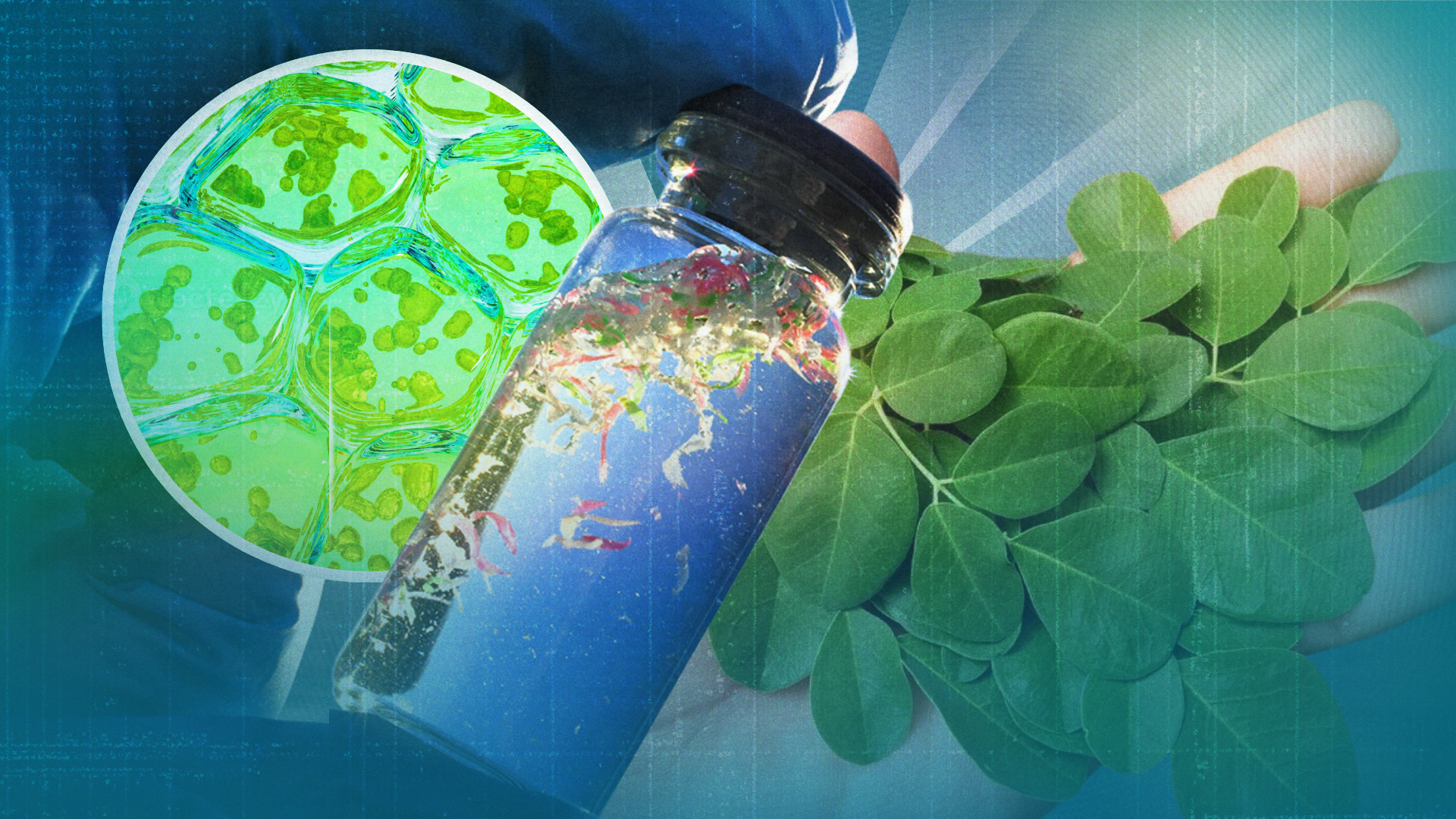
Who would have thought that the same plant used in making malunggay pandesal can also be used for filtering tiny pieces of plastics from water?
The Moringa tree, commonly known as ‘malunggay’ or ‘miracle tree’ is vastly known in the Philippines for its various uses such as for cooking, medicine and everyday nutrition.
But recently, this miracle tree may be adding something to its already vast list of benefits.
Researchers from Brazil and the United Kingdom discovered that extracts of seeds from the plant are as equally effective as common treatment chemicals used to remove microplastics from drinking water.
The power of moringa
Microplastics are small plastic fragments, some as small as 1 micrometer (μ), and they may already be present in the drinking water that people consume everyday.
In humans, the impact can be drastic, as exposure to microplastics has been linked to cause increased risks of cardiovascular, gastrointestinal, and respiratory damage.
According to Sao Paulo State University author and professor Adriano Gonçalves dos Reis, the researchers focused on PVC microplastics, among the most common kinds of tiny particles, derived from damaged PVC products such as those in product packaging, pipes, and even toys..
Findings revealed that a saline extract from Malunggay seed can remove PVC microplastics from tap water, tallying a 98.5% of effectiveness when used in filtration systems.
The extract works as a coagulant, a substance that binds tiny particles together for it to be easier to separate and filter out.
Its performance matches the performance of aluminum sulfate or alum, a much more common coagulant frequently used in water treatment.
The solution in plain sight
Moringa tree is easily one of the most valuable plants in the Philippines—one may even be right outside someone’s house.
Widely cultivated in the country, moringa trees are common nationwide, making the recent discovery a viable and sustainable solution locally.
According to Matthew Campen, a professor from the University of New Mexico Health Sciences Center, using natural products such as moringa to replace chemicals like alum “may offer a cheaper and more sustainable solution to removal of PVC microplastics.”
The discovery can be a major start in resolving the microplastics pollution in the country, as it seems to worsen as time goes by.
In a study funded by the National Research Council of the Philippines, it was revealed that marine organisms across the country contain even the slightest bit of microplastics.
The research team, led by University of the Philippines associate professor Dr. Deo Florence Onda, sampled 240 mussels in eight study sites in the country, where 100% of the samples tested positive for microplastics.
With the extent of the contamination now evident nationwide, attention needs to be on potential solutions.
Local community initiatives such as clean-up drives, proper segregation and other waste management efforts can significantly help as the solution progresses towards a huge scale.
Moreover, previous bills such as the Senate Bill No. 1400 (2020) or the Moringa Development Act, alongside enough funding may serve as a structure to use the plant as an organic solution to microplastics.
Filter blockages
Even with the potential upside of moringa trees being used as an organic filter for microplastics, flaws remain intact.
The researchers found out that a single moringa seed can treat about 10 liters of water each. For urban areas such as Metro Manila where water volume flows high, filtration plants would require vastly large amounts of seeds to process such big-scale quantities.
Moreover, organic residues from the seeds will be left in the water, which has to be removed to keep everything sanitary.
A tiny fragment of hope
Plastic pollution draws the world near further to ruins, but solutions such as moringa trees may come in handy at the same time.
Even so, further research is required to completely understand how moringa seed extracts work as a coagulant and its feasibility as a primary water treatment solution.
The study, however, opens new possibilities as to what moringa trees can do outside cooking, medicine, and malunggay pandesal—growing seeds that can potentially solve the microplastics crisis.
So the next time you look at a malunggay tree, remember—it is not just an ingredient for pandesal, but rather a key to address a growing pollution problem worldwide.